
IND vs NZ: Is selecting Ravi Bishnoi in T20I squad a good decision?

Ravi Bishnoi returns to the Indian team after a long time.
The BCCI selectors have named Ravi Bishnoi and Shreyas Iyer as replacements for the injured Washington Sundar and Tilak Varma in India’s squad for the upcoming five-match T20I series against New Zealand (IND vs NZ), starting January 21.
While Iyer has been included only for the first three matches, Bishnoi’s return has somewhat come as a surprise to many fans. With the T20 World Cup just around the corner, every selection decision is under the scanner, and Bishnoi’s inclusion is no exception.
Washington Sundar was ruled out after reporting acute discomfort in his lower rib area during the first ODI against New Zealand. Sundar was later diagnosed with a side strain. He will now report to the BCCI’s Centre of Excellence for further management.
On the other hand, Tilak Varma has not been ruled out of the entire series, which explains Iyer’s limited inclusion. Bishnoi steps in as the specialist leg-spinner, adding variety to India’s bowling attack.
Catch Every Update, Anytime, Anywhere
Ravi Bishnoi’s recent performances under the microscope
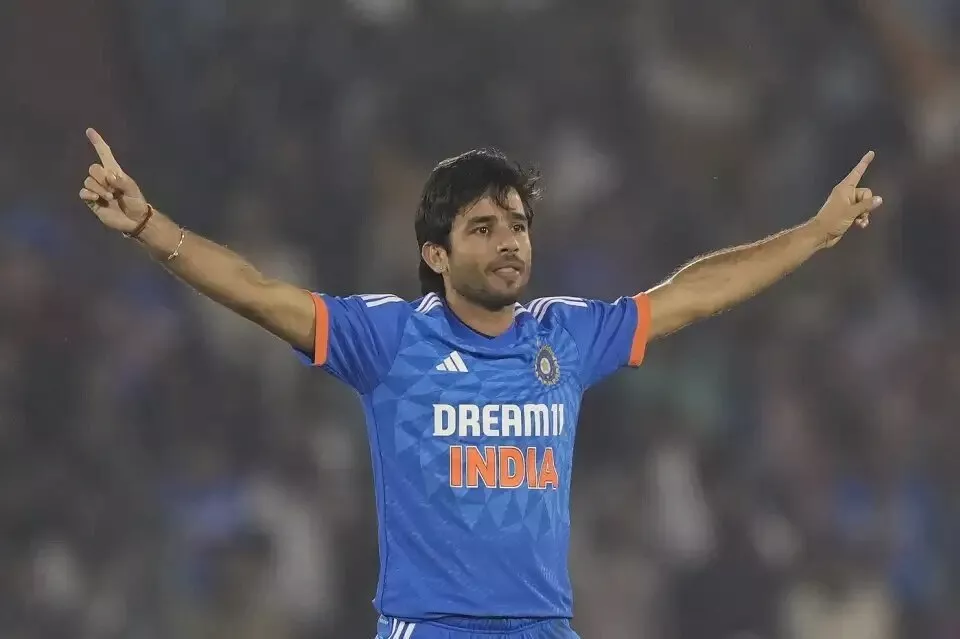
Ravi Bishnoi last featured in a T20I almost a year ago against England in Mumbai. Since then, he has been active in domestic cricket, representing Gujarat in the Syed Mushtaq Ali Trophy and the Vijay Hazare Trophy.
In the Mushtaq Ali Trophy, Bishnoi picked up nine wickets in seven matches, though his economy rate of 8.72 raised a few eyebrows.
His IPL 2025 season with Lucknow Super Giants was also quite uneventful, despite the franchise retaining him at a high price. Bishnoi managed to take just nine wickets in 11 matches and conceded runs at an economy rate of 10.84, which is on the higher side for a frontline spinner.
The selection has now raised many eyebrows as these numbers are not eye-catching. The only reason for the selectors to back Ravi Bishnoi seems to be backing his wicket-taking ability.
Is Bishnoi’s selection the right call?
At this stage, the selection of Bishnoi seems to be a calculated decision. Despite his recent inconsistency, Bishnoi offers something India currently needs – a genuine attacking leg-spinner who is not afraid to flight the ball and go for wickets.
With the T20 World Cup approaching, India needs to test all possible combinations. Bishnoi’s inclusion gives the team management another spin option to evaluate under pressure in the New Zealand series.
Moreover, on Indian pitches, spin will play a crucial role. Bishnoi’s ability to take wickets in the middle overs adds value. With Kuldeep and Varun Chakravarthy already in the squad, the addition of Bishnoi can create a deadly combination.
The five T20Is will be played on January 21 in Nagpur, January 23 in Raipur, January 25 in Guwahati, January 28 in Visakhapatnam, and January 31 in Thiruvananthapuram.
This will be India’s final series before the T20 World Cup 2026, which will begin on February 7. After this somewhat surprising call-up, many fans will have their eyes locked on how Ravi Bishnoi performs against New Zealand.
Why was Ravi Bishnoi selected for the IND vs NZ T20I series?
Bishnoi is picked as a replacement for injured Washington Sundar to strengthen India’s spin attack.
When did Ravi Bishnoi last play a T20I for India?
Ravi Bishnoi last featured in a T20I almost a year ago against England in Mumbai.
How has Bishnoi performed in recent domestic tournaments?
He took 9 wickets in 7 matches in the Syed Mushtaq Ali Trophy with an economy rate of 8.72.
For more updates, follow Khel Now Cricket on Facebook, Twitter, Instagram, Youtube; download the Khel Now Android App or IOS App and join our community on Whatsapp & Telegram.