
3 reasons behind India's poor batting show against Sri Lanka in Tri-Nation A Series
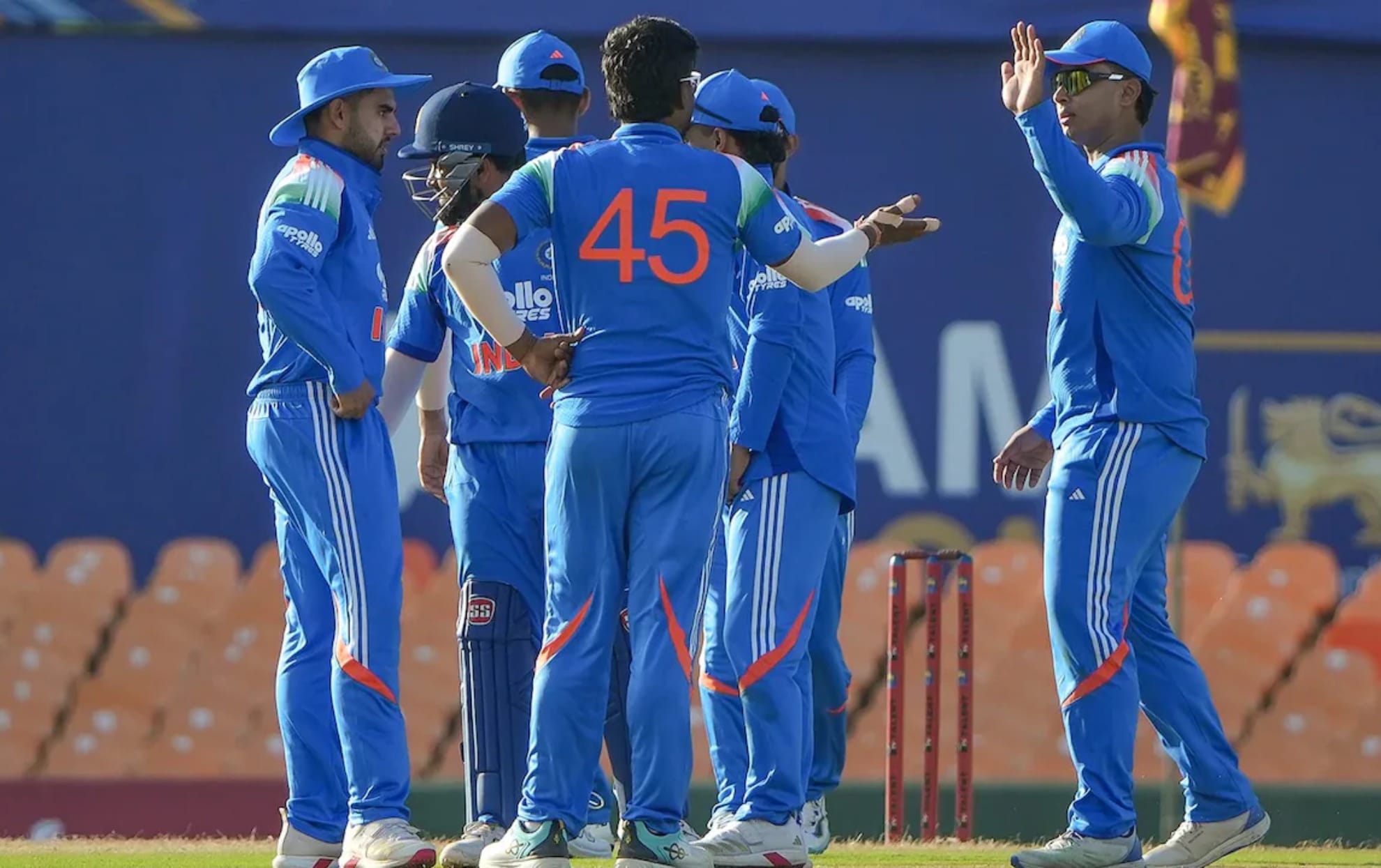
India A scored 265 runs against Sri Lanka A on June 15.
The Tri-Nation A Series is underway in Sri Lanka. It started on June 9 with India, Sri Lanka and Afghanistan’s A teams contesting for the trophy. All matches of the series are being played at the Rangiri Dambulla International Stadium in Sri Lanka.
So far, India have played both teams, but have managed to win only against the hosts. Against Afghanistan, the match was affected by rain, and India lost by 4 runs (by DLS method) despite scoring 349 runs in the first innings.
Ruturaj Gaikwad has been the only player to score more than 200 runs in the series so far, and V Viyaskanth has picked 5 wickets in 3 matches.
The Men in Blue are playing their third match of this series against Sri Lanka on June 15. After winning the toss, the hosts opted to field first. India made two changes to their side, bringing in Nishant Sindhu and Yash Thakur in place of Priyansh Arya and Anshul Kamboj.
India had a rough start with Vaibhav Sooryavanshi and Prabhsimran Singh failing to score big. They went to the dugout after scoring just 21 and 11 runs, respectively. Meanwhile, the leadership duo of Tilak Varma and Ruturaj Gaikwad, who had both scored half-centuries in the past two matches, got out for 23 and 37.
It was only with the assistance of all-rounders Suryansh Shedge and Vipraj Nigam that India managed to reach a defendable total of 265. Shedge scored 72, alongside Vipraj, who scored 51.
On that note, let’s take a look at the three reasons behind India’s poor batting show in the Tri-Nation A Series against Sri Lanka.
Reasons behind India’s poor batting show against Sri Lanka
Catch Every Update, Anytime, Anywhere
Slow pitch
When the two captains walked out for the toss, Sri Lanka won and chose to bowl first. When Tilak Varma was asked what he would have done if he won the toss, he too said he would have opted to bowl first. He also mentioned how 260 would be a decent score on this ground.
Ahead of the toss, the pitch report had suggested the same thing: that the pitch is relatively slower and 260-270 should be a defendable score; and that the spinners will come into play.
India fall to spinners again
Tilak Varma & Co. have struggled against spinners in this encounter. In the previous two matches, they had been dismissed by spin bowling only once each; but when today’s pitch aided the spinners, India lost five wickets.
Even the team’s best batsmen have failed to play effectively against quality spin bowling. Ruturaj Gaikwad, who is considered a good player of spin, failed to capitalise on this.
Lack of strike rotation
Indian batsmen have failed to rotate the strike, especially in the middle overs. The overs 11-40 are crucial in the 50-over format, as they determine how well a team consolidates runs during that phase. Even the skipper of the side, Tilak Varma, has been underwhelming in this regard.
This match against Sri Lanka A was virtually a do-or-die match for India A; however, they still have one more match to go against Afghanistan on June 17.
Who is the captain of India A in the Tri-Nation A Series?
Tilak Varma is leading the side in the Tri-Nation A Series.
For more updates, follow Khel Now Cricket on Facebook, Twitter, Instagram, Youtube; download the Khel Now Android App or IOS App and join our community on Whatsapp & Telegram.