
What is backfoot no-ball rule in cricket? Explained
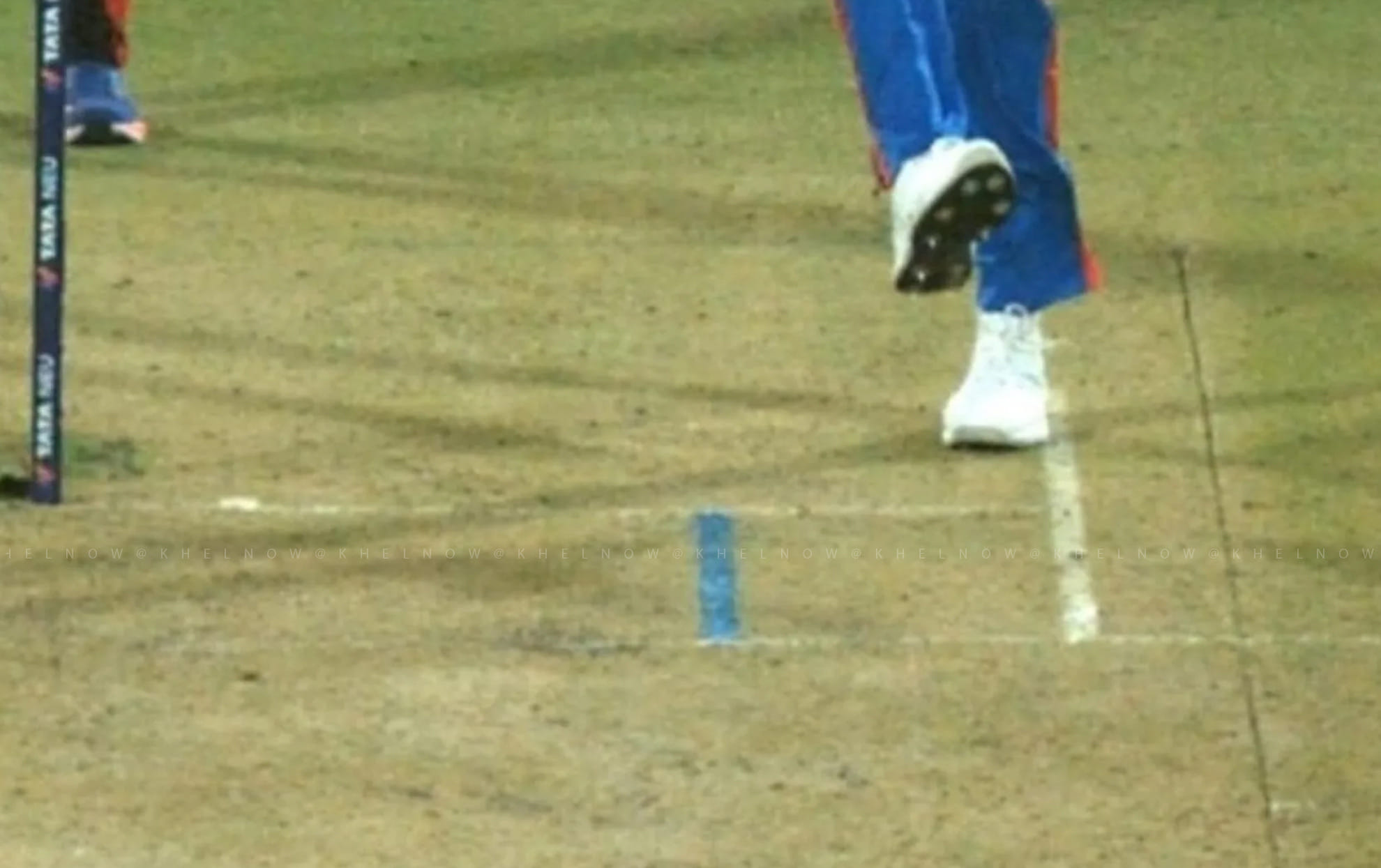
The backfoot no-ball law is one of the rare rule in game of cricket of which not many fans are aware of.
During the MICT vs JSK match in SA20 2025-26, an intriguing moment unfolded that left many fans scratching their heads. Nandre Burger, bowling for JSK, delivered a pacey ball on a back-of-a-length outside off to MICT’s Ryan Rickelton.
Rickelton miscued his big hit towards long-off, where Wiaan Mulder took a safe catch. The celebrations were short-lived, though, as the umpire called it a no-ball. The reason? Burger had cut the side crease with his back foot. JSK continued to fight back, but the incident sparked widespread confusion online and in the stands. “What’s a back-foot no-ball?” became a trending query, highlighting one of cricket’s lesser-known rules.
Catch Every Update, Anytime, Anywhere
What is backfoot no-ball rule in cricket?
This rare infraction isn’t as common as the front-foot no-ball, but it’s crucial for maintaining fairness in the game.
According to the Marylebone Cricket Club (MCC) Laws of Cricket, specifically Law 21.5, for a delivery to be fair, the bowler’s back foot must land within and not touching the return crease in the delivery stride. The return creases are the long white lines running parallel to the pitch on either side of the stumps. If the back foot touches or crosses this line upon landing, it’s a no-ball—regardless of the front foot’s position.
To clarify, this differs starkly from the front-foot rule. For the front foot, part of it must be behind the popping crease (the line perpendicular to the pitch in front of the stumps). As long as some portion is grounded or raised behind that line, it’s legal, even if the rest extends forward.
For a delivery to be fair in respect of the feet, in the delivery stride:
21.5.1 the bowler’s back foot must land within and not touching the return crease appertaining to his/her stated mode of delivery.
21.5.2 the bowler’s front foot must land with some part of the foot, whether grounded or raised
– on the same side of the imaginary line joining the two middle stumps as the return crease described in 21.5.1, and
– behind the popping crease.
But the back foot gets no such leeway; the return crease is a strict boundary. The foot can hover over or outside it in the air, but the landing point must be entirely inside.
This rule prevents bowlers from exploiting extreme angles by stepping too wide during their run-up, which could make umpiring decisions harder and disrupt the batter’s line of sight. Without it, bowlers might deliver from unnatural positions, tilting the game unfairly.
Consequences are the same as other no-balls: one extra run to the batting side, and in case of white-ball cricket, the next delivery is a free hit, where the batter can’t be dismissed except via run-out, obstructing the field, or handling the ball. It’s a harsh penalty, but it underscores cricket’s emphasis on precision.
Previous instances of backfoot no-ball rule
Spotting a back-foot no-ball can be tricky for on-field umpires, as the landing often occurs behind their viewpoint. In high-profile leagues like the Indian Premier League (IPL) or SA20, third umpires use multiple cameras, angles and replays to check.
For instance, in IPL 2025, Mitch Starc faced a similar call during a Super Over against Rajasthan Royals. Bowling around the wicket to Riyan Parag, his left (back) foot grazed the return crease, awarding Delhi Capitals with a free hit.
Similarly, an error surfaced during the decisive fifth Test of Ashes 2025-26 at the SCG when third umpire Kumar Dharmasena failed to spot a clear back-foot no-ball by Beau Webster during Harry Brook’s LBW dismissal on Day 4. Replays showed Webster’s back foot landing outside and touching the return crease, making the delivery illegal under MCC Law 21.5.1.
How does a back-foot no-ball differ from a front-foot no-ball?
A front-foot no-ball occurs if no part of the front foot is behind the popping crease. A back-foot no-ball is stricter—the back foot cannot touch or land outside the return crease at all, to prevent extreme bowling angles.
Why is the back-foot rule important?
It maintains fairness by stopping bowlers from delivering from unnatural, wide positions that could disadvantage the batter or make umpiring harder.
For more updates, follow Khel Now Cricket on Facebook, Twitter, Instagram, Youtube; download the Khel Now Android App or IOS App and join our community on Whatsapp & Telegram.