
Delhi High Court dismisses Anush Agarwalla, Sudipti Hajela's plea against Asian Games selection snub
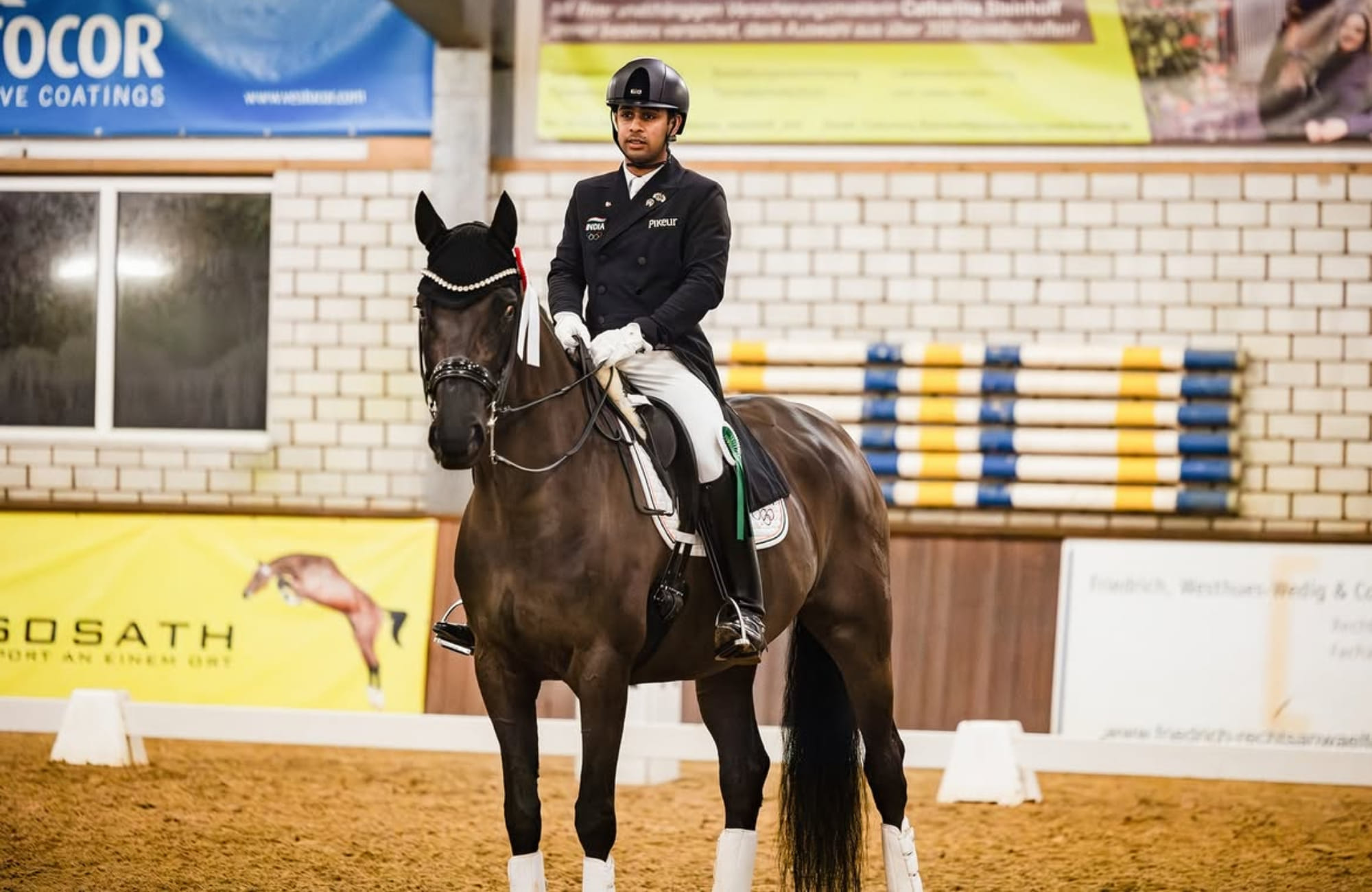
(Courtesy : @anushagarwalla/Instagram)
Anush Agarwalla and Sudipti Hajela were named reserve riders in the Indian squad
Catch Every Update, Anytime, Anywhere
The Delhi High Court has upheld the Equestrian Federation of India’s selection process for the 2026 Asian Games dressage team and dismissed the petition filed by riders Anush Agarwalla and Sudipti Hajela.
Justice Mini Pushkarna emphasized that the selection criteria were fair and that there was no “arbitrariness” or procedural strategy requiring the court’s interference.
The court said it did not defer to expert selection bodies because their decisions were neither arbitrary nor contrary to established rules.
Agarwalla and Hajela had challenged the selection list released on 16 June by EFI’s ad hoc committee for the dressage event at the Asian Games 2026, to be held in Japan.
They were picked as reserve riders, with Agarwalla as the first reserve and Hajela as the second, while four other riders were selected ahead of them.
The court rejected their objections regarding the Minimum Eligibility Requirement (MER) calculation, the interpretation of the selection criteria, the absence of an additional selection trial, and their allegation of bias against the selection committee.
The case arose after India’s dressage team was selected for the Asian Games 2026, to be held in Japan later this year.
Under EFI’s Selection Criteria Version 4.0, horse-rider combinations were picked according to their two best MER performances in the qualifying window, which ran from November 2025 to June this year.
According to the policy, every dressage combination had to finish all three prescribed Small Tour tests: Prix St. Georges, Intermediate 1, and Intermediate 2 freestyle, to get MER.
Riders were then ranked based on their highest cumulative percentage score from the two best valid MER results, provided at least one MER was achieved between 17 April and 15 June this year, as it reflected their current form.
As per the criteria, when the team was selected, individuals who achieved MER combinations were preferred over those who achieved them as part of a team.
Agarwalla argued that his Prix St. George score in Hagen, Germany, should have been preferred over his performance in Lier, Belgium, as it might have improved his ranking and helped him qualify for the top four.
The court found that the tournament in Belgium included all three prescribed tests. It also said the rider should consider only one score and combine it with an improved score from another tournament.
The court also dismissed Agarwalla’s allegation that the riders who were picked, Shruti Vora and Jai Sud, were given special treatment because their scores from two different tournaments were combined.
It found that both riders had participated in events missing one important test and that, under Clause 8(e) of the criteria, riders not living in India could take the missing test at a different tournament in such cases.
Hajela argued that the rankings should have been determined first by the team MERs and only then by the individual MERs.
But the court disagreed and said that, according to clause 8(f), the riders were ranked by the cumulative scores of their two best MERs and did not differentiate between team and individual MERs when calculating comparative merit.
Justice Pushkarna opined that the cumulative scoring system for all three dressage tests followed the Asian Games format and ensured that the riders had prepared for both team and individual medal events.
The court also dismissed the notion that the EFI had picked just six “probables” on 16 June, organized fresh tournaments among them, and then announced the four-member team.
It accepted EFI’s explanation that the six riders, along with the petitioners, were living in different European countries, which made the tournament impractical.
The court observed that clause 15 of the selection criteria permitted the Selection Committee and the ad hoc Executive Committee to assess performances before selecting the team.
Both bodies had met earlier this month, analyzed the merit calculations, accepted the recommendations, and then released the team on 16 June, following the prescribed process.
The court also dismissed Agarwalla’s allegation that the selection committee member, Kapil Modi, was biased in selecting the team. Agarwalla had said there were conflicts due to the ongoing dispute within his family with Modi.
The court noted that Agarwalla was unhappy with Modi’s presence and had sent a WhatsApp message in April this year. He neither sought reconstitution of the committee nor took any legal action before participating in the selection process.
Citing the Supreme Court’s ruling in Manak Lal vs Dr Prem Chand Singhvi (1957), the court held that the committee’s structure was valid and could not be challenged after he failed to secure selection.
After rejecting all the pleas, the court reiterated that its role in sports selection cases is very limited. It also referred to previous cases such as Swastika Ghosh vs Table Tennis Federation of India, Sushil Kumar vs Union of India, Karamjyoti vs Union of India, Manini Kaushik vs National Rifle Association of India, and Yamini Mourya vs Indian Olympic Association.
The court noted that such cases often leave athlete selection to experts. It said the court should intervene only when the decision appears arbitrary or mala fide.
Since the court found no infirmity in EFI’s selection process, it rejected the writ petitions and all pending cases.
What were Anush Agarwalla and Sudipti Hajela’s petitions?
The duo had challenged the team selection made by the Equestrian Federation of India’s (EFI) ad-hoc committee for the Asian Games 2026 in Japan.
In their petitions, they alleged preferential treatment given to some riders, and conflict of interest against selection committee member Kapil Modi.
What did Delhi High Court say in its judgment?
The High Court bench led by Justice Mini Pushkarna hed that the selection criteria has been applied fairly and that there was no arbitrariness, perversity or procedural impropriety that warranted judicial interference.
Are Anush Agarwalla and Sudipti Hajela part of the Indian Equestrian contingent for the 026 Asian Games?
Yes, both have been selected as reserve riders.
For more updates, follow Khel Now on Facebook, Twitter, and Instagram; download the Khel Now Android App or IOS App and join our community on Whatsapp & Telegram