
ISL clubs pay first instalment but warn AIFF, governance cannot remain unilateral
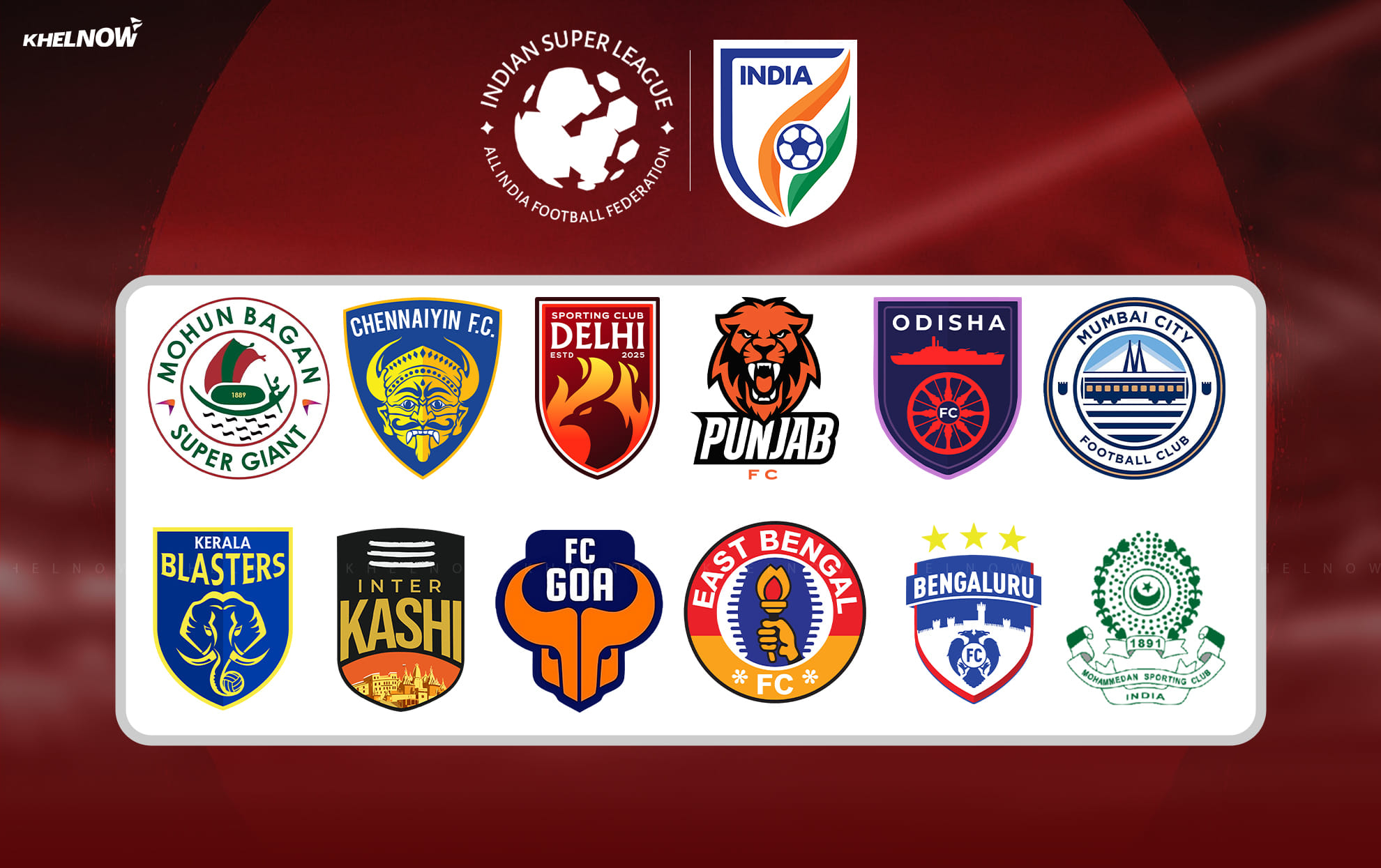
12 Clubs confirm first payment instalment but warn governance cannot remain “100% unilateral” if they fund league operations
The financial standoff around the Indian Super League has taken another turn.
A group of participating ISL clubs have formally written to the All India Football Federation, responding to the Federation’s 26 February notice that set out the financial model and mandatory payment schedule for the 2025–26 season.
While the clubs have confirmed they will pay the first instalment of ₹30 lakh within the stipulated timeline, the letter makes it clear the payment is being made “strictly without prejudice” and does not imply acceptance of the governance structure currently being exercised by the Federation.
The response letter, dated 6 March and signed by representatives of 12 participating clubs, other than NorthEast United and Jamshedpur FC, raises concerns about financial contributions, governance rights, long-term commercial decisions, and sporting integrity.
“AIFF just care about their public image and what the media is saying, rather than thinking about football development,” a club representative said on the latest developments.
Catch Every Update, Anytime, Anywhere
ISL Clubs confirm payment, but reserve rights
At the very beginning of the communication, the clubs indicate that they will make the immediate payment despite their reservations.
The letter states:
“At the outset, and in the larger interests of Indian football and the Federation’s immediate financial requirements, the Clubs confirm that they shall remit the first instalment of INR 30,00,000/- within the stipulated timeline in the interest of ensuring funds remain for the continuity of Indian Football being fully aware of AIFF’s difficult financial situation.”
However, the clubs emphasise that the payment is being made without accepting unilateral governance.
“Such remittance is being made strictly without prejudice to all rights and contentions.”
Clubs question revenue share and financial burden
The Federation’s earlier notice had introduced a mandatory payment schedule and financial model for the season.
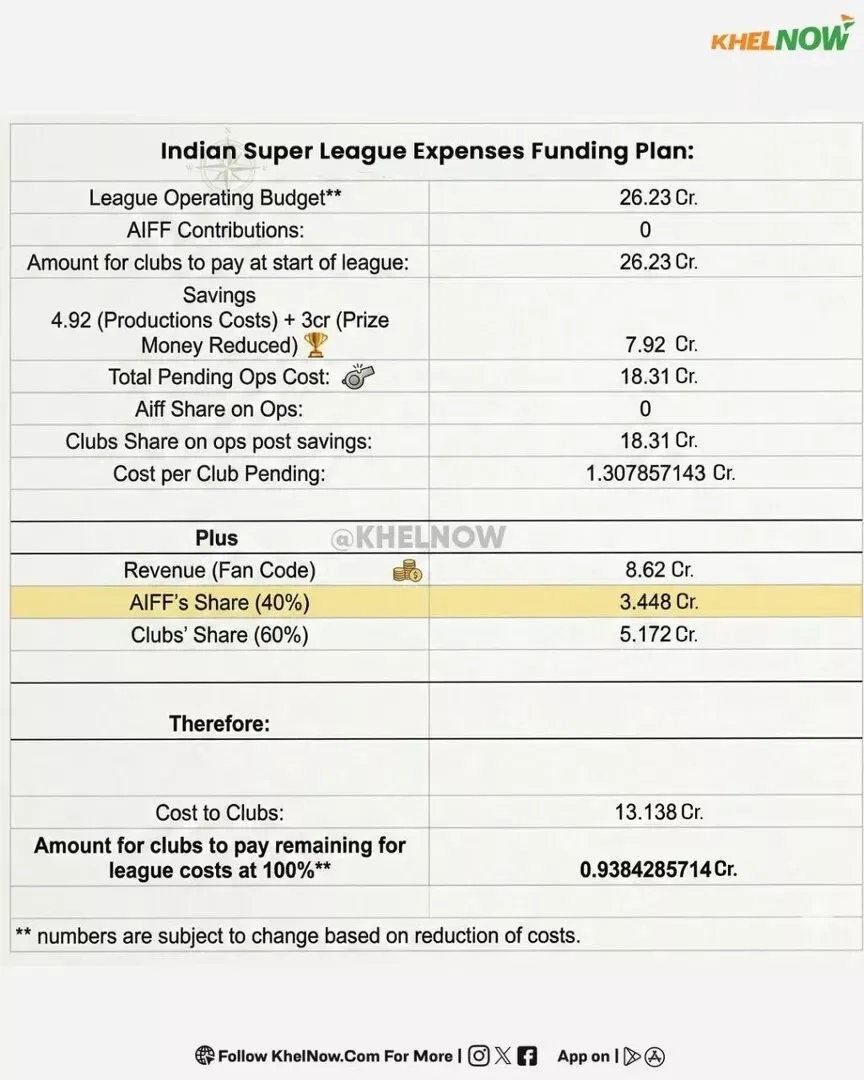
According to the annexed financial model in that notice, the league’s operating budget stands at 26.23 crore with AIFF contributions listed as zero, while operational funding is borne by clubs.
At the same time, central revenue from FanCode is projected at ₹8.62 crore, with AIFF retaining 40 %, approximately ₹3.448 crore.
The clubs highlight this imbalance directly in their response.
“The annexed Financial Model records:
- AIFF Contributions: 0
- AIFF Share on Ops: 0
- Entire operational funding borne by Clubs
Simultaneously, AIFF retains 40% of central revenue (INR 3.448 crores projected).”
They argue that if clubs are carrying the financial exposure, governance cannot remain one-sided.
“If Clubs are bearing 100% of operational exposure and 60% of economic risk, then governance cannot remain 100% unilateral.”
Concerns over long-term commercial tender
One of the strongest objections raised in the letter relates to the publication of a long-term RFQ (Request for Qualification) for the league’s commercial structure.
According to the clubs, the document was issued without consultation.
“No Club:
- Was informed in advance of its publication;
- Was circulated a draft for review;
- Has, to date, been formally provided a copy of the final RFQ;
- Was consulted on evaluation parameters, structure, or long-term commercial framework.”
The letter notes that clubs first learned of the RFQ through the AIFF website.
“Clubs learned of the publication of long term tender through the AIFF website. This is extraordinary.”
Clubs question profit extraction in a difficult season
The response also raises concerns about the season’s financial outcome.
The clubs argue that the league is already operating in difficult circumstances due to reduced commercial revenue.
“Despite this extraordinary context, the Federation stands to earn a surplus in excess of INR 3.4 crores — even after publicly stating before the Hon’ble Sports Minister that it would not ‘make a rupee’ out of the League this year.”
They add that the current environment, including reduced broadcast income and weak sponsorship markets, has placed additional strain on clubs.
Relegation debate raised again
Another issue flagged by the ISL clubs is the possibility of relegation during what they describe as a distorted season.
The letter states:
“This season does not meet the threshold of sporting integrity required to impose relegation.”
Among the factors cited are competitive imbalance, operational uncertainty and financial asymmetry between clubs.
AIFF notice had introduced strict penalties
The original AIFF notice set out strict financial compliance measures for the season.
According to the notice:
“A fine of INR 1,00,000/- (Rupees One Lakh only) per day shall be levied for each day of delay from the due date until actual payment.”
If non-payment continues for seven days, the Federation may issue a notice of disqualification.
“If the default is not remedied within 4 (four) days from the date of such Notice of Disqualification, the concerned Club shall be deemed disqualified from participation in the next season of the ISL, without any further communication.”
A widening governance question
The clubs conclude their letter by reiterating that financial participation must be matched with decision-making involvement.
“If AIFF views the ISL as a purely AIFF league, then AIFF must bear the corresponding financial burden. If AIFF views it as a partnership, then a partnership must exist in both economics and decision-making.”
The letter concludes by stating that the clubs remain open to dialogue, but only under conditions of transparency and shared governance.
For now, the first instalment will be paid.
But the deeper governance debate around the future of the league appears far from settled.
Why did ISL clubs write to AIFF?
The clubs responded to AIFF’s notice regarding the financial model and payment schedule for the ISL 2025–26 season.
Will the clubs pay the required instalment?
Yes. Clubs confirmed they will remit the first ₹30 lakh instalment within the deadline, though they stated the payment is made “without prejudice”.
What are the ISL clubs’ main concerns?
Clubs raised issues about governance rights, revenue distribution, lack of consultation on long-term commercial tenders and the possibility of relegation.
What penalties did AIFF introduce in its notice?
AIFF imposed a ₹1 lakh per day fine for delayed payments and a possible disqualification from the next ISL season for continued non-payment.
How much revenue does AIFF receive from central distribution?
According to the financial model, AIFF receives 40% of FanCode revenue, projected at approximately ₹3.448 crore.
For more updates, follow Khel Now on Facebook, Twitter, Instagram, Youtube; download the Khel Now Android App or IOS App and join our community on Whatsapp & Telegram.