
Indian Football’s First Poster Boy: Remembering Subimal ‘Chuni’ Goswami on his 88th birth anniversary
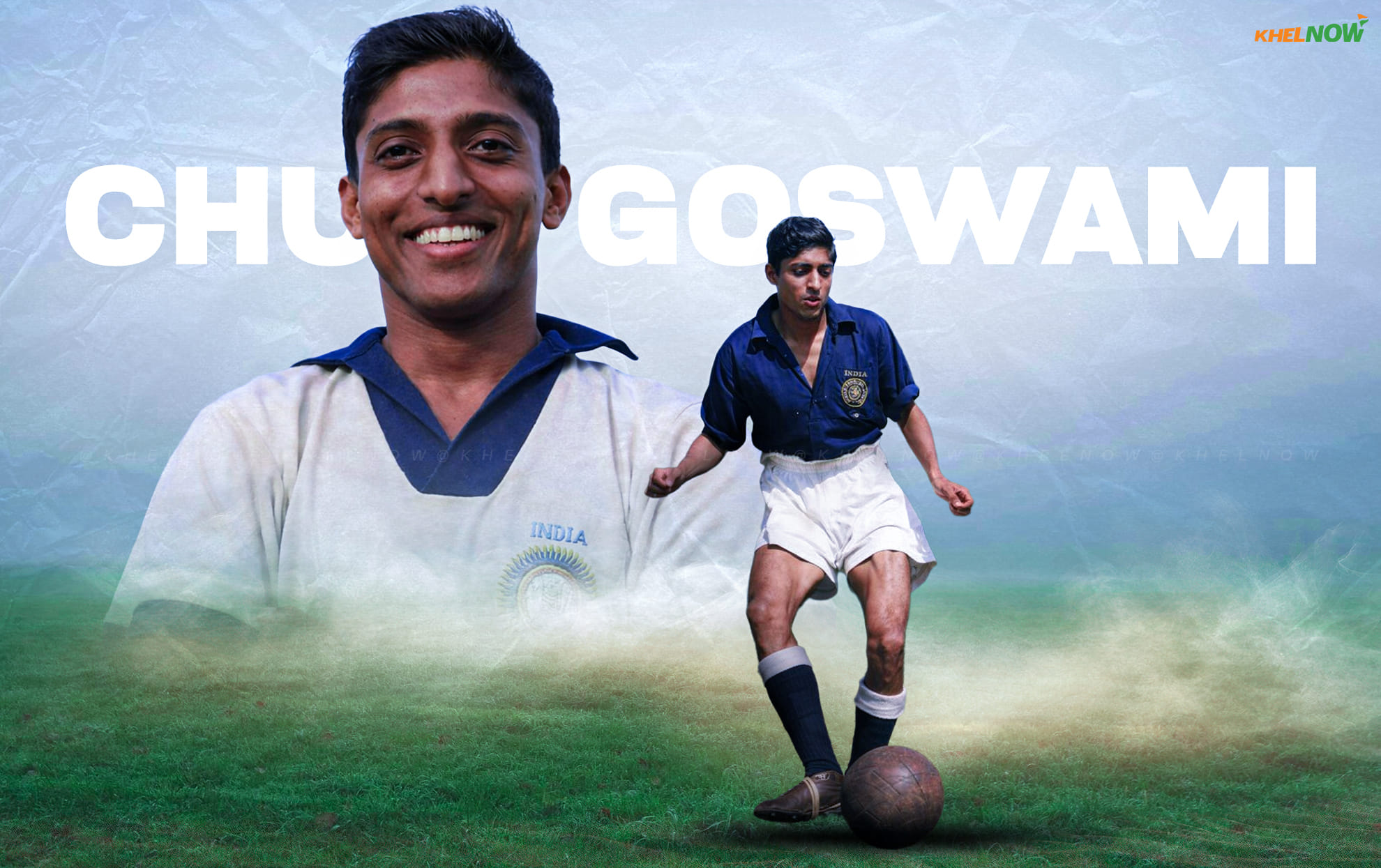
Chuni Goswami led India to the 1962 Asian Games gold medal.
Subimal “Chuni” Goswami’s name still evokes dreams of a golden age in Indian football, an era when the sport on the subcontinent wasn’t just an afterthought but an emblem of pride, passion and possibility. Born on January 15, 1938, in Kishoreganj in undivided Bengal (now in Bangladesh), Goswami transcended his humble origins to become India’s first true and versatile sporting icon.
His footballing artistry, loyalty to Mohun Bagan and leadership of the national team in the 1960s earned him not just trophies but the admiration of a nation that had only recently gained its independence and was seeking heroes to inspire its youth. On his 88th birth anniversary, let us look at his inspirational journey in the sport and beyond.
Catch Every Update, Anytime, Anywhere
From the Maidan to International Arenas
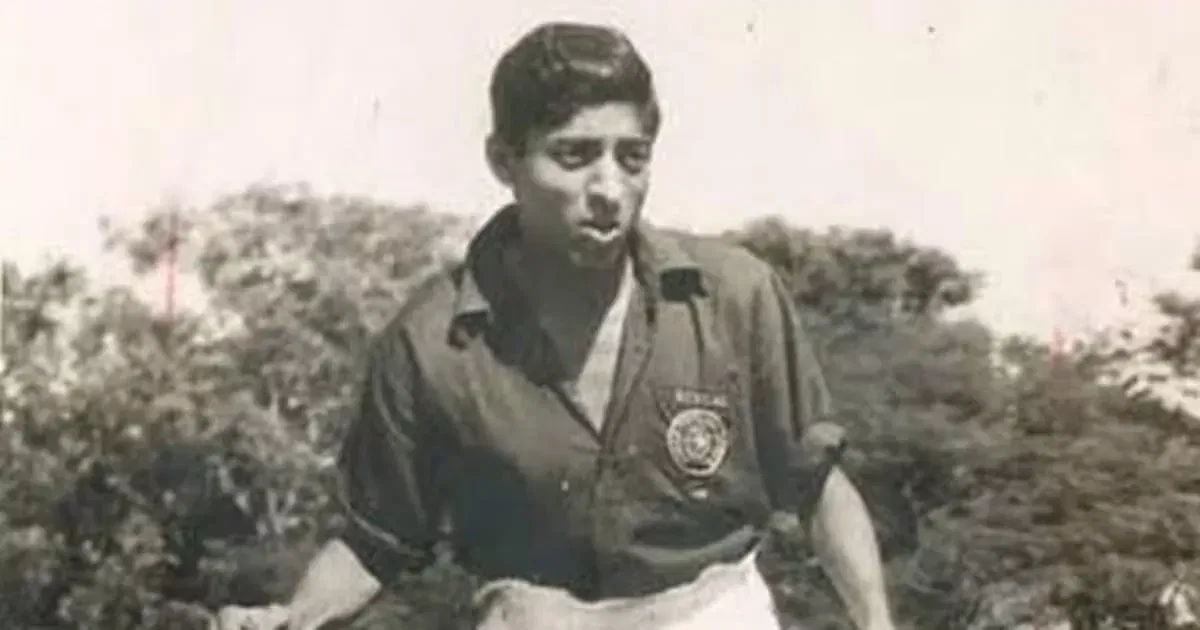
Chuni’s journey into football legend began almost as early as he could walk. He joined the junior ranks of Mohun Bagan in 1946 at the age of eight, after catching the eye of club scouts for his natural athleticism and ball-control skills. He rose through the age groups until he made his senior debut in 1954 at just age 16.
What followed was the start of a 15-year love affair with the green and maroon that saw him score more than 300+ goals for the club and lead them through a domestic trophy renaissance. In an age before multimillion-dollar transfers and globalized leagues, Goswami’s loyalty was rare.
Despite interest from international clubs abroad including English giants Tottenham Hotspur FC, he remained a one-club man throughout his career. On the Calcutta Maidan, his serpentine dribbles and deft finishing became the stuff of legend.
With him at the helm, Mohun Bagan won three successive Durand Cups and four straight Calcutta League titles among many other honours.
ALSO READ: List of foreigners who left ISL due to uncertainty in Indian Football
International breakthrough and the 1962 Asian Games
Goswami’s exploits at club level brought him into the Indian national setup, where he made a palpable impact between 1956 and 1964, featuring in approximately 50 matches and scoring vital goals across major tournaments. One of his earliest tastes of global competition came at the 1960 Rome Olympics, where India held a strong French side to a draw, a performance that remains one of the proud moments in Indian Olympic football history.
However, it was the 1962 Asian Games in Jakarta that sealed Goswami’s status as a national footballing icon. As captain, he marshalled a talented Indian side under the guidance of coach Syed Abdul Rahim to a historic 2-1 victory against South Korea in the final, delivering India its second gold medal in football at the Asian Games.
The gold medal triumph was more than a sporting victory, it was a cultural milestone that captivated a football-mad nation, something India has failed to replicate over the years. In 1964, Goswami again led India to continental glory as they finished runners-up at the AFC Asian Cup in Tel Aviv, the highest finish ever for the country in the competition.
His ability to orchestrate play from inside left was widely admired — he combined sharp vision with fine technical ability, and was known for his control and powerful, accurate shooting.
‘One of a kind’ sporting all-rounder
What truly set Goswami apart from many contemporaries was not just his football talent but his remarkable proficiency in another sport: cricket. While still at the peak of his footballing powers, Goswami debuted in first-class cricket for Bengal in the Ranji Trophy in the early 1960s.
In a nation where cricket would soon surpass all others in popularity, Goswami bridged both worlds with ease. After retiring from football in 1968, he devoted himself fully to cricket, captaining Bengal in the Ranji Trophy and leading the state side to the final in the 1971-72 season.
Over a decade of first-class cricket, he amassed almost 1,600 runs, including a century and took 47 wickets, proving that his sporting genius was not confined to a single discipline.
Recognition and legacy of Chuni Goswami
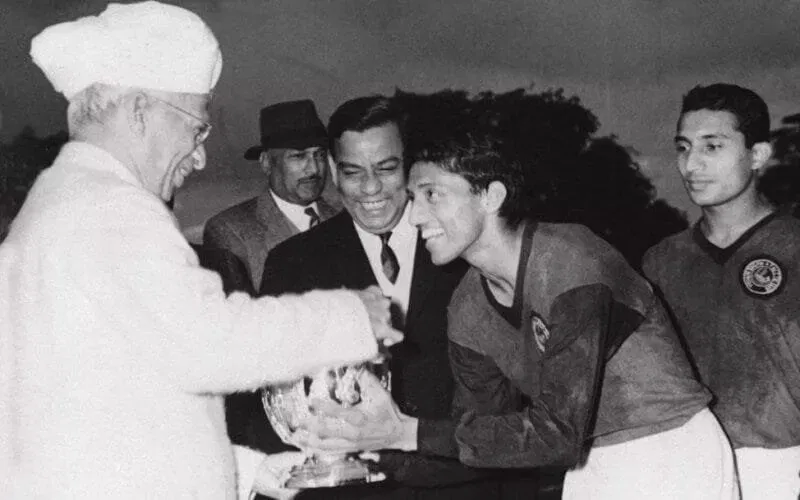
Goswami’s achievements did not go unnoticed in his lifetime. In 1963, he became one of India’s earliest recipients of the Arjuna Award, recognizing his excellence in sport. Two decades later, in 1983, he was honored with the Padma Shri, one of India’s highest civilian awards, for his services to football.
In 2005, Mohun Bagan bestowed upon him the club’s highest honour, the Mohun Bagan Ratna, cementing his status as a club legend. His influence extended beyond the pitch as after his playing days, Goswami continued to nurture young talent, serving as director of the Tata Football Academy, where he helped guide future generations of Indian players.
He was also appointed Sheriff of Kolkata in 2005, a ceremonial post reflecting his stature in Bengal’s cultural as well as sporting life. In 2020, on what would have been his 82nd birthday, India Post issued a commemorative postage stamp in his honor, a testament to his enduring legacy in the nation’s sporting memory.
A revered figure of Indian football
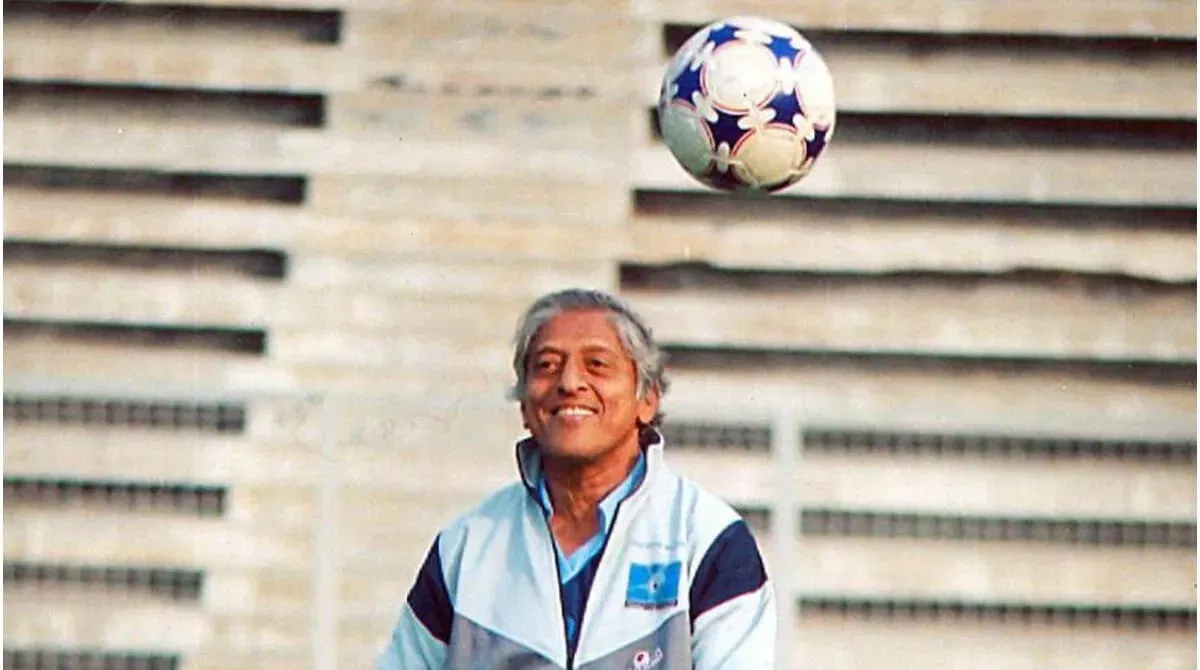
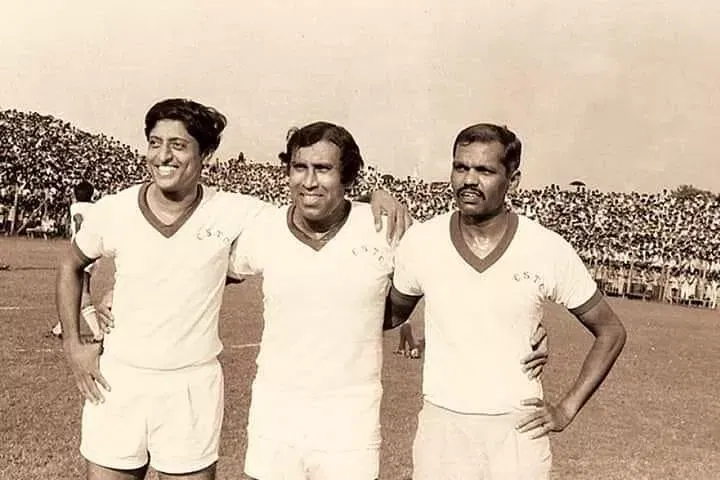
Beyond statistics and medals, Goswami’s presence embodied a period often referred to as the ‘Golden Era’ of Indian football. Alongside contemporaries such as PK Banerjee and Tulsidas Balaram, with whom he formed a fearsome attacking trio, he helped place Indian football on the Asian map at a time when the nation was establishing its identity in the post-colonial world.
Fans and former teammates alike recount how his good looks and graceful play made him not just a sporting figure but something of a cultural star. Stories of admirers that ranged from film icons to political leaders underscore how deeply he resonated with the public imagination. His legacy also offers lessons about loyalty and humility in sport, something that has been not been seen in a long time.
Goswami declined opportunities abroad to remain with Mohun Bagan, and even when lucrative options might have beckoned, he stayed rooted in his club and community. That choice, admired by generations of fans, reflects a sporting ethos that extends beyond trophies to encompass identity, belonging and heart.
The Indian icon passed away in Kolkata on April 30, 2020, after a prolonged illness. He left behind his wife Basanti and son Sudipto, but also an indelible imprint on Indian sport. Today, Goswami is remembered not just as a champion striker or an astute captain, but as Indian football’s first poster boy, a figure whose talent, integrity and passion helped shape the sport’s history in this country.
In an era when Indian football seeks to recapture past glories, his life story remains a reminder of what was possible and what future generations can yet still achieve in the coming years. His legacy lives on in every young player who dreams of glory, every fan who fills a stadium with hope, and every heart that beats for the beautiful game in India.
For more updates, follow Khel Now on Facebook, Twitter, Instagram, Youtube; download the Khel Now Android App or IOS App and join our community on Whatsapp & Telegram.