
Where do we go from here? Germany's World Cup identity crisis reaches breaking point at FIFA World Cup 2026
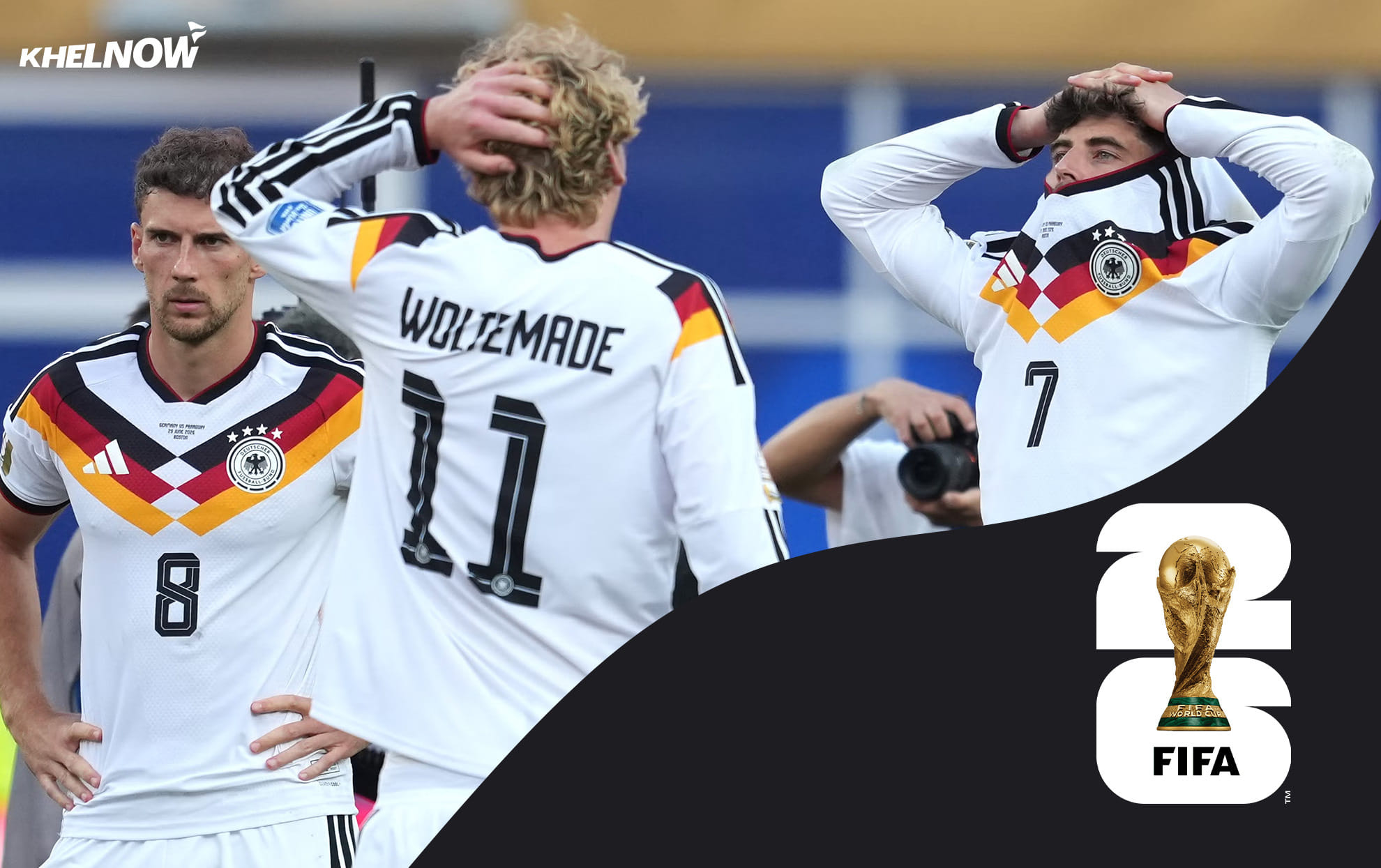
Paraguay prepared for Germany. Germany prepared for exit.
Fans of Germany, take this FIFA World Cup 2026 exit with a pinch of salt. This time, simply going back to the drawing board will not be enough. Here’s why.
Germany’s decline didn’t begin against Paraguay—it has been years in the making. Back-to-back group-stage exits at the 2018 and 2022 World Cups, despite entering as defending champions in 2018, exposed a failure to build on past success. Both the players and the German Football Association struggled to evolve, adapt, and sustain the standards that once made Germany the benchmark of international football.
This very writer was very effusive in the piece (mentioned below) written in 2017 for the Die Mannschaft, highlighting how Germany went to the drawing board after a dismal Euro 2000 and won the World Cup in just 14 years.
“Germany’s depth in quality the envy of the football world.”
Paraguay’s tactical masterclass exposed Germany’s shortcomings
Catch Every Update, Anytime, Anywhere
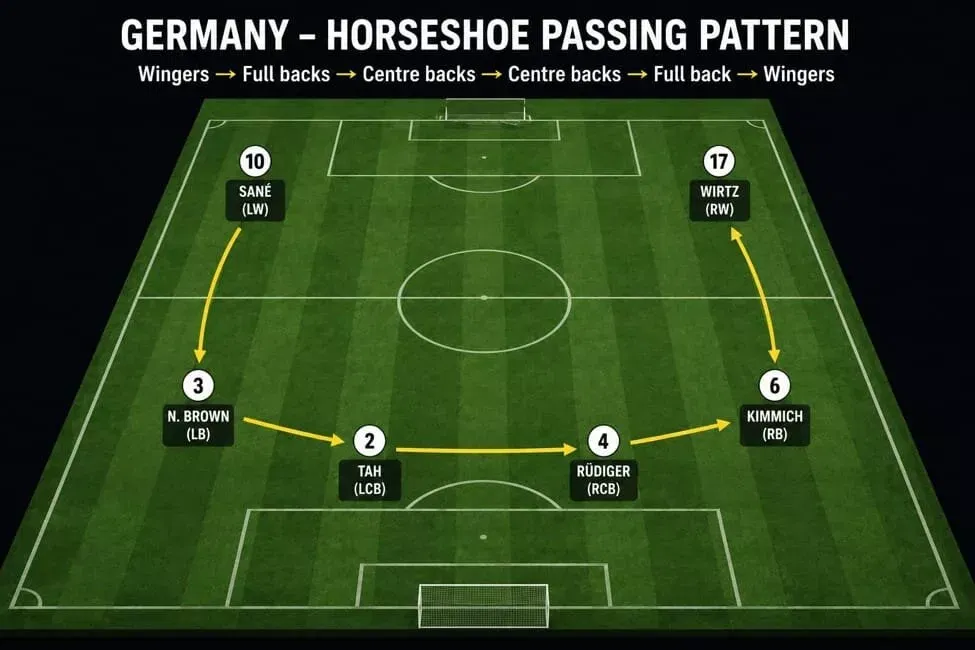
The blueprint was already there. Germany’s vulnerabilities had been laid bare against Ecuador in the group stage, and Paraguay simply replicated that approach while playing to their own strengths. Rather than trying to mimic the possession-heavy styles of Brazil or Argentina, Paraguay doubled down on their historical footballing DNA: Garra Guaraní (tenacity, grit, and defensive discipline).
Under Gustavo Alfaro, they have weaponized being comfortable without the ball. Had Julian Nagelsmann done his homework, he would have known that sterile horseshoe passing alone would never unsettle Gustavo Gómez and his defensive partners. Every aerial delivery was dealt with decisively, while two of the world’s brightest attacking talents, Jamal Musiala and Florian Wirtz, were consistently denied the chance to receive the ball on the half-turn and attack the goal.
Paraguay came to the tournament prepared. They had beaten both Brazil and Argentina during the World Cup qualifiers, no mean feat for a nation that isn’t star-studded by any means. The players started the game with the right plan and suffocated Germany for central space. Jamal Musiala, inarguably Germany’s best dribbler, was on the bench, and their plan to create central overloads failed massively.
A look at the mental aspect of the game is also crucial. Jonathan Tah, Kai Havertz and Nick Woltemade missed their penalties.
For Geir Jordet, professor of football and psychology at the Norwegian School of Sport Sciences and author of Pressure: Lessons from the Psychology of the Penalty Shoot-Out, penalty shootouts are among football’s ultimate tests of mental strength and preparation.
“The best penalty takers are specialists, who have worked relentlessly for years to perfect their kicks. This skill always has a technical component – how to hit the ball to get it to where you want it to go,” he told Reuters shortly before the Germans were dumped out of the tournament.
From the first whistle, Paraguay’s objective was clear. They wanted to drag the game into the latter stages, trusting that Germany’s young attacking unit would grow increasingly impatient as chances failed to materialise.
Germany, in contrast, kept waiting for Paraguay to abandon their compact shape and press higher. That moment never came. Their inability to manipulate space or force defensive rotations was unworthy of a four-time world champion.
Germany need a clear footballing identity, not another rebuild
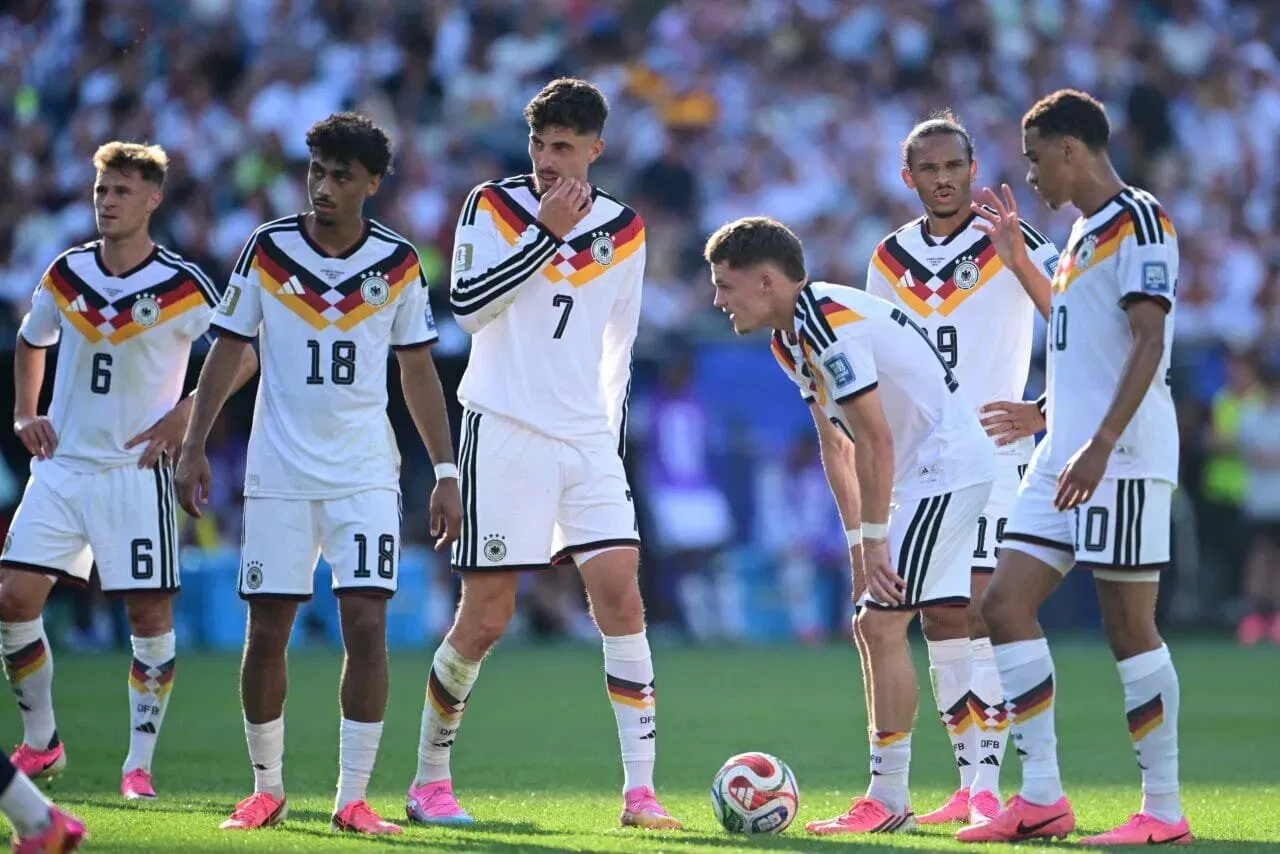
The German language is famously nuanced, with words that capture emotions few other languages can express. The same cannot be said of German football. While the identity of its defence has remained remarkably consistent, built around physically dominant centre-backs, its attacking philosophy has lurched from one idea to another. That inconsistency stems from a footballing structure that is heavily top-down, one that has lacked clarity and conviction at the very top, beginning with the national team.
For nearly two decades, Germany relied on the dependable 4-2-3-1 as the foundation of their identity. Julian Nagelsmann may possess innovative attacking ideas and well-rehearsed patterns, but this defeat once again highlighted the absence of a convincing Plan B. When their preferred approach was neutralised, Germany struggled to adapt.
“Wie geht es jetzt weiter?”
Where do we go from here?
If the German Football Association is serious about rebuilding, it should turn to Hansi Flick and give him the time to shape the project. The football he has developed at Barcelona is not only exciting but consistently effective. More importantly, it is fluid, adaptable, and far less predictable.
Germany’s build-up has become too structured and too easy to prepare for. Opponents can study it, identify recurring patterns, and devise effective countermeasures. What Germany need now is greater unpredictability, and that begins with the footballing vision at the top. Hansi Flick, not Thomas Tuchel, is best equipped to create that identity, something Germany have never truly possessed. They have the setup; all they need is the direction.
While discipline and practice raise passing percentages, they rarely improve a team’s 1v1 ability or unpredictability. Legend Thomas Müller recently said:
“In Germany, we don’t believe too much in superstars. From an early age, we are taught to play as a team, not to shine alone.”
Maybe it is time Germany creates superstars. Maybe it is time a German player wins a Ballon d’Or. Maybe it is time Germany rejigs its metronomical style.

To put it into perspective, Germany’s decline is not the result of a shortage of talent. Jamal Musiala, Florian Wirtz, Aleksandar Pavlović and several others represent one of the strongest young cores in world football. The problem is that the collective has failed to elevate the individual. They do not have that one magical outlet—someone you simply give the ball to and expect something extraordinary. For far too long, Germany have been a team with outstanding players but an inconsistent and, quite frankly, predictable footballing identity.
The path back to the summit does not require another overhaul. It requires conviction. Germany need a long-term footballing philosophy that extends beyond one tournament cycle or one head coach. They must embrace tactical flexibility without sacrificing their traditional strengths of discipline, intensity and collective organisation. Most importantly, they need the patience to see that vision through.
International football rewards continuity as much as innovation. Germany already possess the infrastructure, the talent pipeline and the footballing culture. What they have lacked is a clear direction—one that blends their discipline and meticulous preparation with creativity and flair. Once those pieces align, there is little reason they cannot reclaim their place among the world’s footballing superpowers.
However, one thing is certain:
Sadly, Germany’s depth in quality is no longer the envy of the football world.
For more updates, follow Khel Now on Facebook, Twitter, Instagram, Youtube; download the Khel Now Android App or IOS App and join our community on Whatsapp & Telegram.