
Norway end 28-year FIFA World Cup exile as Haaland and Odegaard lead golden generation revival
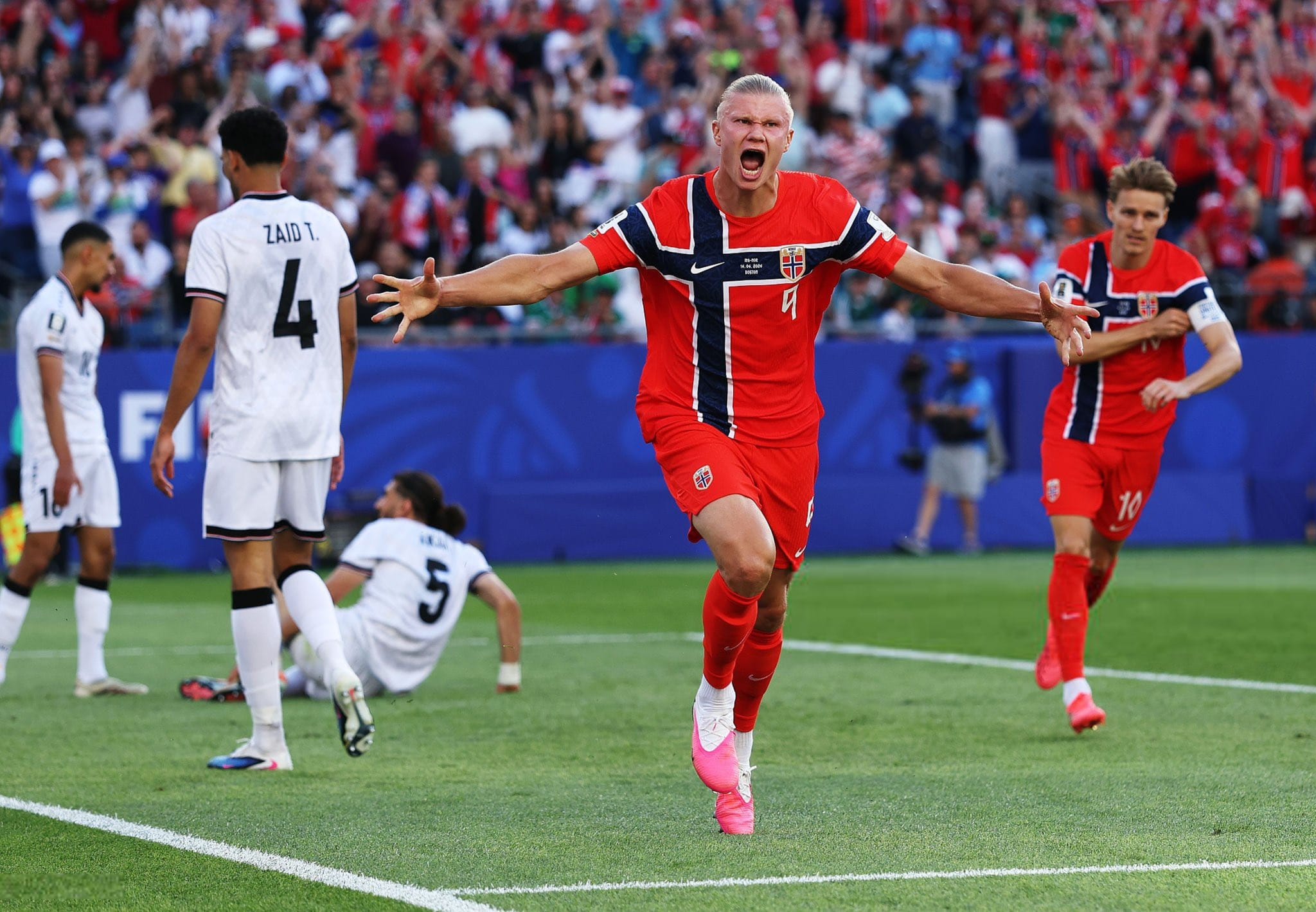
(Courtesy : Getty)
The Vikings will face Côte d’Ivoire in the Round of 32
The 2026 FIFA World Cup has seen some teams punch above their weight. DR Congo held Portugal in a sensational 1-1 draw. Meanwhile, Cape Verde managed to get a goalless draw from Spain. But including Norway’s performance in that list will be an injustice to the quality of their players.
There was a time when simply naming Norway in the same breath as football’s elite invited raised eyebrows.
They were a solid team in the 1990s but faded into obscurity, missing one major tournament after another. Then came two prodigies which raised expectations.
One was a boy from Drammen, who initially caught everyone’s attention at Real Madrid, and then became the heartbeat of Arsenal’s midfield. The other was a goal-scoring machine who had been breaking countless records put in front of him.
Martin Odegaard and Erling Haaland were hailed as the faces of Norway’s long-awaited golden generation. They were expected to drag the Scandinavian country back to football’s biggest stage.
Instead, they initially became symbols of unfulfilled promises.
Irony can be painful in football
Catch Every Update, Anytime, Anywhere
It looked like they would never be able to return to their past glory, as they missed out on qualifying for the UEFA Euros in 2020 and 2024 and were absent from the 2022 World Cup. Despite having arguably the world’s most prolific striker and one of Europe’s finest midfielders, Norway kept falling short when it mattered most.
The criticism followed, and it looked like the golden generation label came a little too early. Fans wondered how a team with Haaland could fail to qualify for major tournaments.
Why couldn’t Odegaard inspire his country the way he does for Arsenal? Was this a golden generation which would flop big time?
The irony was painful. Norway had not participated in a World Cup since 1998. Nearly three decades had passed, and an entire generation of supporters was growing impatient. The pressure weighed heavily on everyone.
The turning point
But head coach Stale Solbakken had other plans. International football can’t be reliant on individual brilliance. Lionel Messi would not have clinched the title in Qatar if Argentina didn’t play like a team. Building a successful national team needs time, continuity and squad depth.
Solbakken succeeded in doing that, building a team not just reliant on Haaland or Odegaard, but also having other players who could step up when needed. It wasn’t just Haaland and Odegaard who contributed to the qualification; even the likes of Antonio Nusa, Alexander Sorloth, Sander Berge, Kristoffer Ajer and Julian Ryerson stepped up, becoming key figures within the national team setup.
Norway qualified for the 2026 World Cup by winning UEFA Qualifying Group I, with an undefeated record of 8 wins. It saw them secure automatic qualification directly for the tournament, co-hosted by the US, Canada and Mexico. They also finished six points ahead of four-time World Cup winners Italy, whom they thrashed 4-1 in their final group match.
Their qualification campaign was defined by a dominant watertight defence and free-flowing attacking football. Haaland topped the European qualification goalscoring chart with 16 goals.
Therefore, the ongoing 2026 World Cup is not just another tournament for them. It represents an opportunity to bury years of frustration.
Placed in Group I with France, Senegal, and Iraq, Norway entered the competition as an underdog. France were the overwhelming favourites to top the group. Meanwhile, Senegal had tournament experience and physicality. Despite boasting two of football’s biggest superstars, there were question marks on how Norway would cope in Group I.
Could they translate potential into results?
Campaign opener vs Iraq
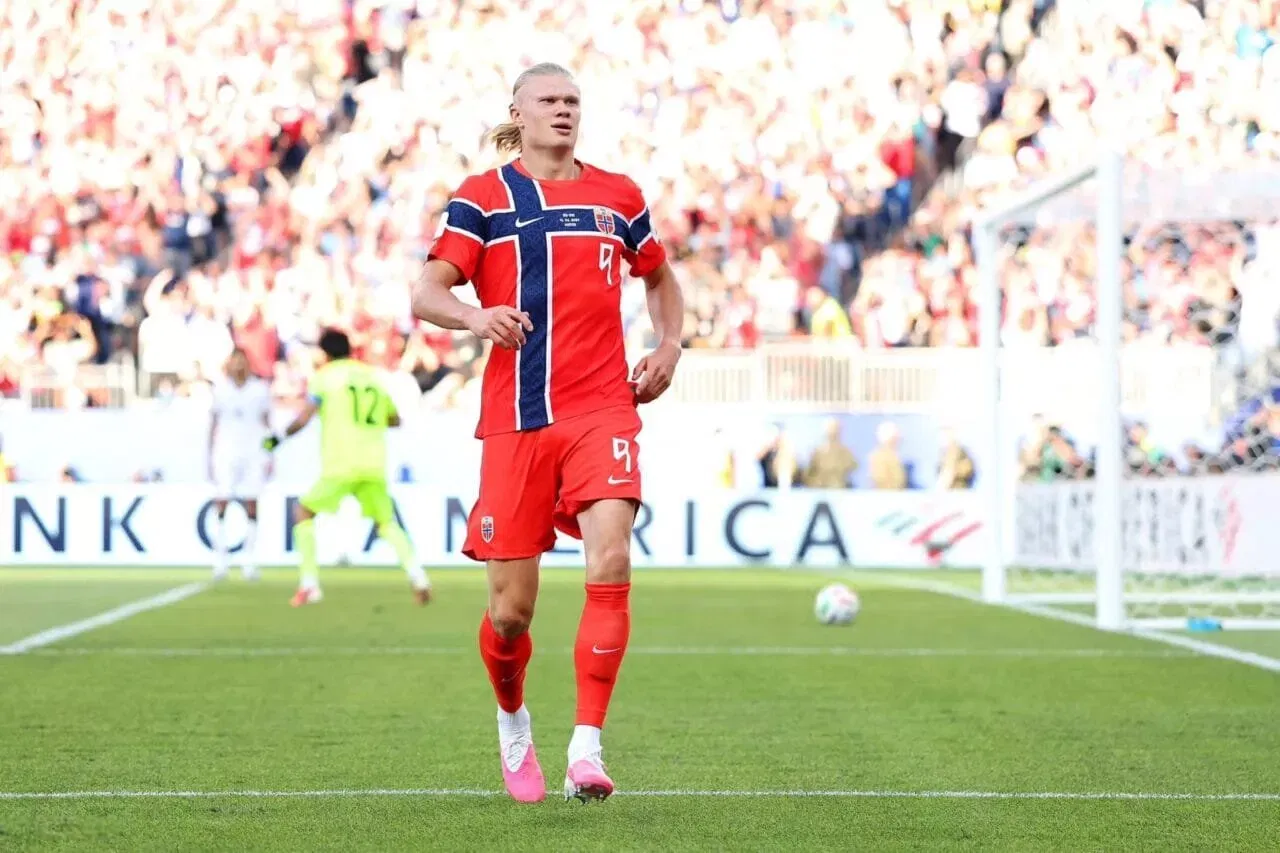
Their campaign opener against Iraq provided the perfect response to the question. A dominant 4-1 victory showed they easily handle the burden of expectations. Haaland made his long-awaited World Cup debut with two goals, justifying the hype surrounding him.
Meanwhile, Odegaard orchestrated and dictated the tempo from midfield, finding spaces between Iraq’s defensive lines. They pressed aggressively and moved the ball with confidence. What was more impressive was that they looked like a cohesive unit, rather than a squad of talented individuals.
In the past few years, fans felt that Norway were far too reliant on Odegaard and Haaland. But it looks like they have learned from that and are now performing as a collective unit. Their full-backs pushed high. The midfield kept control. Meanwhile, Nusa was shining on the left flank, and Sorloth’s physical presence created room for Haaland to exploit. They attacked with purpose and defended with discipline.
But Solbakken didn’t get carried away as the real examination awaited. Opening wins should never be taken seriously in tournament football. A team might get a win in their opener, and then could face a downward spiral after that.
Senegal test
Next up was Senegal. Unlike Iraq, the African team possessed athleticism, defensive organisation, world-class attackers and tournament experience. The Senegal team had reached the knockout stages in Qatar four years earlier. If Iraq had tested Norway’s attacking quality, facing Senegal would be about their mentality.
The Iraq victory saw them overcome a psychological barrier. The Senegal game would determine whether they were ready to navigate an entire tournament. Sadio Mane’s side posed a serious challenge, and they responded in style in an entertaining 3-2 victory. It wasn’t just about securing three points; it also proved that they were no longer haunted by the past. The previous generation folded under pressure, but the current one refused!
Against Senegal, Odegaard once again dictated play, and Haaland’s movement constantly stretched their backline. Even when the match turned chaotic, Norway stuck to their strategy rather than abandoning it, and Haaland took his tournament tally to four goals with a brace.
For fans, the temptation has always been to reduce Norway to a two-man story: Haaland and Odegaard. Everything else is secondary. But the reality is different. Sorloth and Nusa have become invaluable up front. The midfield have shown far greater balance, and their backline has been well-organised, rather than a fragile unit.
It is a perfect example of football rarely rewarding individual brilliance in tournaments. Norway appears to have realised that, and that is why this World Cup feels different. Haaland will obviously dominate headlines, but reducing their campaign to one or two extraordinary players makes us miss the bigger picture. This World Cup has become a redemption story of an entire generation of players.
Despite the loss against France, they reached the Round of 32
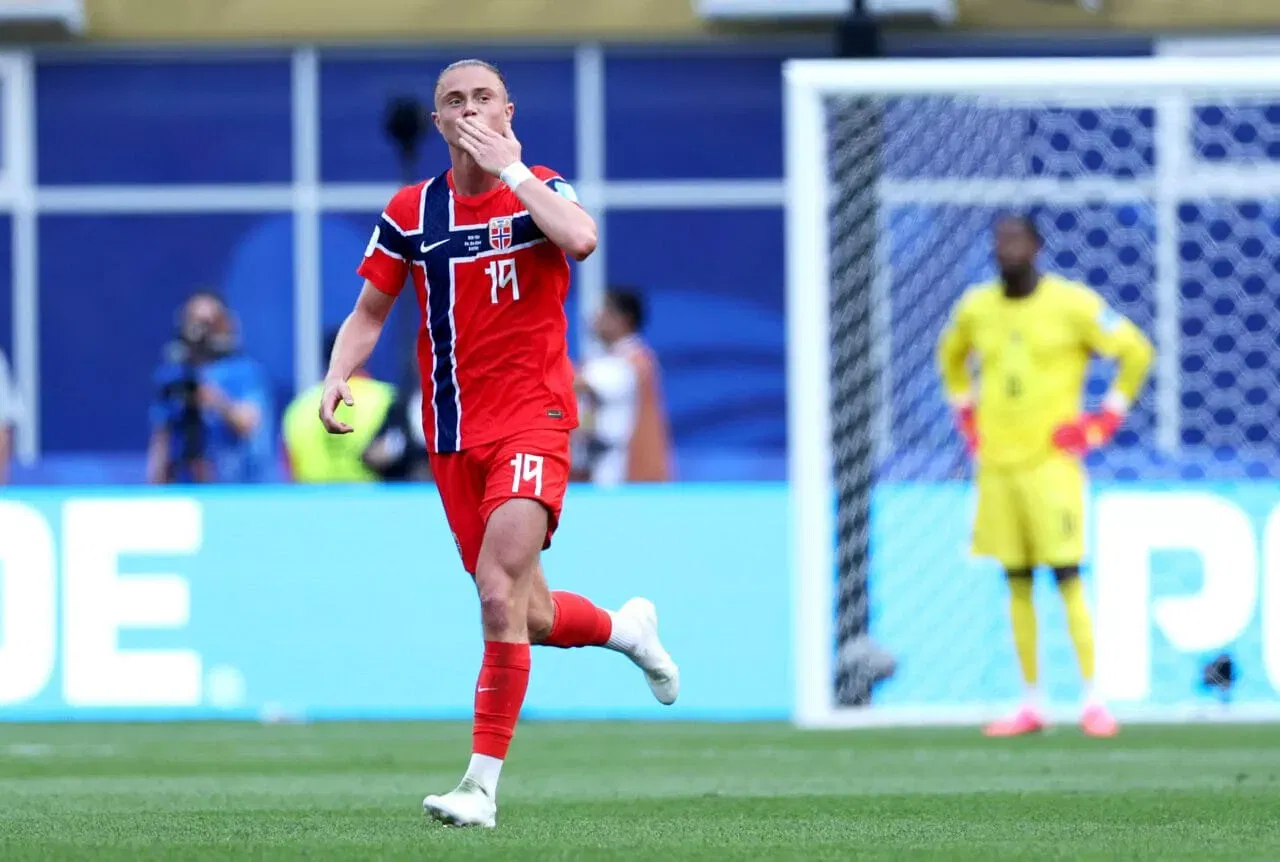
In the past few years, it felt the ‘golden generation’ label was unjustified, as they failed to qualify for major tournaments. The phrase carried equal measures of expectation, frustration, and disappointment. But now it represents something else, hope for an entire country.
4-1 thrashing by France is not the end, Norway has earned the right to dream
Their biggest test in the group stage was supposed to be their final fixture against France, and it was also expected to be a showdown between two of the world’s biggest football strikers: Haaland and Mbappe. But Solbakken had other plans, as finishing second in Group I would mean facing the Ivory Coast in the Round of 32. Meanwhile, the opponents for the Group I toppers haven’t been confirmed yet. The Norwegian manager made 10 changes to his playing XI, including benching Haaland, Odegaard, Nusa, Ryerson, and Sorloth.
For the uninformed section of fans, this might look like poor management as Ousmane Dembele hammered a first-half hat-trick, destroying Norway’s defence with ease.
Meanwhile, Desire Doue scored another goal in the second-half added time as France ended up clinching a 4-1 victory to top Group I.
But it could turn out to be the right decision as the likes of Haaland and Odegaard remained on the bench and got proper rest as Norway finished second in Group I. They face the Ivory Coast on June 30, and Solbakken’s decision could be pivotal in how this campaign progresses.
Facing the Ivory Coast won’t be easy; it will be a tough challenge. But losing to France doesn’t mean that Norway aren’t ready for the challenge from the AFCON side.
We also need to realise that Norway has earned the right to dream. It is not because of Haaland or Odegaard. It is because they resemble a complete tournament team.
There is a calmness in the setup that was absent in the past. There is an understanding that success at a World Cup isn’t about individual brilliance. It is about controlling momentum and surviving adversity, which is only possible through a collective performance.
Norway waited 28 years to return to football’s grandest stage. They are through to the knockout stage, which was the first objective for Solbakken, and now history awaits them.
How did Norway qualify for the 2026 FIFA World Cup?
Norway qualified by winning their UEFA qualifying group with an unbeaten record, securing automatic qualification.
Who are Norway’s key players at the 2026 World Cup?
Erling Haaland, Martin Odegaard, Antonio Nusa, Alexander Sorloth, and Sander Berge have been among Norway’s standout performers.
Who will Norway face in the Round of 32?
Norway will take on Ivory Coast in the Round of 32.
For more updates, follow Khel Now on Facebook, Twitter, Instagram, Youtube; download the Khel Now Android App or IOS App and join our community on Whatsapp & Telegram.