
Inside Sentosa Golf Club: Why The Serapong remains Asia’s ultimate championship test
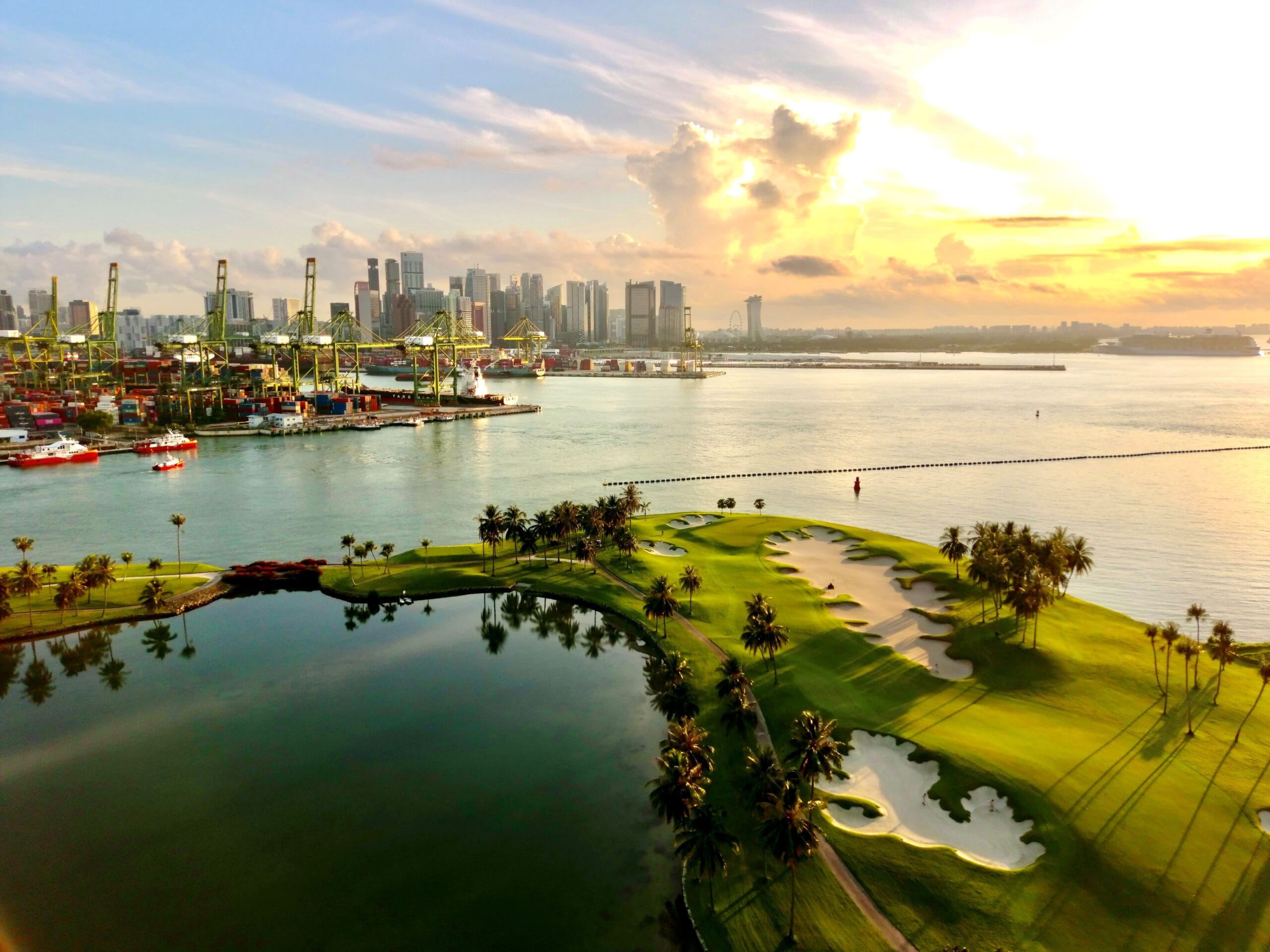
(Courtesy : Sentosa Golf Club)
From Dragon’s Tail to tournament-ready greens, Sentosa continues to set the global benchmark
Catch Every Update, Anytime, Anywhere
At first glance, Sentosa Golf Club looks exactly how a world-class venue should — pristine fairways, sharp bunkering and greens that barely show a flaw.
But that impression doesn’t last very long. Spend a few holes on The Serapong and it becomes clear this place isn’t really about appearances. It’s about how it holds up when the pressure starts to build.
A course built to host, not just impress
Sentosa Golf Club, which opened in 1974, has hosted 15 editions of the Singapore Open and continues to stage elite events such as LIV Golf Singapore and the HSBC Women’s Championship, often within a short span of each other.
That kind of schedule doesn’t just need preparation; it demands consistency, almost like a system that never switches off. The club currently has two courses, the Serapong Course and the Tanjong Course.
Andrew “Andy” Johnston, who has been associated with the club for close to two decades and now leads agronomy and course design, explained how that works in practice.
“With three championships in a short window, it takes a coordinated effort. Our focus is on doing the basics well every day and delivering tournament-ready conditions 365 days a year.”
Internally, that idea has a simple name — “Tournament 365.” For Johnston’s team of over 80 people, it isn’t a slogan. It’s the standard they work to every single day.
The Serapong: design shaped by its surroundings
The Serapong’s identity comes from the land it sits on. Originally opened in 1982 and designed by Ron Fream, it was renovated in 2005, not to redesign everything, but to build around what was already there.
“Renovating The Serapong was about keeping its original character while creating a new test built around Sentosa’s natural features,” Johnston said.
That approach is most visible across holes 4 to 7 — better known as the Dragon Tail. At the centre of it all sits the sixth hole, which features the Dragon’s Tooth.
“The waterline and the volcanic rock, particularly the Dragon’s Tooth, are at the heart of it,” he added.
It’s one of those features players remember, not just because it looks striking, but because it forces you to make a decision.
A complete test, not a partial one
For players, Serapong doesn’t allow you to rely on one strength. You can’t just drive well or putt well and get away with it.
Gaganjeet Bhullar summed it up in simple terms:
“You’ve got to be mentally strong. Everything has to be spot on.”
And that’s where the course starts to separate players. Miss a fairway, and you’re immediately under pressure. Miss a green, it doesn’t get easier. Over four rounds, those small moments begin to add up.
The benchmark players measure themselves against
Shiv Kapur didn’t hesitate when asked about The Serapong.
“This is the best golf course in Asia, hands down. You can’t fault the conditions, it’s absolutely perfect.”
That view isn’t unique.
Lee Westwood has described the greens as among the best he has seen anywhere, while Bryson DeChambeau pointed to their pace.
“Some of the fastest greens I’ve ever seen in my life,” DeChambeau said.
It’s that consistency, the pace, the roll, the predictability, that players keep coming back to.

Consistency is where the real pressure lies
Getting a course ready for one tournament is hard enough. Doing it again within a few weeks, and making sure nothing really changes, is where Sentosa begins to stand apart.
The weather in Singapore doesn’t make it easy either. Heat, wind and sudden rain can shift conditions quickly. Add multiple events into the calendar, and there isn’t much room for error.
Johnston is aware of that reality.
“When players return so soon… there’s no hiding whether we’ve maintained the same standards.”
There isn’t really a reset button here. One tournament rolls into the next, and the expectation stays exactly the same.
The work behind the surface
What looks effortless from the outside is built on detail.
- 350 km of fairway mowing during tournament week
- 600 miles walked by greenkeeping teams
- 22 greens prepared daily to speeds of 13 on the Stimpmeter
- 105 bunkers maintained and edged every day
This isn’t just for presentation. It’s about making sure the course plays the same way across all four days, fair, consistent and predictable.
Related: ‘I could have been disqualified’- Jeev Milkha Singh relives dramatic 2008 Singapore Open win
A course that rewards discipline
For Sergio García, who won here in 2018, the challenge is straightforward to explain, even if it’s not easy to execute.
“If you play well, you can score, but you have to be consistent throughout the whole round.”
That’s really what defines The Serapong. It doesn’t demand perfection on every shot, but it doesn’t let you switch off either.
More than rankings
Sentosa Golf Club’s list of accolades is long, including being named the World’s Best Golf Course and Asia’s Best Golf Course, as well as consistent rankings among the world’s top venues. But internally, that isn’t what drives the place.
“What you see here is more than a golf course; it’s the result of a team, a clear vision, and a commitment to delivering world-class experiences,” Johnston said.
That idea runs through everything, from how the greens are prepared to how the entire operation functions.
Why Sentosa stands apart
There are plenty of great golf courses that can host a big tournament. Not many can do it again, a few weeks later, and still look and play exactly the same.
Sentosa does.
At Sentosa, the aim isn’t to peak for one week and then reset. The expectation is simpler than that, keep the standard the same, no matter the tournament, the players or the conditions.
Why is Sentosa Golf Club considered one of the best in the world?
Due to its ability to maintain tournament-level conditions year-round and host multiple elite events consistently.
What makes The Serapong Course unique?
Its design uses natural features like the Dragon stretch and offers consistently fast, true greens.
What challenges do players face at Serapong?
It requires complete performance, from tee to green, with no room for inconsistency.
How many major events does Sentosa host?
It regularly hosts the Singapore Open, LIV Golf Singapore and HSBC Women’s Champions.