
100 years of Indian Hockey: Legendary M.M. Somaya looks back on the glory days and future
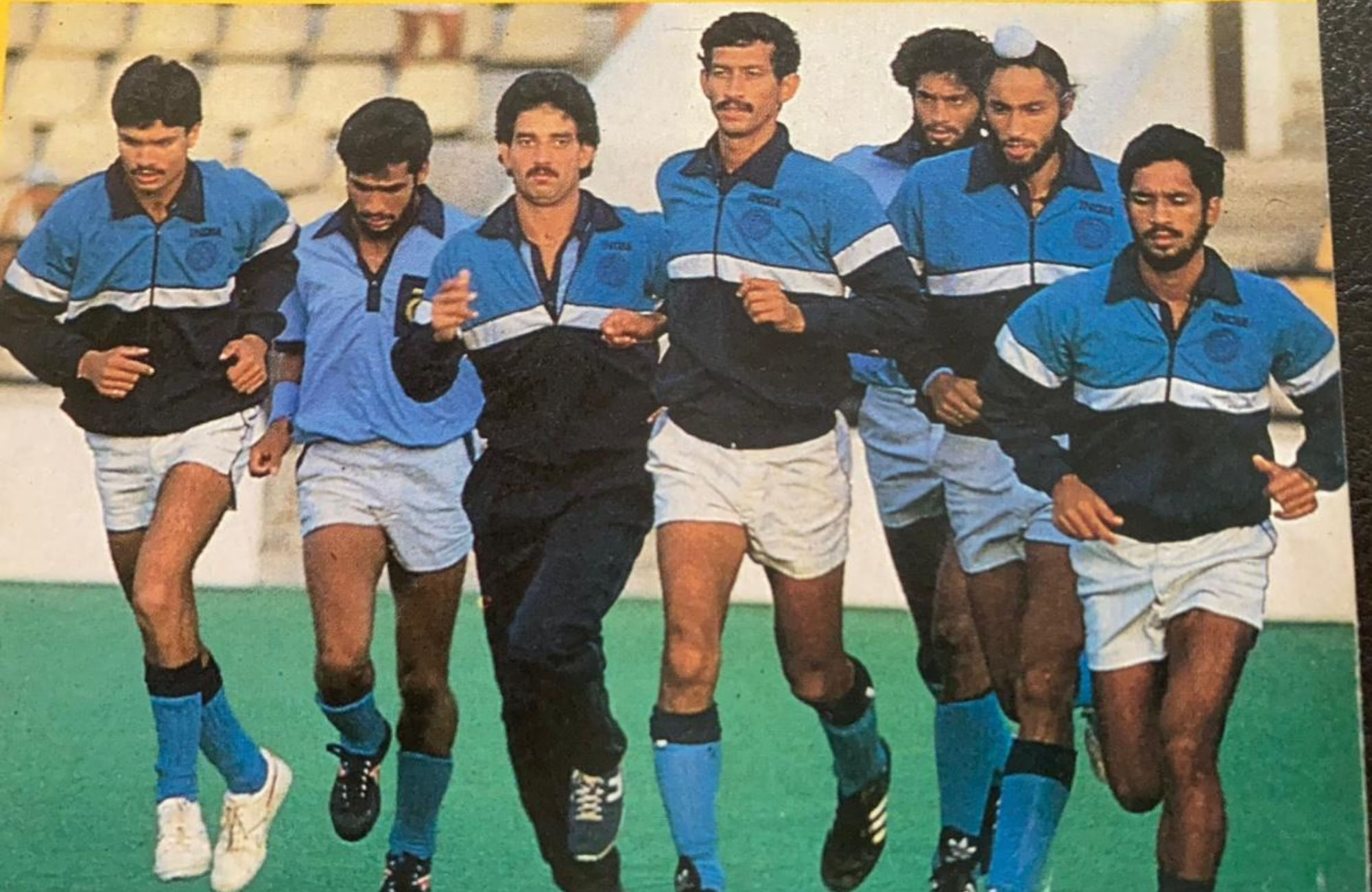
(Courtesy : Hockey India)
M.M. Somaya believes the last 15 years have been the most transformative era in Indian hockey.
For decades, Indian hockey stood as the very definition of excellence on the global stage. With a proud haul of 13 Olympic medals—8 gold, 1 silver, and 4 bronze—India established itself as the sport’s ultimate powerhouse.
Few have had a closer view of this golden era than M.M. Somaya, who represented India in three consecutive Olympic Games — 1980, 1984, and 1988. A member of the gold medal-winning team at the 1980 Moscow Olympics, Somaya also had the honour of captaining India at the 1988 Seoul Olympics.
As India’s hockey fraternity comes together to celebrate 100 years of the sport’s organised structure in the country, Somaya reflects on this historic milestone not merely as a commemoration of medals and triumphs, but as a celebration of the countless individuals and institutions that have nurtured the game.
For him, the centenary is as much about the unseen contributors who laid the foundation for Indian hockey’s success as it is about the players who carried the tricolour to global glory.
“While we rightly celebrate the players who brought glory to the nation, I would dedicate these hundred years to the people behind the scenes,” Somaya said.
“From employers such as the Indian Railways, Armed Forces, Police, Banks, and Petroleum companies to fans, who have stood by the game through every high and low — have all helped create the ecosystem that sustains Indian hockey and they surely deserve equal credit.”
Also Read: Top 10 Indian hockey players with most medals at Olympics
Having made his debut in an era that saw the transition from natural grass to artificial turf, Somaya experienced one of the most defining shifts in hockey’s modern evolution. “I had never seen AstroTurf before the Moscow Olympics.
“We had to adapt instantly to a completely new surface that changed the pace and tactics of the game. Over time, Indian hockey learned to evolve — shifting focus from individual brilliance to collective structure and strategy.”
Further reflecting on his three Olympic appearances, Somaya recalled, “Playing in three Olympics was both an honour and a test of commitment.
“I didn’t have much competition for the position I played — I used to play as right half — but it took a lot of dedication and discipline. The support I received from people back home and my friends really pushed me to do well.
“My employers were also very supportive as they gave me the freedom to practise as much as I wanted. In those days, there wasn’t any real financial benefit in playing hockey — it was pure love for the sport that kept us going. That love still drives me today, even as I continue to follow the game as a keen spectator.”
Somaya believes that the past 15 years have been among the most transformative in Indian hockey’s history. “We are now playing a faster, more structured brand of hockey.
“The presence of world-class coaches, scientific training, and strong academies in states like Punjab, Odisha, and Haryana have completely changed the face of the sport,” he said.
Praising the current Indian men’s and women’s teams, Somaya added, “The professionalism, fitness, and scientific approach of today’s players — from nutrition and recovery to tactical preparation — are world-class.
“The Tokyo Olympic bronze was not just a medal; it symbolised the resurgence of Indian hockey. This is a golden generation in every sense.”
Looking ahead, the former captain underlined the need for a robust talent pipeline to sustain India’s success over the next century. “We must start early — with structured programs from under-12 to under-21. The development squad and India A teams are excellent initiatives.
“If we continue to train young players scientifically and expose them to world-class competition, India will remain among the global elite for years to come.”
As Indian hockey marks a hundred years of existence, Somaya’s reflections capture both the nostalgia of the past and optimism for the future.
“This centenary is not just about celebrating the champions who wore the India jersey, but it’s a tribute to every unseen contributor — administrators, employers, coaches, and fans — who have kept the spirit of Indian hockey alive for a hundred years,” he concluded.
Why is Indian hockey celebrating 100 years?
Indian hockey marks a century since the establishment of its organised structure, celebrating its Olympic legacy and the people who shaped the sport’s journey.
Who is M.M. Somaya?
M.M. Somaya is a former Indian hockey player who represented India in three Olympics (1980, 1984, 1988) and captained the national team in Seoul 1988.
What major changes did Somaya witness in hockey?
Somaya played during the transition from natural grass to AstroTurf, a shift that revolutionised the game’s speed, tactics, and playing style.
For more updates, follow Khel Now on Facebook, Twitter, and Instagram; download the Khel Now Android App or IOS App and join our community on Whatsapp & Telegram

Alex graduated in mass communication in 2016 and has been covering global sports for Khel Now since then. He is covering sports tech, igaming, sports betting and casino domain from 2017.