
Why Sharda Nand Tiwari took all penalty strokes for India in shoot-off win over Belgium?
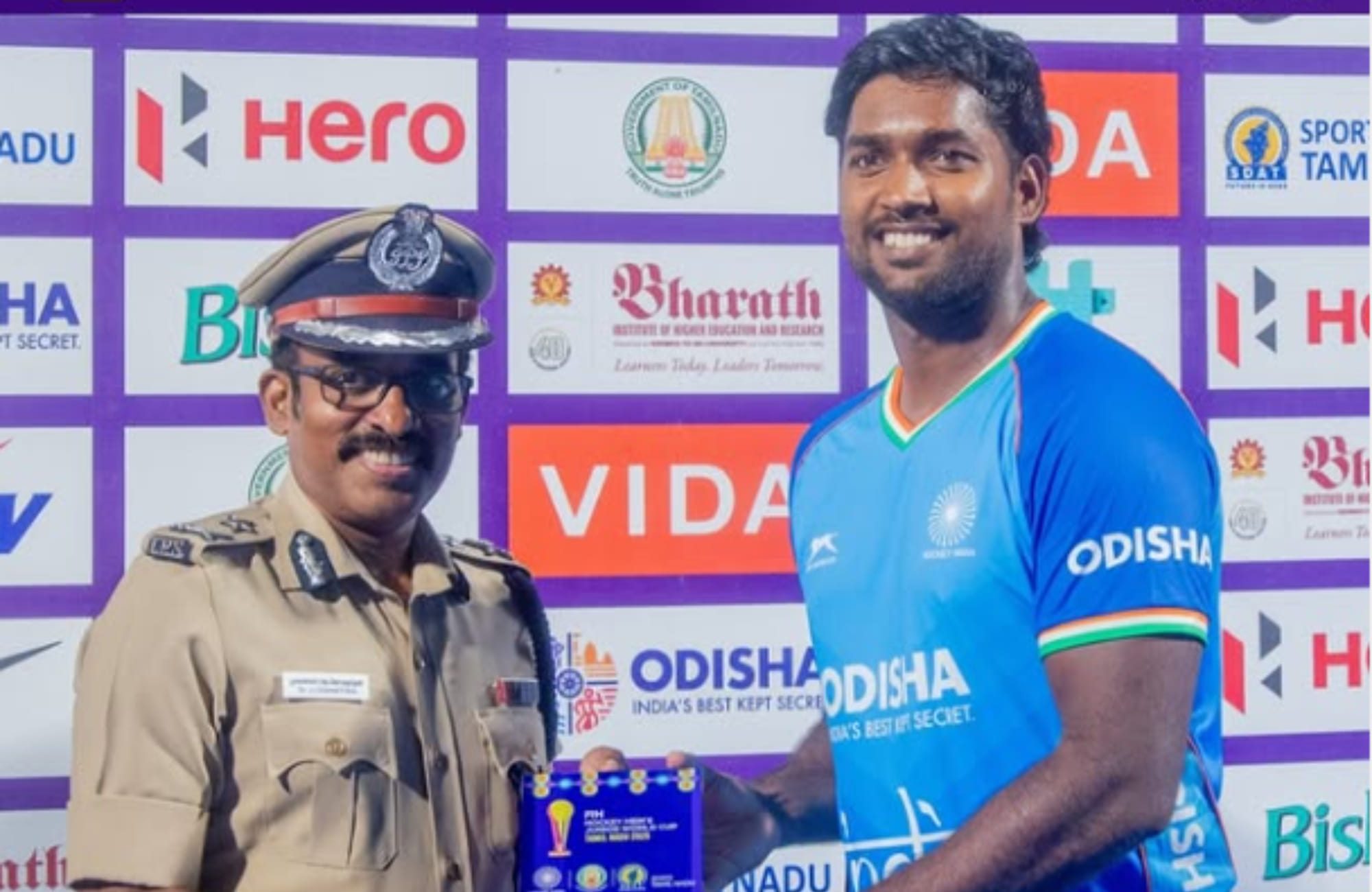
(Courtesy : Hockey India)
India vs Belgium played out a 2-2 draw at the end of regular time.
India’s shoot-out victory over Belgium in the FIH Men’s Hockey Junior World Cup 2025 quarterfinal match. raised eyebrows primarily because Sharda Nand Tiwari stepped up to take all of India’s penalty strokes, a rare sight in top-level international hockey.
However, the decision was well within the ambit of the regulations and a calculated tactical call by the Indian camp. India and Belgium played out a 2-2 draw at the end of the regular time.
Gaspard Cornez-Massant opened the scoring for Belgium in the 13th minute of the game. The half-time score read 1-0 in favour of Belgium.
The Indian Colts skipper Rohit stepped up on the occasion and converted a penalty corner in the dying seconds of the third quarter to level scores.
Sharda Nand Tiwari continued his brilliant performance in the tournament by converting a penalty corner in the 48th minute, helping the hosts take a 2-1 lead.
Nathan Rogge found the back of the net in the exact 60 seconds to go on the clock, making it 2-2. The match then headed into a penalty shootout with a set of five shots each to decide the winner.
Why Sharda Nand Tiwari took all penalty strokes for India in shoot-off win over Belgium?
Catch Every Update, Anytime, Anywhere
Interestingly, Sharda Nand Tiwari was not part of India’s original five designated shoot-out takers. India began the shoot-out with their initially nominated players, but proceedings took an unusual turn when the Belgian goalkeeper committed fouls in each of the first three attempts, denying India clear scoring opportunities.
As per FIH shoot-out regulations, when a defending goalkeeper commits a foul that prevents a probable goal, the umpire is empowered to award a penalty stroke or a re-take of the penalty shoot-out, depending on the nature of the offence.
Also Read: India vs Belgium Quarter-final Highlights, FIH Hockey Men’s Junior World Cup 2025
Following the repeated infringements by the Belgian custodian, India were awarded penalty shoot-outs, shifting the dynamic of the contest.
With the shoot-out scenario triggered, India brought in Sharda Nand Tiwari, a specialist stroke-taker, to execute the penalties. Tiwari made no mistake, confidently converting all three attempts to swing the tie decisively in India’s favour.
The sequence explained why Tiwari took all the decisive shots despite not featuring in the original five, highlighting how the rules allow teams to adapt personnel when fouls alter the course of a shoot-out.
Why did Sharda Nand Tiwari take all the penalty strokes?
Because Belgian goalkeeper fouls led to penalty strokes, allowing India to use him as a specialist.
Was Tiwari in the original shoot-out list?
No, he was added after the fouls occurred.
How did the Belgian goalkeeper’s repeated fouls affect the shoot-out?
The repeated infringements led to India being awarded penalty strokes. This shifted the momentum in India’s favour and allowed them to use Tiwari for all decisive attempts.
How did Tiwari perform in the penalty strokes?
He converted all three of his attempts with confidence, helping India secure the shoot-out victory over Belgium.
What was the score at the end of regular time?
The match ended 2-2 after Belgium scored first, India equalised, then took the lead, and Belgium scored again in the final minute.
For more updates, follow Khel Now on Facebook, Twitter, and Instagram; download the Khel Now Android App or IOS App and join our community on Whatsapp & Telegram