
Statistical Regression vs. Breakout: NBA Players Who Might Decline in 2025-26
Regression talk isn’t about tearing players down; it’s about spotting when a huge season sits on factors that are hard to duplicate. The 2025-26 conversation needs that balance, because some stars from 2024-25 hit peaks in volume, efficiency, or workload that historically wobble the year after.
The 2024-25 NBA landscape continued rewarding high-usage creators and elite finishers, with teams leaning into three-point volume, rim pressure, and wide-open spacing. When the league’s offensive ecosystem runs hot, the box score inflates across the board, and even legitimate superstars can end up with numbers that are slightly puffed by context.
That matters because follow-up seasons often pull those inflated results back toward a player’s longer-term baseline. Whether the trigger is age, minutes, health luck, or roster fit, the league has decades of examples where career-high seasons don’t repeat cleanly. Balanced NBA player projections should always consider regression risks — not just who might rise, but who might slip — to provide a nuanced season outlook.
League-wide context: Why 2024-25 numbers were inflated
Catch Every Update, Anytime, Anywhere
The NBA is still deep in an offense-forward era, and 2024-25 was another year where spacing and shot-quality produced superstar stat explosions. Overall efficiency has trended upward for years, and even when pace fluctuates, modern shot diets keep points and assists flowing. The league-wide push toward more threes and more rim attempts creates extra possessions ending in high-value shots, and stars naturally cash those opportunities at the highest rates. In that setting, per-game ceilings rise, and “normal great” seasons can look historic.
A big side effect is usage pressure. Coaches know top engines plus shooters is the safest route to elite offense, so they load minutes and touches onto primary options. When those options are healthy and the roster is tuned for them, counting stats can reach levels that are statistically rare to sustain twice in a row. The 2024-25 leaders in points, rebounds, and assists benefited from both skill and ecosystem, and that blend often cools slightly the next season.
Statistical regression vs. breakout: The framework
Regression doesn’t automatically mean decline in talent. It usually means last year was above a player’s sustainable baseline because of a hot shooting season, an unusual workload, unusually clean health, or a perfect roster fit. A breakout is different: that’s when skill growth or a stable new role lifts the baseline permanently. The challenge is identifying which spike is real growth and which spike is context-driven overflow.
Outlier seasons are the most fragile when they stack multiple extreme elements at once, like career-best usage plus career-best efficiency plus heavy minutes. Age makes that fragility louder, because minute load and recovery get less forgiving over time. Even prime stars can regress statistically if their teams get deeper or their role shifts. For NBA player projections, this framework is the guardrail that keeps evaluations realistic instead of purely hype-driven.
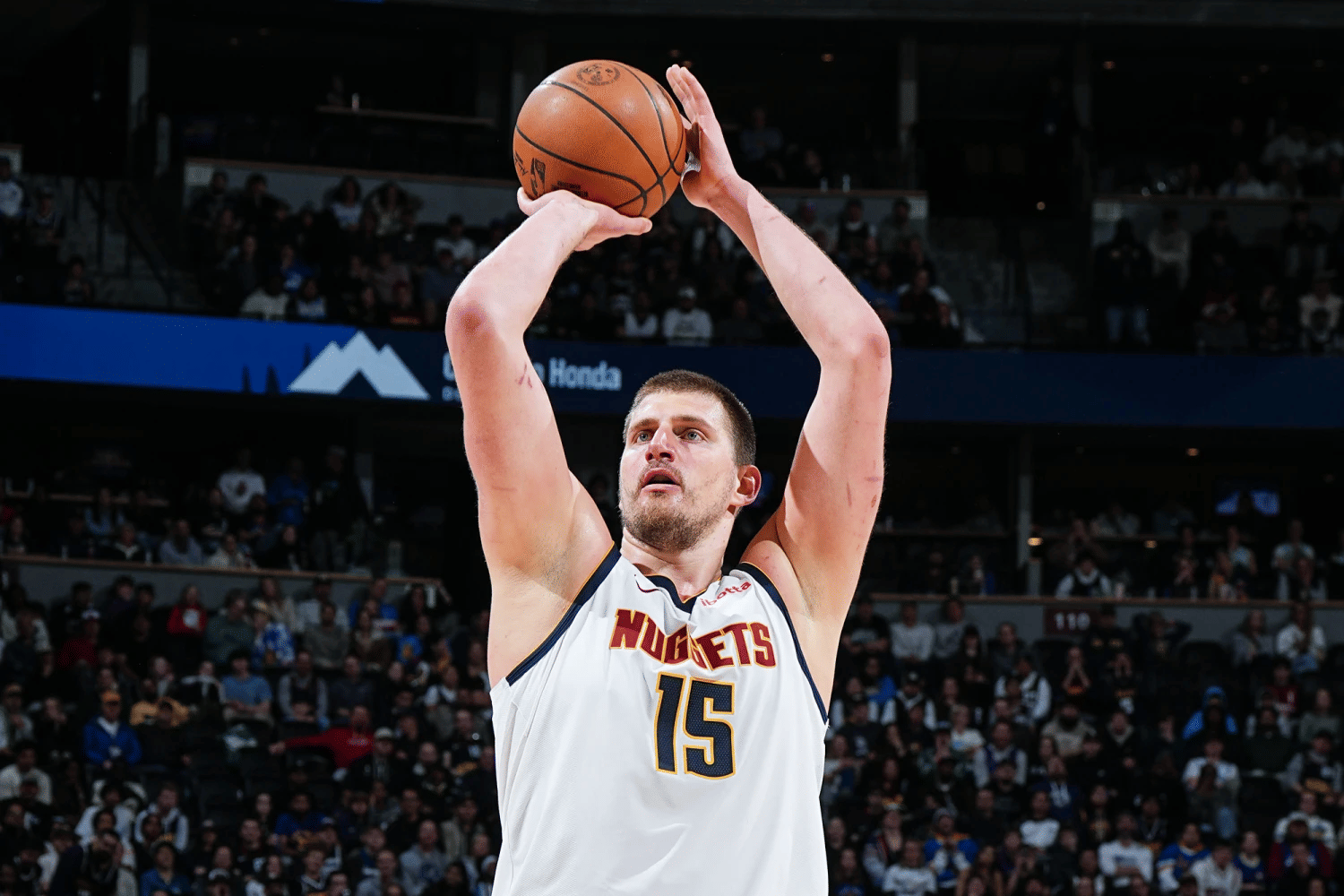
Nikola Jokić: The MVP line is almost impossible to repeat
Nikola Jokić’s 2024-25 season was video-game level: 29.6 points, 12.7 rebounds, and 10.2 assists in 70 games. That is a triple-double season with top-tier scoring on elite efficiency, and even for a generational player, sustaining all three categories at career-high levels simultaneously is historically rare. Denver’s offense also runs through him so constantly that any small shift in roster or scheme can redistribute a slice of his production.
The regression case here isn’t about ability. It’s about statistical gravity. When a player posts a triple-double average while also clearing nearly 30 points a night, the odds of repeating every piece of that stack are slim. A plausible 2025-26 adjustment is still MVP territory, but with a softer edge: around 27.5–29.0 PPG, 11.5–12.5 RPG, and 9.0–10.0 APG. The biggest dip risk is assists if Denver leans more on another high-touch creator or increases off-ball actions.
Shai Gilgeous-Alexander: From 32.7 PPG to “Only” 30?
Shai Gilgeous-Alexander led the league at 32.7 PPG in 2024-25 and won MVP. Unlike older veterans, he’s squarely in his prime, so the regression case is less physical and more contextual. Oklahoma City is getting deeper, and when elite teams add secondary engines, the top scorer often gives up a little volume to preserve efficiency, legs, and team balance.
SGA can still be the league’s most dangerous scorer, but if OKC’s creators expand, he may not need to carry quite the same nightly burden. That kind of role drift usually shaves a couple points without touching true impact. That’s why NBA player projections for him should be framed as “slightly less volume, same dominance,” not as any kind of step backward in quality. A reasonable 2025-26 range is 30.0–31.5 PPG with similar or slightly improved efficiency, plus modest usage decline tied to roster growth.
Domantas Sabonis: Rebounding crown at the edge of sustainability
Domantas Sabonis averaged 19.1 points, 13.9 rebounds, and 6.0 assists in 70 games, leading the NBA in rebounds. Rebounding titles are among the most volatile league-wide stats because they depend heavily on scheme, frontcourt partners, and nightly physical toll. Even if Sabonis plays at the same level, a small change in Sacramento’s rotation or pace can drop his rebounding share.
High rebounding seasons also grind bodies down. Bigs who live on the glass every possession commonly see slight step-backs the next year as teams manage wear or add help. The clean projection is a gentle pull toward normal: 12.5–13.3 RPG, 18.0–19.5 PPG, and 5.5–6.2 APG. His rebounds are the softest stat in the bundle; points and assists are more role-stable. In NBA player projections, he’s a textbook example of how a team context tweak can shave elite counting stats without changing the player’s effectiveness.
Trae Young: Assists leader with a “New Teammate” trap
Trae Young put up 24.2 points and 11.6 assists across 76 games, leading the NBA in assists per game. Assist crowns often rotate quickly when teams add another ball-handler, give more on-ball duties to improving wings, or shift toward more shared playmaking. Atlanta’s young core is still growing, and that growth can chip away at the lead guard’s monopoly on creation.
This is a regression-by-distribution story. Trae doesn’t need to be worse for his assists to drop slightly; he just needs teammates who handle more. A plausible step-back is 10.0–11.0 APG with 23.0–25.0 PPG, reflecting a few fewer creation possessions while keeping his scoring threat intact. Any NBA player projections for Atlanta’s offense should bake in that natural sharing curve.
LeBron James: Brilliant at 40, but role drift is real
LeBron averaged 24.4 points, 7.8 rebounds, and 8.2 assists in 70 games in 2024-25 — an absurd line at age 40. The regression concern is purely about mileage and management. When a player is this late in the aging curve, even tiny dips in burst or minutes can produce visible per-game drops. The Lakers also have every incentive to preserve him for May rather than chase regular-season volume.
Even with elite IQ and skill, the body sets limits. The most reasonable 2025-26 outlook is a controlled reduction: around 21.5–23.5 PPG, 7.0–7.8 RPG, and 7.2–8.0 APG, with fewer high-gear games and more pacing nights.
Kevin Durant: Efficiency is there, availability is the swing stat
Kevin Durant posted 26.6 points, 6.0 rebounds, and 4.2 assists in 62 games. The per-game brilliance is not the issue; the regression lever is games played and role stability. When superstars settle into 55–65 game seasons, teams tend to moderate minutes, or shift touches to protect availability. That can quietly shave volume even if efficiency stays sharp.
Durant can still deliver elite scoring nights, but expecting the same pace and load every game is risky. A fair projection is 24.5–26.0 PPG, 5.5–6.2 RPG, and 3.8–4.5 APG, with total season output most sensitive to health more than skill.
James Harden: High minutes, sub-40% FG, and wear risk
Harden averaged 22.5 points, 5.9 rebounds, and 8.7 assists in 65 games, while shooting 39.8% from the field. That combination is a classic veteran regression setup: heavy creation responsibility, declining rim pressure, and efficiency already leaning toward a narrow scoring diet. If the Clippers reduce his minutes or redistribute touches, the counting stats are the first thing to bend.
His playmaking should remain valuable, but the nightly volume is harder to bank on. A sensible dip looks like 20.0–21.5 PPG and 7.5–8.2 APG, with rebounds near 5.0–5.8 RPG. Even a small role adjustment can push those numbers down without changing his importance.
Why team context can quiet even elite players
Regression is often a roster story. A new co-star, a healthier teammate returning, or a coaching shift can redirect 2–4 shots, or a couple assists away from a superstar without any decline in talent. Teams that get deeper usually spread creation; teams that chase playoff health often trim veteran minutes. That’s why per-game peaks are less sticky when the roster environment changes.
The stars listed above each sit in contexts where distribution could shift: OKC’s rising creators, Sacramento’s potential frontcourt tweaks, Atlanta’s developing ball-handlers, and veteran contenders that must manage aging cores. When these dynamics change, production follows. For NBA player projections, this is the reminder that role and ecosystem are equal partners with skill.
Closing: Upside is fun, downside is necessary
The point isn’t to predict collapse. Jokić, SGA, Sabonis, Trae, LeBron, Durant, Harden, and Lillard can all be excellent again. But career-high seasons and extreme workloads rarely repeat in full, especially when age, injuries, and evolving team structures stack up. If you build 2025-26 expectations with both breakout paths and regression paths, you land on truer ranges and avoid being surprised when historic becomes merely great.Optimism without risk is just wish-casting. A balanced forecast respects that the NBA is a moving target — and that even the biggest stars are still subject to mileage, role drift, and statistical gravity.