
Cryptocurrency Payments in Esports betting: What Indian fans should know
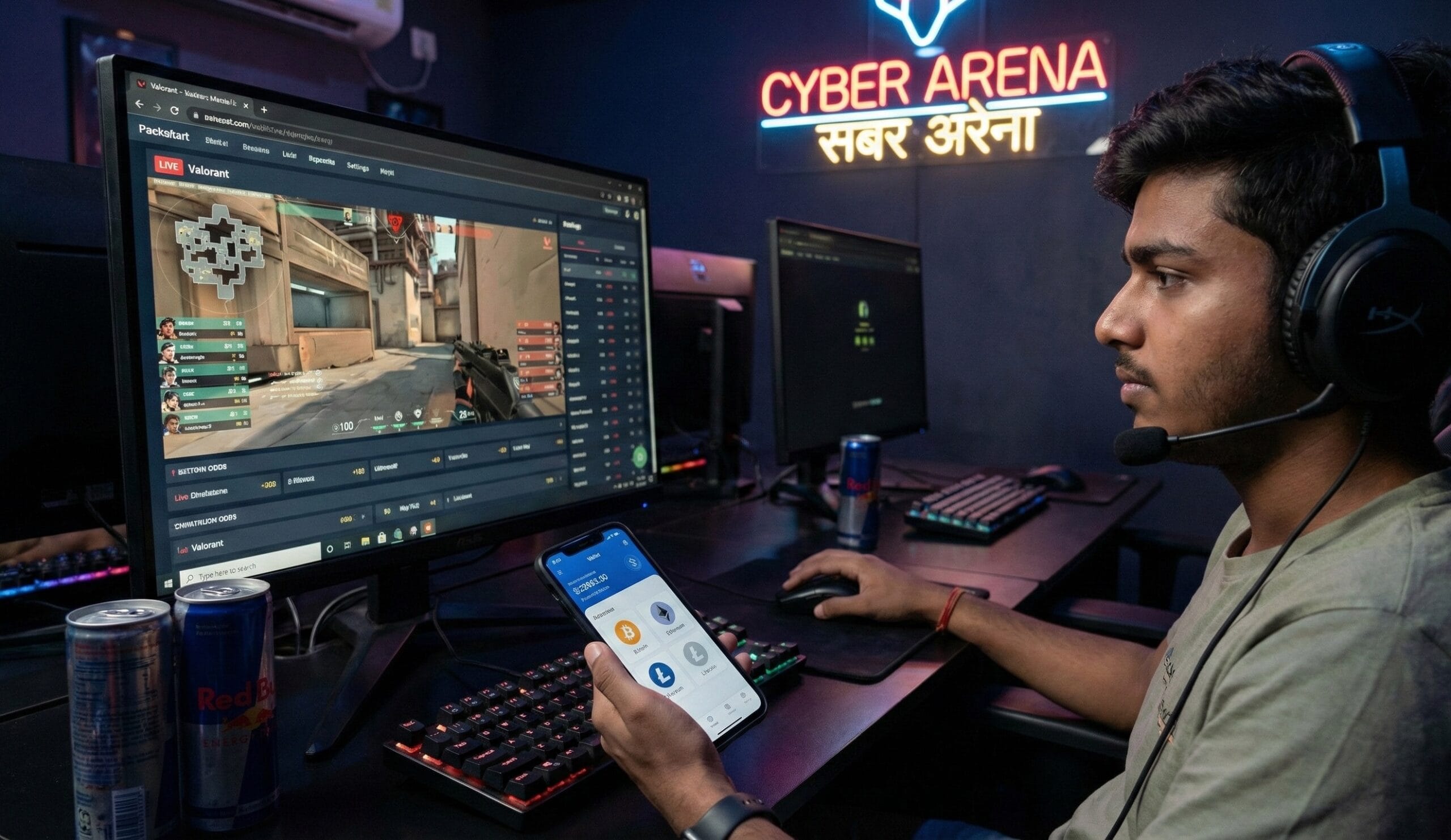
The esports industry has grown from niche entertainment into a global phenomenon. Millions watch tournaments for games like Valorant, CS2, Dota 2, and League of Legends. Alongside this growth, betting markets have expanded to cover competitive gaming with the same depth as traditional sports.
For Indian fans following international esports, the betting landscape looks quite different from domestic options. Cryptocurrency has emerged as a payment method that some bettors prefer when accessing global platforms. Understanding how this works helps anyone curious about the intersection of gaming, betting, and digital finance.
The global Esports betting market
Esports betting has matured considerably since its early days. What started with simple match winner markets now includes map handicaps, first blood predictions, total rounds, and dozens of other options depending on the game.
The big tournaments drive most of the action. The International for Dota 2, the League of Legends World Championship, Valorant Champions, and CS2 Majors attract betting volumes that rival mid-tier traditional sports events. Bookmakers have invested heavily in understanding these games, hiring analysts who actually play competitively.
Asian markets have been particularly important for esports betting growth. South Korea, China, the Philippines, and increasingly India all contribute substantial viewership and betting interest. Games popular in Asia often see deeper markets and better odds than Western-focused titles.
The crossover between gaming and betting feels natural for many fans. If you’ve spent hundreds of hours watching and playing a game, predicting outcomes becomes an extension of that knowledge. This differs from traditional sports, where playing and watching are separate activities for most people.
How cryptocurrency enters the picture
Cryptocurrency and esports share demographic overlap. Both attracted tech-savvy early adopters, both grew through online communities, and both faced initial scepticism from mainstream observers. It makes sense that they’ve increasingly converged.
For bettors, cryptocurrency offers several practical advantages. Transactions typically process faster than traditional banking methods. Fees are often lower, particularly for international transfers. And the global nature of crypto means geographic restrictions matter less than they do for fiat currency payments.
Bitcoin was the first cryptocurrency widely accepted by betting platforms. Ethereum followed, bringing smart contract capabilities that enabled new types of betting products. Other cryptocurrencies like Litecoin and stablecoins have joined the mix, each with their own characteristics.
The technical barrier to using cryptocurrency has dropped substantially. Five years ago, buying and transferring crypto required considerable technical knowledge. Today, mainstream apps make it straightforward for anyone comfortable with digital payments.
Ethereum and Esports betting
Ethereum occupies an interesting position in the betting space. Its smart contract functionality enables features that Bitcoin cannot easily support, including provably fair gaming mechanisms and automated payouts.
Some platforms have built their entire infrastructure on Ethereum, using the blockchain to ensure transparency in their operations. Others simply accept Ethereum as a payment method alongside traditional options.
For bettors researching this space, the Ethereum report from ArcadePunks provides detailed analysis of platforms accepting ETH for gaming and betting. Understanding the specific features and limitations of different platforms matters when choosing where to bet.
Gas fees have historically been a consideration with Ethereum transactions. During network congestion, fees could spike substantially. Layer 2 solutions and the shift to proof-of-stake have improved this situation, though fees still vary based on network activity.
The volatility question applies to Ethereum as it does to other cryptocurrencies. Holding winnings in ETH exposes you to price movements that can be substantial. Many experienced users convert back to fiat or stablecoins quickly to avoid this exposure.
Indian regulations and realities
The legal landscape for both cryptocurrency and online betting in India remains complex. Neither is straightforwardly legal or illegal at the national level, with state-by-state variations adding further complexity.
The Reserve Bank of India has taken various positions on cryptocurrency over the years. The 2018 banking ban was overturned by the Supreme Court in 2020, but regulatory uncertainty continues. The 2022 introduction of a 30% tax on cryptocurrency gains and 1% TDS on transactions above certain thresholds signals government acknowledgment of crypto activity while maintaining a cautious stance.
Online betting occupies similarly ambiguous territory. The Public Gambling Act of 1867 predates the internet by over a century and doesn’t address online gambling directly. Some states have enacted specific prohibitions, while others have licensed certain forms of online gaming. The distinction between games of skill and games of chance becomes relevant here, though betting itself typically falls outside skill-game protections.
For Indian users, this regulatory ambiguity means conducting personal research before engaging with any betting platform. What’s accessible isn’t necessarily legal, and what’s technically prohibited isn’t always enforced. Individual risk tolerance varies.
Games Indian Esports fans follow
The esports titles popular among Indian viewers shape which betting markets matter most. Mobile games have particular relevance given smartphone penetration and data affordability improvements.
BGMI (Battlegrounds Mobile India) has a substantial competitive scene, though its on-again, off-again regulatory status creates uncertainty. Free Fire maintains popularity despite similar concerns. Mobile Legends and Call of Duty Mobile also have followings.
On PC, Valorant has captured substantial Indian attention. The game’s tactical shooter format appeals to CS players, and Riot’s investment in South Asian competitive infrastructure has built local engagement. Indian teams competing in international qualifiers generates betting interest.
Dota 2 retains a dedicated Indian fanbase, though the scene is smaller than in Southeast Asian neighbours. The International remains a major betting event globally, and Indian fans participate in that action.
CS2 has a growing Indian presence, with teams gradually becoming more competitive regionally. The game’s long history and mature betting markets make it accessible for newcomers to esports betting.
Practical considerations for Crypto betting
Anyone considering cryptocurrency for esports betting should approach it methodically rather than impulsively. Several practical factors deserve attention.
Wallet security matters enormously. Unlike bank accounts, cryptocurrency wallets offer no recovery mechanism if you lose access or get hacked. Hardware wallets provide better security for larger amounts. At minimum, enable two-factor authentication on exchange accounts.
Understanding transaction times helps with planning. Bitcoin transactions can take an hour or more during congestion. Ethereum is typically faster. Some platforms offer instant deposits while the blockchain confirmation processes, but withdrawals usually require full confirmation.
Exchange selection affects both security and cost. Major exchanges like WazirX, CoinDCX, or international platforms like Binance all serve Indian users. Fees, available cryptocurrencies, and withdrawal limits vary between them.
Tax implications exist regardless of whether you consider them. The 30% crypto gains tax applies to betting winnings held in cryptocurrency, at least as currently interpreted. Maintaining records simplifies eventual compliance.
Evaluating Esports betting platforms
Not all betting platforms accepting cryptocurrency deserve your trust. The esports betting space includes both reputable operators and questionable outfits. Due diligence before depositing money is worth the effort.
Licensing provides some indication of legitimacy, though Indian users often access platforms licensed in jurisdictions like Curaçao or Malta rather than locally. These licenses offer baseline consumer protections, but enforcement for overseas users can be limited.
Reputation within the esports community matters. Forums, Reddit discussions, and Discord servers often surface complaints about slow withdrawals or unfair treatment. Absence of complaints doesn’t guarantee quality, but widespread complaints indicate problems.
Odds quality varies considerably between platforms. Sharp bookmakers like Pinnacle typically offer better odds than recreational-focused sites, but may limit winning accounts. Understanding this trade-off helps in platform selection.
Payment method reliability deserves attention. Some platforms accept cryptocurrency deposits enthusiastically but create obstacles for withdrawals. Reading terms and conditions, particularly around withdrawal minimums and verification requirements, avoids later frustration.
The future of Esports betting
Esports betting will almost certainly continue growing. The demographic trends favour it: younger generations engage more with esports than traditional sports, and betting industries follow audience attention.
Cryptocurrency integration will likely deepen as well. Regulatory clarity in major markets would accelerate adoption, while continued ambiguity may limit growth to the current enthusiast base.
Game publishers have historically maintained distance from betting, concerned about integrity issues and regulatory complications. This stance may evolve as betting becomes more normalised and revenue-sharing possibilities become attractive.
In-play betting during esports matches presents unique opportunities given the data-rich nature of competitive gaming. Real-time statistics enable betting markets that update continuously based on in-game events. This technology exists but hasn’t reached its full potential.
For Indian esports fans, the trajectory seems positive despite regulatory uncertainty. Growing viewership, improving competitive infrastructure, and increasing international recognition of Indian esports all point toward a larger market over time.
Making informed decisions
The intersection of cryptocurrency and esports betting offers genuine utility for some users and unnecessary complexity for others. Neither technology improves the fundamental challenge of betting profitably, which requires knowledge, discipline, and realistic expectations.
Understanding esports deeply provides the foundation for any betting edge. No payment method compensates for poor predictions. Time spent analysing games, teams, and tournaments yields better returns than time spent optimising transaction fees.
Bankroll management applies regardless of currency. Setting limits, accepting losses as part of the process, and never betting funds you cannot afford to lose remain sound principles whether you use rupees, dollars, Bitcoin, or Ethereum.
The responsible gambling message deserves emphasis. Both cryptocurrency and betting can become problematic when approached compulsively. The combination of instant transactions, 24/7 availability, and the excitement of esports creates conditions where moderation requires conscious effort.
For those who proceed thoughtfully, cryptocurrency-enabled esports betting offers a way to engage with competitive gaming that wasn’t possible a decade ago. For those who find the complexity unappealing, traditional payment methods continue to work fine. The choice depends on individual circumstances and preferences rather than any universal right answer.

Alex graduated in mass communication in 2016 and has been covering global sports for Khel Now since then. He is covering sports tech, igaming, sports betting and casino domain from 2017.