
Top 5 medal-winning sports for India in Asian Games history
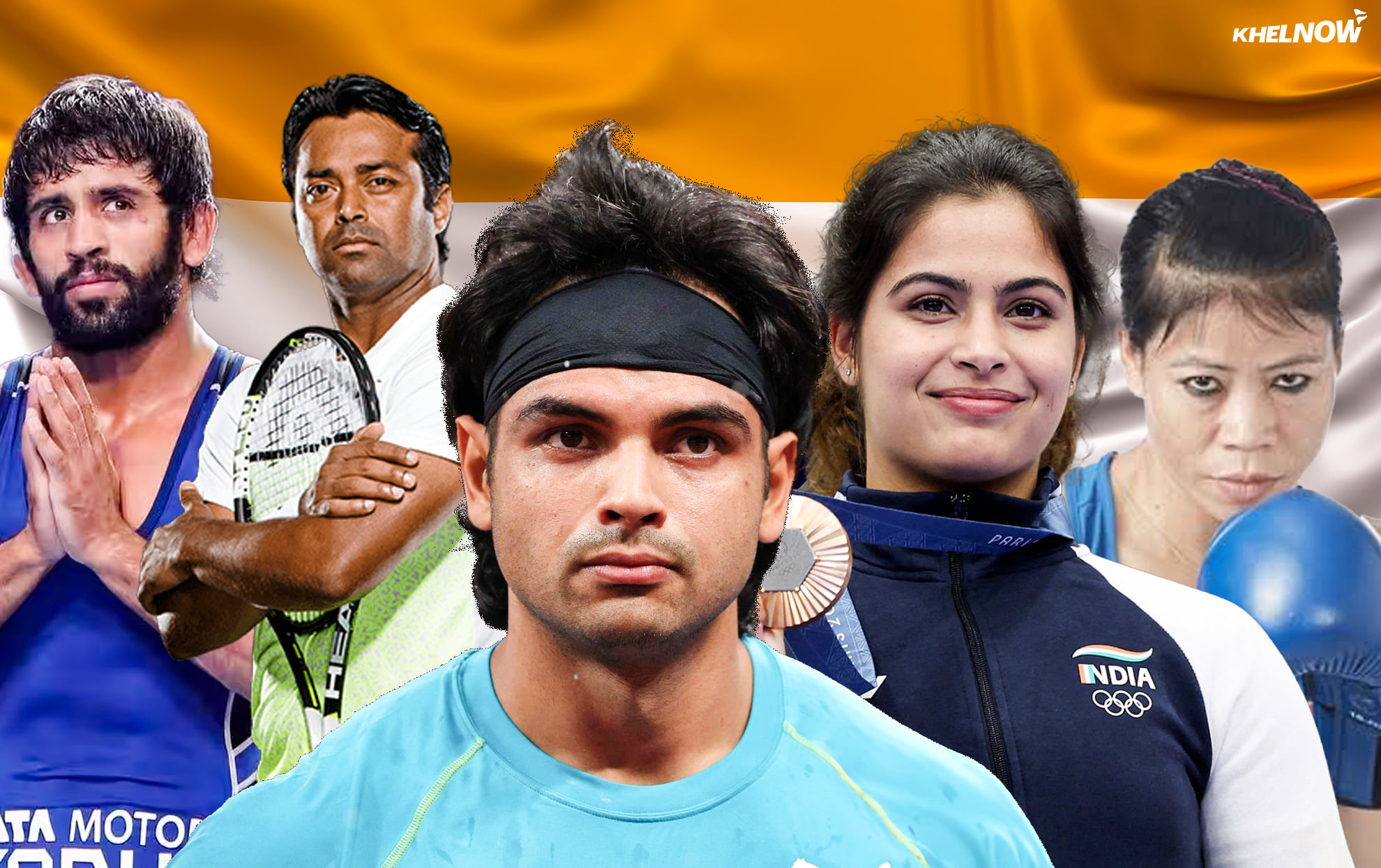
Athletics is India’s most successful sport in Asian Games history.
Since the inaugural edition was held in New Delhi in 1951, the Asian Games has served as a major platform for athletes across the continent.
Over the decades, India’s presence on the podium has grown significantly, with disciplines such as archery, squash and badminton emerging as increasingly productive sources of medals.
On that note, let’s take a look at the top five sports in which India have won the most medals in Asian Games history.
Most medal-winning sports for India in Asian Games history
Catch Every Update, Anytime, Anywhere
Tennis: 34 Medals
Tally: 10 Gold, 7 Silver, 17 Bronze
Standout Performers: Leander Paes, Mahesh Bhupathi, Sania Mirza, Somdev Devvarman, Rohan Bopanna
While tennis fields considerably smaller contingents than combat sports and athletics, its medal return has been particularly impressive. With 10 gold medals among 34 total podium finishes, the sport boasts one of the highest gold-medal conversion rates in India’s Asian Games history.
Leander Paes built the foundation, capturing five gold medals across men’s doubles, mixed doubles, and team events over twelve years. Paes and Mahesh Bhupathi established an era of doubles dominance, later carried forward by Rohan Bopanna and Divij Sharan.
In the women’s circuit, Sania Mirza became a dominant force, securing eight career Asian Games medals through aggressive baseline play and sharp court craft.
Boxing: 61 Medals
Tally: 9 Gold, 17 Silver, 35 Bronze
Standout Performers: Hawa Singh, Dingko Singh, Vijender Singh, Mary Kom, Amit Panghal
Navigating brackets packed with powerhouse fighters from Central Asia, Indian boxers have relied on hand speed, tactical footwork, and grit to secure 60-plus continental medals.
Heavyweight stalwart Hawa Singh announced Indian boxing’s arrival in the 1960s with consecutive titles, leaving a legacy of courage inside the ring.
Decades later, Dingko Singh’s iconic bantamweight gold in 1998 sparked an operational and cultural transformation across the sport. That momentum carried through to Guangzhou in 2010, where Vijender Singh captured middleweight gold.
The inclusion of women’s boxing expanded the medal haul, highlighted by MC Mary Kom’s historic flyweight title in 2014. Today, fighters like Amit Panghal and Lovlina Borgohain maintain India’s reputation as an uncompromising presence in the ring.
Wrestling: 65 Medals
Tally: 11 Gold, 15 Silver, 39 Bronze
Standout Performers: Maruti Mane, Kartar Singh, Yogeshwar Dutt, Bajrang Punia, Vinesh Phogat
It is almost natural to see India doing well in wrestling over the years, as it is deeply rooted in the mud-pit traditions in the northern region. The smooth transition from mud to mats in competitive wrestling has been key to Indian grapplers’ success.
Across freestyle and Greco-Roman styles, Indian grapplers have earned 65 medals since the competition’s inception, demonstrating strength, endurance, and technical counter-attacking. Pioneers like heavyweight champion Kartar Singh set the tone during the late 1970s and 1980s.
When modern wrestling underwent rapid rule and weight-class shifts, Indian wrestlers adapted seamlessly. Yogeshwar Dutt broke an extended gold drought in 2014, opening the floodgates for a vibrant generation.
Bajrang Punia and Vinesh Phogat continued the gold-medal run in subsequent editions, proving that Indian wrestling can navigate some of the fiercest brackets in world sport.
Shooting: 80 Medals
Tally: 16 Gold, 30 Silver, 34 Bronze
Standout Performers: Jaspal Rana, Anjali Bhagwat, Ronjan Sodhi, Jitu Rai, Manu Bhaker
No one can deny the impact shooting has had on India’s sporting spectrum. The sport’s remarkable rise to second on this list reflects years of sustained investment, improved technical coaching and a growing emphasis on psychological composure.
In the 1990s and early 2000s, pistol specialist Jaspal Rana was a force to reckon with, collecting individual and team titles with incredible finesse. It also affirmed that Indian shooters could routinely challenge Asian powerhouses like China and South Korea.
The country’s footprint quickly expanded across disciplines. Trap and double-trap specialists like Ronjan Sodhi and Manavjit Singh Sandhu brought home crucial shotgun titles, proving the squad’s depth.
In recent years, a wave of teenage and twenty-something talents — including Manu Bhaker, Sift Kaur Samra, and Sarabjot Singh — have turned shooting ranges into medal factories, often delivering double-digit podium finishes in a single edition through rifle, pistol, and mixed-team categories.
Athletics: 283 Medals
Tally: 85 Gold, 102 Silver, 96 Bronze
Standout Performers: Milkha Singh, P. T. Usha, Jyotirmoyee Sikdar, Manjit Singh, Neeraj Chopra
Track and field has long been the cornerstone of India’s Asian Games medal haul, accounting for more than one-third of the country’s total. The journey began at the inaugural edition in 1951, when sprinter Lavy Pinto scripted history by winning a landmark double in the 100m and 200m.
‘The Flying Sikh’ Milkha Singh became a household name with his blistering quarter-mile runs in Tokyo and Jakarta, setting a standard of speed and stamina that inspired subsequent generations.
In the mid-1980s, PT Usha established herself as a dominant force on the Asian stage, delivering one of the most prolific individual performances in Asian Games history at Seoul, where she won four gold medals and a silver.
The current surge in field events is driven by athletes such as the masterful and ever-so-consistent Neeraj Chopra (Javelin Throw), Tajinderpal Singh Toor’s (shot put ring), and Avinash Sable (steeplechase), among others.
When did India first participate in the Asian Games?
India first participated in the Asian Games at the inaugural 1951 Asian Games, which were held in New Delhi from March 4 to 11, 1951.
Which is India’s most successful sport at the Asian Games?
Athletics is India’s most successful sport at the Asian Games, delivering 283 medals (85 Gold, 102 Silver, 96 Bronze).
For more updates, follow Khel Now on Facebook, Twitter, and Instagram; download the Khel Now Android App or IOS App and join our community on Whatsapp & Telegram