
Bengaluru FC 3-2 SC Delhi: Key takeaways from ISL 2026-27 opener
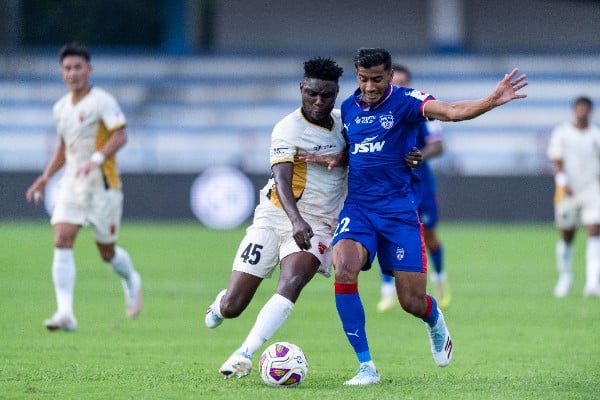
Bengaluru FC won 3-2 against Sporting Club Delhi in the opening night of ISL 13.
Bengaluru FC beat Sporting Club Delhi 3-2 on Matchday 1 of the Indian Super League’s 13th season. Borja Martinez opened the season’s goalscoring in the 22nd minute, and Delhi took the lead courtesy to two quick goals, one by Rodriguinho and an own goal by Bengaluru’s Menno Koch. Koch then scored at the right end in the 89th minute to complete Bengaluru’s comeback.
That arc, an own goal answered by a winner, is the story of the night, but it isn’t the explanation. The explanation lies in the shape of the match. For roughly an hour, Tomasz Tchorz’s Delhi dictated terms, crowding the middle and stretching Bengaluru’s structure sideways until gaps opened. Borja Martinez had opened the ISL’s 13th season goalscoring charts in the 22nd minute, yet Bengaluru were still being managed more than they were managing.
Then the control shifted. Bengaluru FC changed their midfield, widened their attacks, and made the game uncomfortable in the places where Delhi’s plan was thinnest. Delhi had a 90-minute idea and only a 60-minute version of it. By the time Koch converted at the 89th, the 3-2 scoreline had stopped looking like a surprise.
Catch Every Update, Anytime, Anywhere
1. Delhi’s overload worked until it stopped working

Tchorz’s side built their opening hour on a simple premise: outnumber Bengaluru in central areas, then pull the ball wide to drag defenders out of position. It produced a first half of real chances at both ends, and Delhi’s mostly ended in saves or misses. The plan made Bengaluru reactive, and the lead Delhi eventually took came from that pressure, even though the final touch was Koch’s own.
The first-half pattern also explains why the contest stayed open. Delhi generated openings but didn’t convert them, and a plan that creates chances without converting them lives on borrowed time.
2. The final 20 minutes: Bengaluru change the game
The decisive swing came after Bengaluru introduced Iriondo, whose arrival restored their foothold in midfield. That mattered because Delhi’s overload depended on winning the middle. Once Bengaluru stopped losing it, the wide-stretching tactic lost its anchor.
Bengaluru then attacked down the flanks repeatedly, and the introduction of Soham Varshneya tilted the balance further. Delhi answered by using all their available substitutes, an attempt to rebuild control through fresh legs. It didn’t work. Bengaluru’s changes were targeted: each one solved a specific problem. Delhi’s looked like a search for any solution. The comeback was built by the bench as much as by the starters.
3. Delhi’s real problem
Delhi’s start was good, and the idea behind it is credible. That makes the collapse more instructive, not less. When control slipped, the team didn’t adapt in shape. It panicked.
This is the item Tchorz has to study first. A team with a strong core system and no fallback is vulnerable the moment an opponent neutralizes the system, and fresh legs can’t fix that because the issue is structure, not fitness. The fix isn’t a new philosophy. It’s a second structure the players can move into within minutes, rehearsed enough that a trailing, tiring side defaults to it rather than to disorder. If that isn’t built in the coming weeks, opponents will copy Bengaluru’s recipe.
4. Borja and Williams give Bengaluru their clearest identity

Photo: Baranidharan M / FS MEDIA PRO / ISL
Borja Martinez’s 22nd-minute opener was the night’s first marker, and the team’s wide threat is where its attacking identity looks most defined. With Borja on one flank and Ryan Williams on the other, Bengaluru have two outlets who stretch back lines in opposite directions, which is exactly what produced their late pressure.
The missing piece is Mihailo Perovic. Though he assisted for the equalizer, whether Bengaluru’s attack reaches its peak depends heavily on him scoring regularly, because wide threats need a finisher in the box to make the delivery worth the risk.
5. The defensive questions Bengaluru can’t ignore
A win obscures a worrying figure: Bengaluru conceded twice, one by their own centre-back’s hand, against a team that spent the last 20 minutes in disarray. A better-organised opponent with a functioning midfield will punish the same gaps more severely and for longer.
Koch’s own goal is partly an individual error, but it also points to something collective: Delhi’s overload got Bengaluru’s defenders turning, scrambling, and defending facing their own goal. If Bengaluru see themselves as contenders for both the Shield and the trophy, the back line has to be able to cope with pressure without relying on late attacking rescues.
For more updates, follow Khel Now on Facebook, Twitter, Instagram, Youtube; download the Khel Now Android App or IOS App and join our community on Whatsapp & Telegram.