
EXCLUSIVE: RFYC Head of Youth Robert Roelofsen opens up on youth development, scouting & more

The Dutch coach became the Head of Youth at RFYC in June 2023.
For Robert Roelofsen, youth development is as much about people as it is about football. The Reliance Foundation Young Champs (RFYC) head of youth has spent close to four decades in the game across Europe and Asia, and his philosophy is rooted in structure, competition and long-term thinking.
In an exclusive conversation with Khel Now, Roelofsen spoke about Indian youngsters Zehal Shibu and Vanlal Fanai joining Tokyo 23 FC, the importance of Asian exposure, the role of former India international Arata Izumi, and why scouting and competition structure remain the biggest challenges and opportunities for Indian football.
Catch Every Update, Anytime, Anywhere
Here are some excerpts from the interview:
Zehal and Vanlal impressed during Sanix Cup campaign
Zehal and Vanlal recently earned opportunities with Tokyo 23 FC, securing a contract that runs until December 31st, 2026, a move that Robert Roelofsen believes was shaped by both preparation and mindset.
According to him, Zehal had been challenged early by consistently playing in older age groups at RFYC, while Vanlal impressed through his determination and performances, particularly during international tournaments.
While talking about both the players, Roelofsen stated, “With Zehal, he was always playing one year older or two years older because we always saw him as a big talent. That helped prepare him for the physical competition in Japan…They proved themselves in the tournament because of their performance when we played there in the Sanix Cup and because of the trials and that they really wanted it in the strong community of the Indians also in Tokyo that made them decide.”
Asian tournaments key for Indian academies
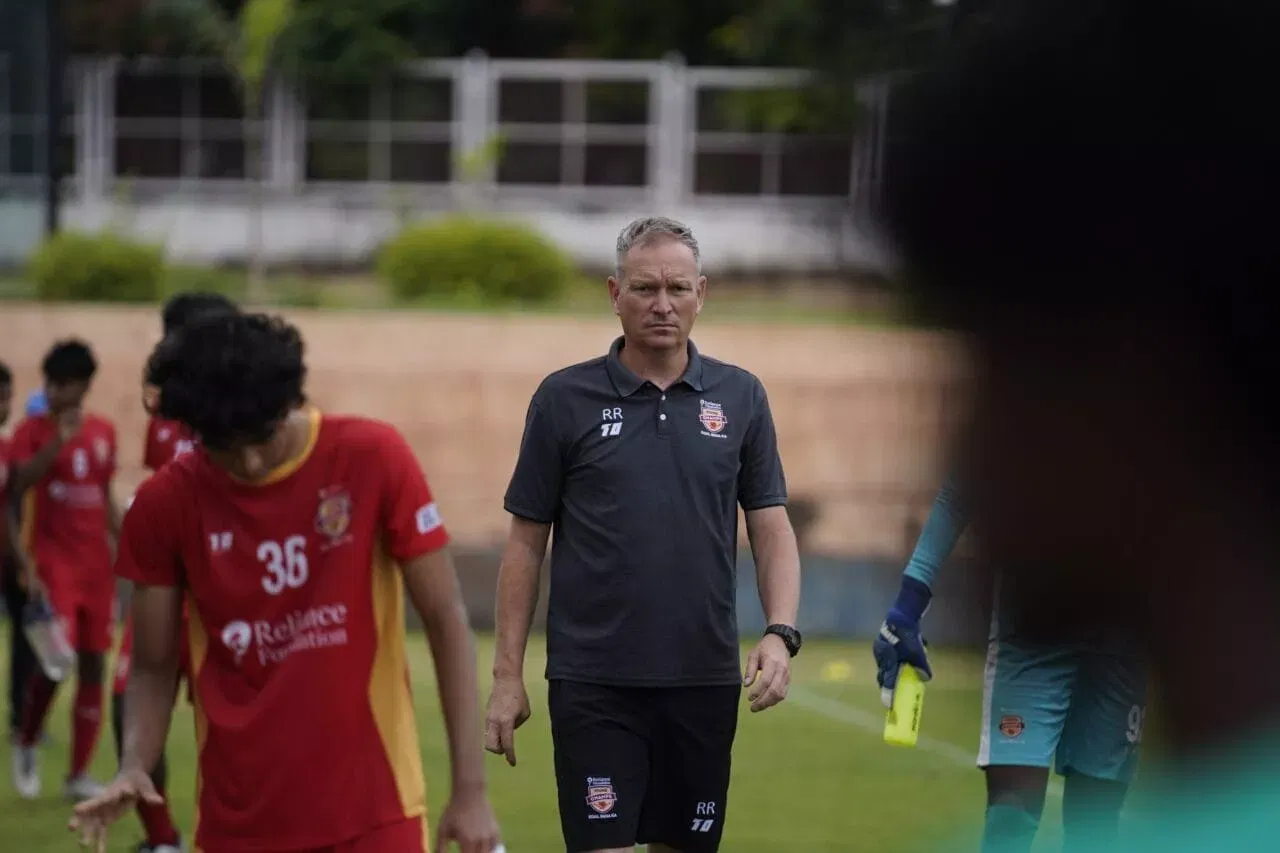
Exposure trips across Asia have become a key pillar of RFYC’s development pathway, and Robert Roelofsen is convinced that these experiences are more relevant than occasional European tours. While acknowledging Europe’s higher physical demands, he believes Asian tournaments offer a more realistic and consistent benchmark for Indian academies.
The Dutch coach stated, “The good thing that Supermunk brings us, Japan brings us maybe a little bit too much, but especially also in Thailand, now I face that. That is the level we really can compete at; seeing ourselves as one of the best/the best academies in India, playing against the best academies from Malaysia and from Thailand brings that game you want every weekend, and that’s what you get in Europe: you always have competitive games every weekend because the competition structure is easier and also the consequences, in the sense that every week you know that you’re going to play. That makes it really good to play this kind of tournament.”
Robert Roelofsen also pointed to practical factors such as travel, climate and food, arguing that Asia offers “more contributory benefits” than Europe at this stage of Indian youth development.
ALSO READ: RFDL 2025-26: All teams that have qualified so far
Positive influence of Arata Izumi
The Japan connection, however, would not have been possible without Arata Izumi, the former India midfielder who played a crucial behind-the-scenes role. While Roelofsen worked only briefly with Izumi at the academy, he credits him as a vital link for Zehal and Vanlal’s opportunity in Japan.
Robert Roelofsen revealed, “I must say I only worked four weeks with him, so I cannot speak too much about that, but of course it helps when you have a contact in Japan, and he brought us to jump into the Sanix Cup, and there put our players onto the stage so that they can also shine there. Without him it was not possible…and he was always practising from his perspective as an Indian/Japanese player, and of course it was really beneficial.”
The RFYC Head of Youth also revealed that Izumi worked closely with Zehal Shibu from the very beginning and credits his work and influence behind the scenes for securing both players’ signings with Tokyo 23 FC.
Robert Roelofsen joined RYFC, looking to make an impact
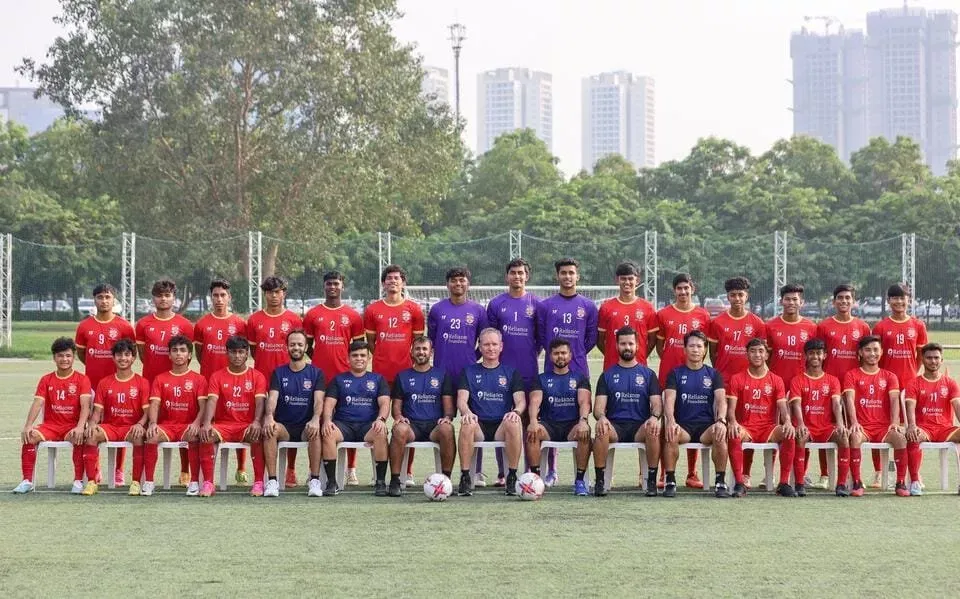
Roelofsen’s own journey to Reliance Foundation Young Champs was driven by the search for a project where he could truly make an impact. Having coached across Germany and beyond, he was drawn to an academy that already had strong foundations.
He stated, “I’m really blessed and thankful that I can be part of this academy because I can really work from all my experience, and you said 30 (years); it’s already 40 years. I’m that old already, and I started really early as a coach, so I think it’s all my philosophies and all my experiences together with the staff we have here is to develop a product and always become better every day. That’s the main reason why I took on this project (academy).”
He credits his background in social work, including a decade as a sports therapist in a prison environment, with shaping his holistic approach to coaching. At a residential academy like RFYC, Robert Roelofsen believes the human element is just as important as technical training.
Competition structure, not infrastructure, is the main problem
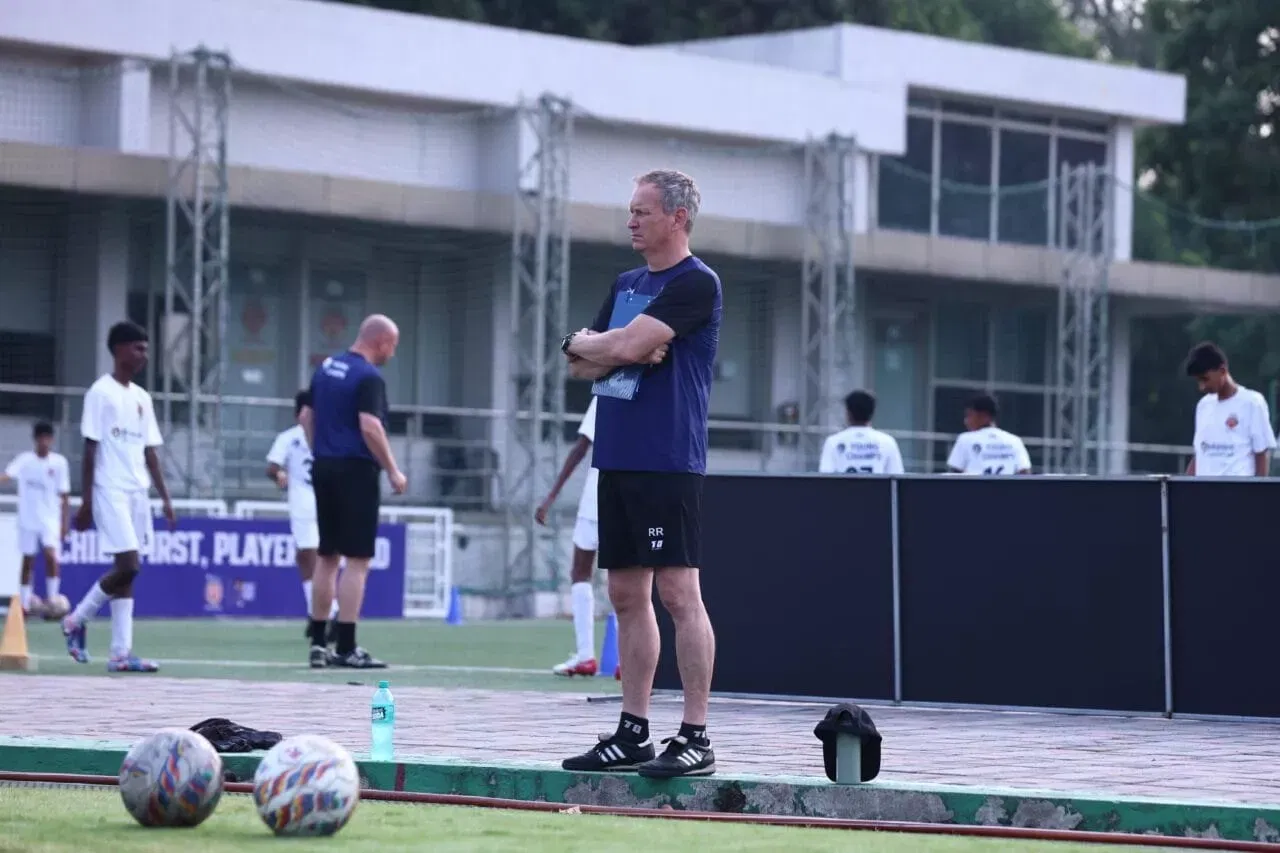
When comparing Indian youth development with systems abroad, Robert Roelofsen is clear about where the biggest gap lies. It is not infrastructure or coaching tools, he insists, but competition structure.
He stated, “From a professional setup, we are definitely not less than most academies… The main problem is finding competitive games every week… When you want to have a competitive game, you have to play against people who are double your age, sometimes, or let’s say 10 years or 5 years older, and then the impact of injuries is too big. So it’s more the competition structure that makes the biggest difference, and that makes the biggest challenge or problem that Indian football is facing on a yearly basis.”
For Robert Roelofsen, consistent competition is essential for players to understand why they train the way they do.
Scouting network has been key for Roelofsen
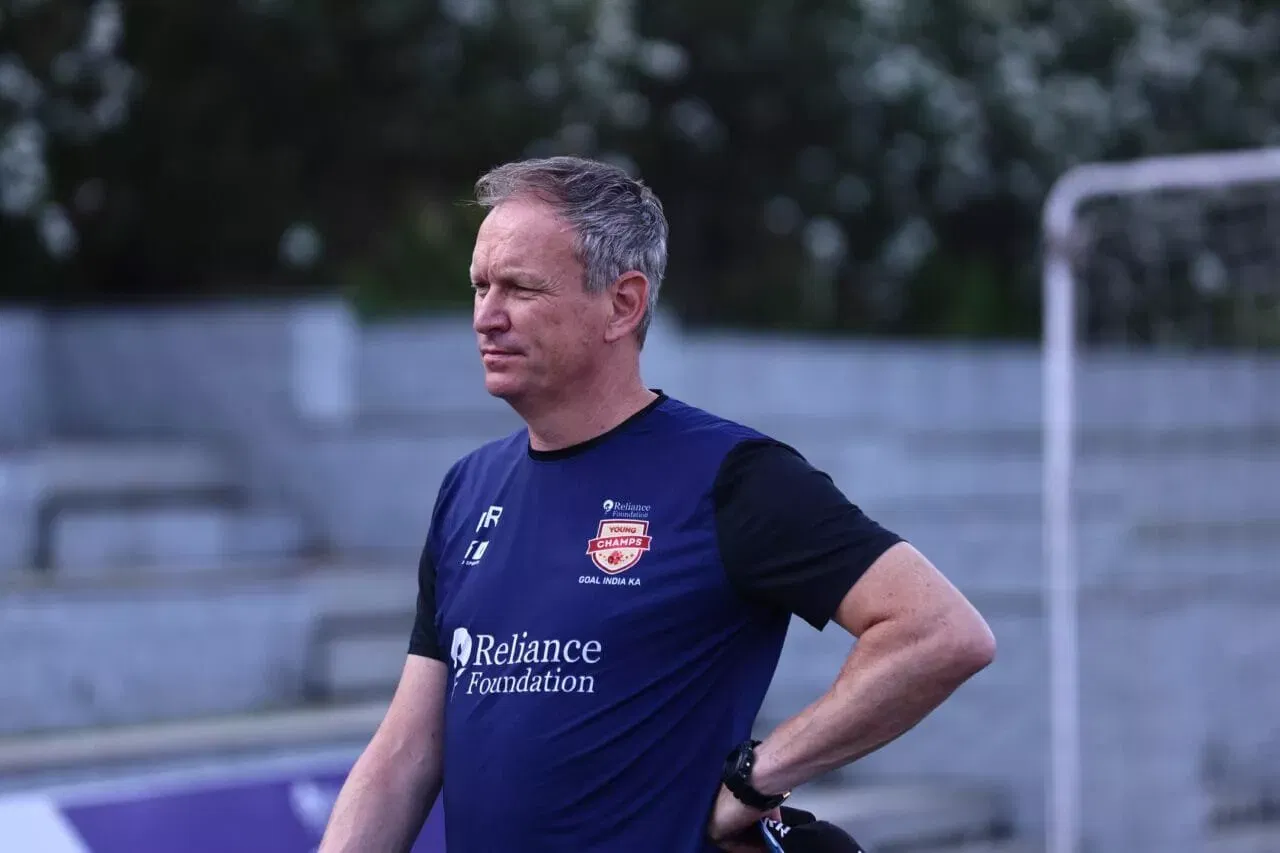
Scouting, however, is an area where Roelofsen believes RFYC is setting national benchmarks. He praised the academy’s extensive network of 22 scouts across the country and a collaborative decision-making process involving all coaches.
Technology has further expanded that reach. RFYC’s AI-based scouting app, AI Scout, allows young players from even the most remote regions to showcase their talent. He stated, “Everybody with a phone and internet is accessible… It gives a fair chance to kids who might never be seen otherwise.”
Importantly, once selected, players are given time. Roelofsen added, “When they come in, they have two years to develop… We don’t send them out quickly if it’s not working.”
As Indian football continues to search for sustainable progress, Robert Roelofsen’s message is consistent: invest in structure, trust the process and create competitive environments.
For Zehal Shibu and Vanlal Fanai, the move to Japan is the starting step on that journey. For the wider ecosystem, it is a reminder that youth development is a long game, one that requires patience, opportunity, belief and support.
For more updates, follow Khel Now on Facebook, Twitter, Instagram, Youtube; download the Khel Now Android App or IOS App and join our community on Whatsapp & Telegram.