
How Philippine football clubs are building the next generation of players
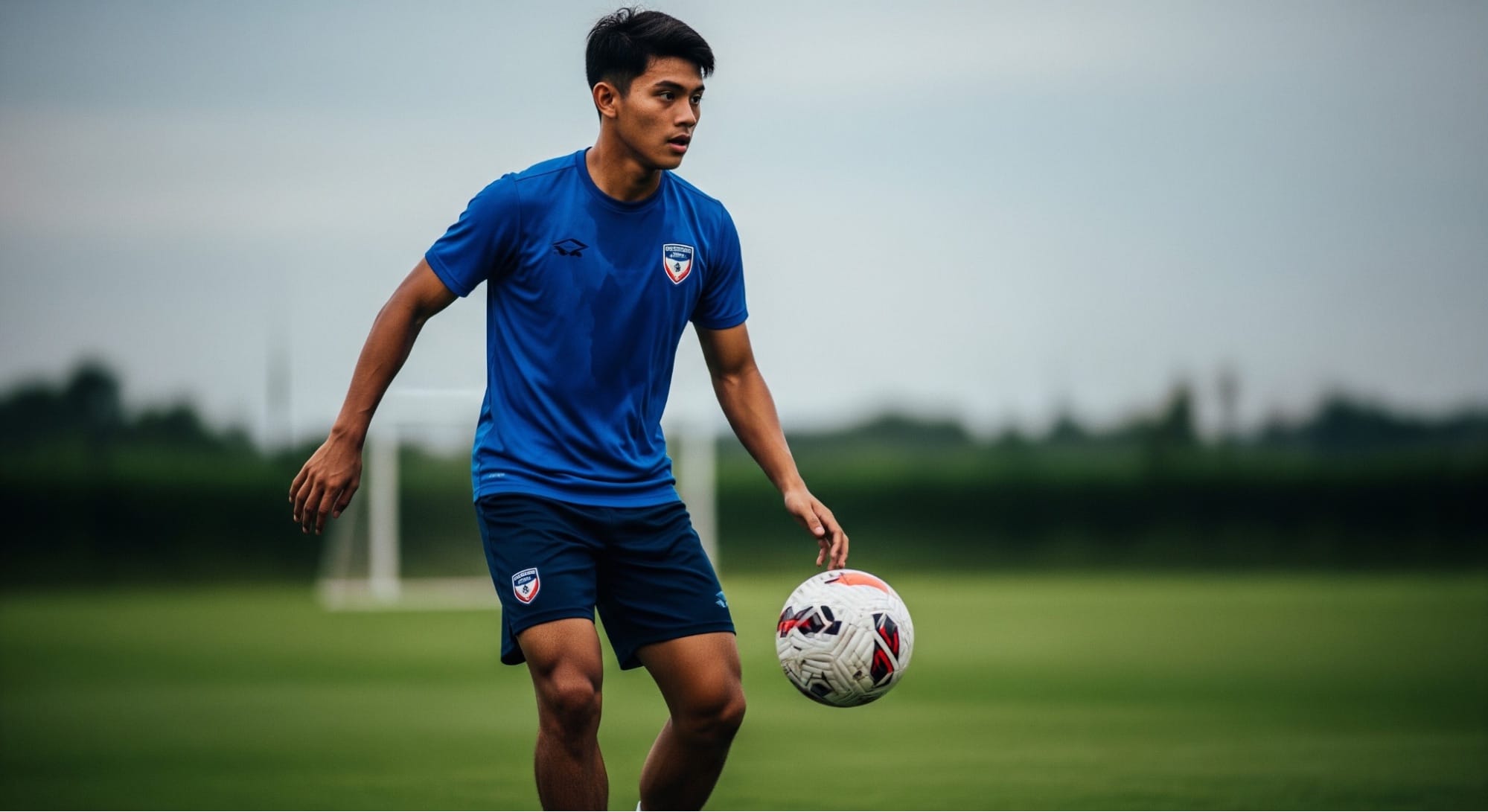
At Rizal Memorial Stadium in June 2026, regional coaches moved from classroom notes to drills built around first touch, passing, heading and attacking movement. The group was small, 24 coaches, but its map stretched from Iloilo and Cebu to Bukidnon, Bicol and ZAMBASULTA. The following day, sessions at Atleta63 in Pasig added live observation and transition work under a Japan Football Association-aligned method.
That is what the next phase of Philippine football looks like on the ground: fewer isolated clinics, more shared language. Clubs still carry much of the daily burden, while the federation is building regional identification and national competition around them. The work is uneven and travel remains expensive, yet young Filipino footballers now encounter more checkpoints between a local training field and the Azkals than they did even five years ago.
Six regions took the same training guide home
Catch Every Update, Anytime, Anywhere
The PFF Center of Development program targets U14 and U16 players within Regional Football Associations. Its value is not one week in Manila; it is what happens when participating coaches repeat the same principles at home. A midfielder from Albay should not have to relearn basic positional language when entering a national camp.
The June workshop mixed technical instruction with individual tactics and attacking transitions. Coaches watched an NCRFA session, then planned and delivered their own field work. That structure matters because coaching quality cannot be upgraded by presentations alone; instructors need to see whether a session creates the behavior written in the training guide.
Negros became a national scouting floor
San Carlos City hosted the first Inter-Center of Development tournament in March 2026. Four regional teams entered the boys’ U15 division and six entered the girls’ event, with fair playing time encouraged so scouts could evaluate more than a preferred starting eleven. NCRFA-A won the boys’ title, while Negros Occidental took the girls’ competition.
Negros Occidental then hosted the national U16 and U19 championships in April and May. Ten RFAs contested the inaugural U16 division; the U19 structure separated Emerging and Elite levels, giving developing regions an earned route upward. Daily matches at Bago and Victorias produced the repetition that a weekend festival cannot offer.
Kaya is connecting the academy whiteboard to the first team
The clearest club signal arrived in July 2026. Kaya FC-Iloilo appointed Bobae Park as men’s head coach and also placed him in charge of youth development and the Elite Program. One coach now has authority to establish the game model, scouting profile and positional requirements from academy training to the senior squad.
That does not guarantee first-team careers, but it removes a common break in football academies Philippines has operated: youth coaches teach one style, then a senior coach recruits for another. Kaya’s academy already runs recreational and elite programs and has sent players toward collegiate and national-team football. The new structure makes senior promotion a stated football objective rather than an occasional success story.
Tuloy FC offers a different model. Its professional team is tied to a foundation program built around formation and opportunity, so the PFL squad itself can become the end point of long-term development. The Youth Football League supplies regular club competition across U7 to U19 age groups, helping Kaya, Tuloy and other academies test training against opponents rather than internal drills.
Senior markets begin outside the academy gate
Youth development should be covered as education and sporting progression, not as wagering inventory. Betting analysis begins only when adult players enter senior PFL fixtures, where minutes, injuries, tactics and opponent strength can be assessed. Performance lines at a betting site may then reflect whether an academy graduate has earned a starting role or changed a club’s scoring profile. Reputation from youth tournaments alone is not enough evidence for a title projection.
Esports belongs to a separate adult competitive system with its own teams, formats and performance records. Its rapid schedule rewards careful checks of current rosters, recent series and tournament rules. Markets grouped under esports betting Philippines therefore cannot be read using PFL form or academy reputation. The shared element is only the need for accurate, timely data.
Live-dealer casino tables are farther removed because the outcome follows game rules and physical or streamed dealing rather than athletic performance. House edge changes with the table variant and player decisions, while limits and side bets affect session volatility. A lobby offering live casino should be assessed by rules, table limits, provider and wagering terms, not by confidence in a football forecast. A strong scouting judgment provides no advantage at a roulette wheel.
The U23 bridge is no longer waiting for a tournament
In May 2026, the PFF assembled a U23 talent-identification match after monitoring the UAAP and PFL for six months. The 40-to-44-player pool included prospects from Kaya, One Taguig, Tuloy, DB Garelli, FEU, UP, Ateneo, La Salle and schools outside Metro Manila. Regular one-off matches are planned to keep evaluation moving between formal camps.
That bridge follows a productive 2025, when the Philippine U22 side reached the SEA Games semifinals for the first time since 1991. The next boots-on-the-ground measure is straightforward: count how many academy and collegiate players sign senior contracts, then count their PFL minutes. When those names reappear in U23 and Azkals squads, football development in the Philippines has a trackable route rather than a collection of hopeful projects.
How are Philippine football clubs developing young players?
Philippine football clubs are investing in structured academy programs, regional coaching initiatives, youth leagues, and clear pathways to senior teams to help develop the next generation of footballers.
What is the PFF Center of Development program?
The Philippine Football Federation (PFF) Center of Development program trains U14 and U16 players while providing standardized coaching methods across regional football associations to improve player development nationwide.
Why are regional football tournaments important in the Philippines?
Regional tournaments allow young players to compete against top talent, gain valuable match experience, and showcase their abilities to coaches and national team scouts.
How does Kaya FC-Iloilo support youth development?
Kaya FC-Iloilo has aligned its academy and senior team under a unified football philosophy, creating a clearer pathway for talented youth players to progress into professional football.
How are players selected for the Philippine U23 national team?
The PFF monitors performances in youth competitions, collegiate football, and the Philippines Football League (PFL) before inviting promising players to U23 talent identification camps and matches.