
Japan's Nagoya hit by massive flood ahead of Asian Games 2026, athletes evacuated
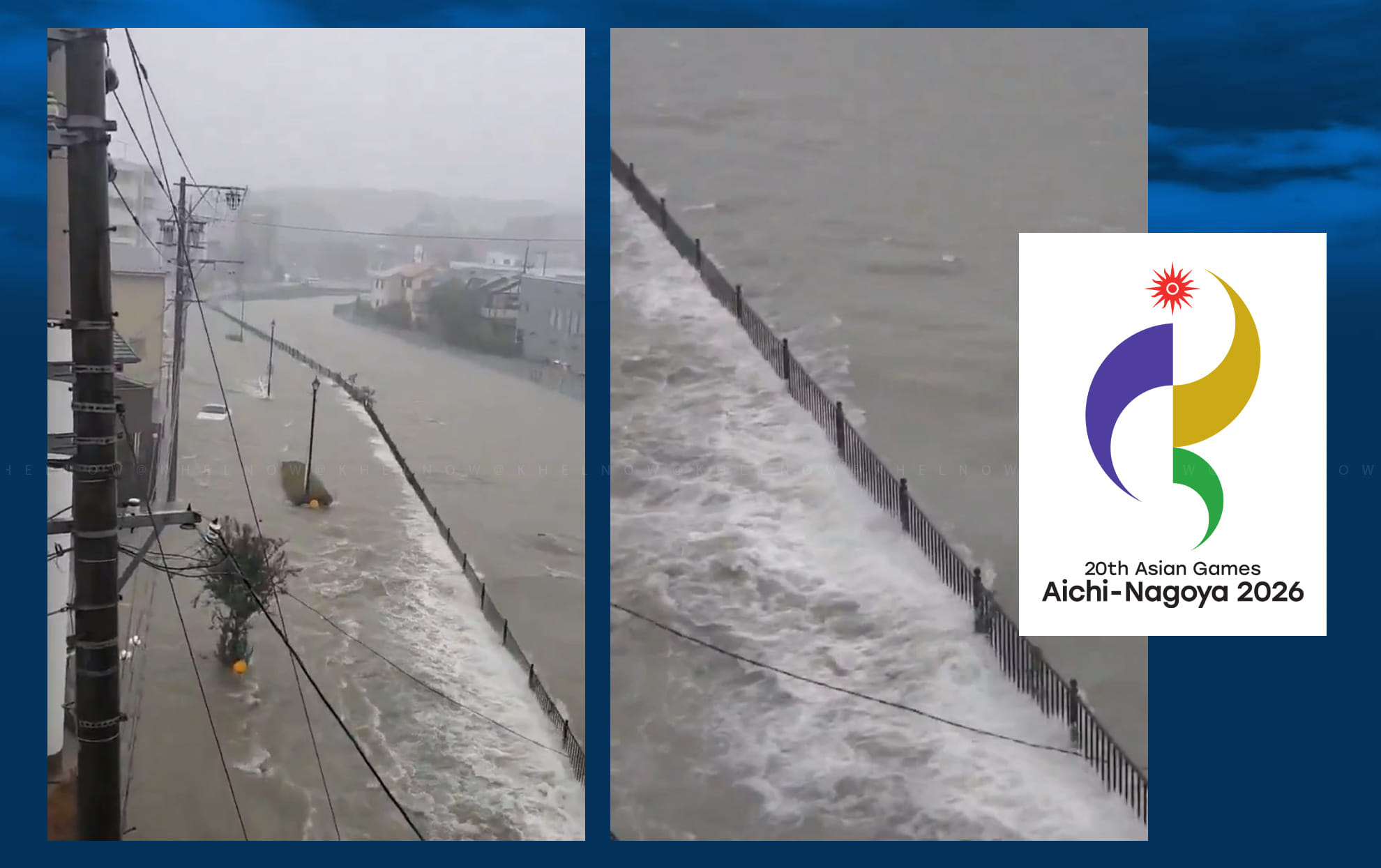
(Courtesy : Screenshots/Twitter video)
The 75th edition of the Games will begin on September 19
Nagoya, the venue for the upcoming Asian Games 2026, just recorded its heaviest hour of rain since records started in 1890, and the timing couldn’t have been worse.
With the Asian Games 2026 set to get underway in just over a week, the central Japanese city got slammed by a downpour that dumped around 104.5mm of rain in a single hour on Tuesday, September 8, flooding streets and rail lines and reaching a handful of Games venues in the process.
The Japan Meteorological Agency responded with a Level 5 flood warning, its most severe, for the Shonai River, which runs through Gifu and Aichi prefectures.
Related: Which sports will offer Olympic quotas at 2026 Asian Games?
Around 400 athletes and support staff who had already arrived early for the Games were moved to higher ground as a precaution. Most of them were staying in shipping containers that organisers had converted into temporary accommodation for the event.
What Happened to the Asian Games venues?
Catch Every Update, Anytime, Anywhere
The bigger question on everyone’s mind was whether the flooding would force any changes to the Games schedule. Nagoya Mayor Ichiro Hirosawa moved quickly to shut that down, telling reporters, “We are not worried about the conditions of the venues.”
He added that the city saw no problem holding the event as planned, noting that a number of leaking roofs had turned up around the dozens of Games venues but nothing more serious than that.
Everyday life in the city took a bigger hit than the venues did. Bus and subway services run by the municipal government were temporarily suspended, JR Chuo Line railway tracks flooded, and the normally busy Sakae shopping district had streets under ankle-deep water at one point during the storm.
Also Read: What is the accommodation controversy at Asian Games 2026? All you need to know
Four people suffered minor injuries in the flooding, according to the Aichi prefectural government. Shelter numbers varied by report, with one count putting it at around 2,700 people taking refuge in emergency centres and another citing a figure closer to 3,500, as dozens of roads and homes across the city went under water.
The Asian Games open on September 19 and run through October 4, spread across venues in Nagoya and the wider Aichi Prefecture.
Related: Asian Games 2026: Event dates, schedule, venue and other details
More than 11,000 athletes from 45 countries and regions are expected to take part, which actually puts the field ahead of the roughly 10,700 athletes who competed at the Paris Olympics in 2024.
This edition also carries some historical weight, marking 75 years since the first Asian Games were held in New Delhi back in 1951, and it’s only the third time Japan has hosted the event after Tokyo in 1958 and Hiroshima in 1994.
Did the flooding damage the Asian Games 2026 venues in Nagoya?
Not seriously. Mayor Ichiro Hirosawa said a number of leaking roofs turned up around the dozens of Games venues, but nothing more significant, and the city sees no problem holding the Games as scheduled.
How many athletes were evacuated during the Nagoya floods?
Around 400 athletes and support staff who had already arrived for the Games, most staying in converted shipping-container housing, were moved to higher ground as a precaution. All were confirmed unharmed.
When do the 2026 Asian Games begin, and how big is the field?
The Games open on September 19 and run through October 4 across Nagoya and Aichi Prefecture, with more than 11,000 athletes from 45 countries and regions taking part, a bigger field than the roughly 10,700 athletes at the 2024 Paris Olympics.
Will the massive flooding affect the Asian Games 2026 schedule?
While the torrential rain has impacted the city, flooding its streets and rail lines, the city mayor Ichiro Hirosawa has quashed reports about any change in schedule or change of venues. He told reports that “We are not worried about the conditions of the venues and we believe there is no problem holding the Asian Games as planned,” as reported by new agency AP.