
5 major reasons behind Indian badminton's disappointing campaign at Asian Games 2026
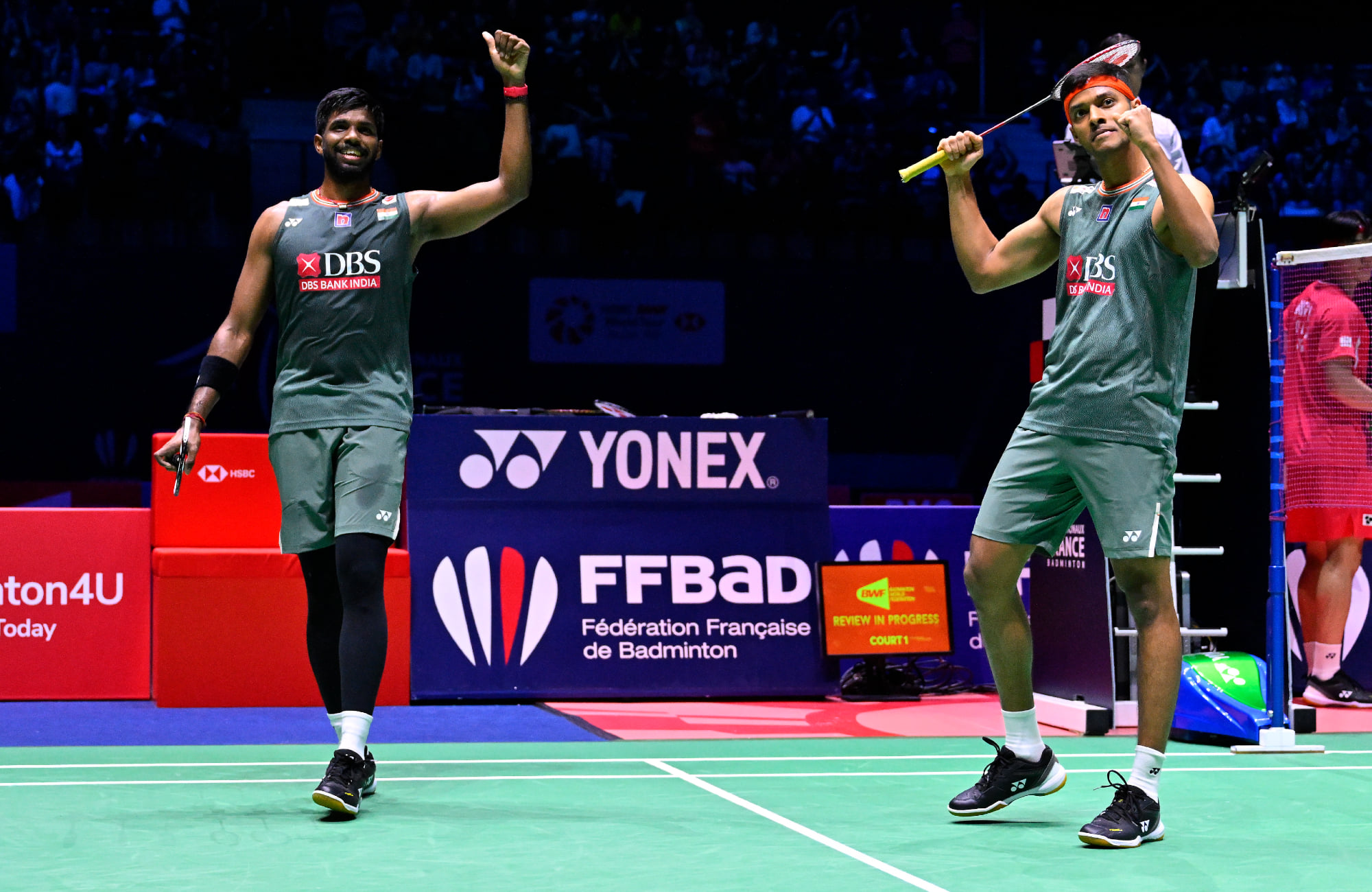
(Courtesy : Getty Images)
India’s 12-year individual medal streak has ended.
India’s badminton campaign at the Asian Games 2026 concluded with a bronze medal in the men’s team event, while the individual competitions yielded a disappointing return.
At the Hangzhou Games, India won three badminton medals: gold for Satwiksairaj Rankireddy and Chirag Shetty in men’s doubles, silver in the men’s team event, and bronze for HS Prannoy in men’s singles. This time, India failed to win a medal in any of the five individual events.
Here are five major factors behind India’s underwhelming campaign.
Reasons behind India’s disappointing badminton campaign
Catch Every Update, Anytime, Anywhere
5. Promising runs were not converted into medals
India did have several encouraging performances. Unnati Hooda reached the women’s singles quarter-finals, while Sindhu also made the last eight.
Treesa Jolly and Gayatri Gopichand defeated Japan’s Yuki Fukushima and Mayu Matsumoto for the second time in the tournament before losing to Malaysia’s Pearly Tan and Thinaah Muralitharan.
Dhruv Kapila and Tanisha Crasto also reached the mixed doubles quarter-finals. However, none of those campaigns translated into a semi-final berth, leaving India without an individual badminton medal at the Asian Games for the first time since 2014.
4. Satwik-Chirag’s shock exit changed the doubles picture
Satwik-Chirag’s first-round exit was arguably the biggest setback of India’s individual campaign. The fourth seeds and defending Asian Games champions won the opening game against Thailand’s Peeratchai Sukphun and Pakkapon Teeratsakul but eventually lost 21-12, 19-21, 21-14.
Satwik later admitted that the pair struggled to manage the mental demands of the contest. Meanwhile, Chirag acknowledged that they needed to remain calmer and make smarter decisions after the Thai duo fought back.
Their early elimination removed one of India’s strongest medal contenders from the draw before the tournament had properly begun.
3. Team-event performances exposed weaknesses in singles
Indian men’s team still secured a bronze medal, but the semi-final against China highlighted the gap against the very best opposition.
Lakshya Sen lost to Shi Yuqi, while Ayush Shetty went down to Li Shifeng. Satwik-Chirag’s victory over Liang Weikeng and Wang Chang was not enough as China won the tie 3-1.
The women’s team faced a similar problem against Japan. After beating Kazakhstan 3-0, India lost 3-1 in the quarter-finals, with Treesa-Gayatri providing the only win. India’s singles players lost all three singles matches.
2. Difficult draws brought elite opposition early
Indian shuttlers also faced tough draws in the knockout rounds. Lakshya Sen faced Loh Kean Yew in the men’s singles Round of 32, while Ayush Shetty faced Chou Tien-chen in the pre-quarterfinals.
In the women’s singles draw, PV Sindhu‘s route to the latter stages included potential clashes with Tomoka Miyazaki and Chen Yufei. Unnati eventually faced Akane Yamaguchi in the quarter-finals. Dhruv and Tanisha faced World No. 1 Feng/Huang.
The quality of the opposition left Indian shuttlers with little margin for error once the knockout rounds got underway. India’s individual campaign ultimately ended with all four quarter-finalists losing their last-eight matches.
1. Lack of depth beyond the leading contenders
India’s campaign also highlighted the gap between its leading medal contenders and the rest of the field. While PV Sindhu and Unnati Hooda reached the women’s singles quarter-finals, Lakshya Sen and Ayush Shetty could not progress beyond the pre-quarters.
In doubles, with the early exit of defending champions Satwiksairaj Rankireddy and Chirag Shetty, the responsibility of carrying the nation’s challenge fell upon the other Indian pairs.
Treesa Jolly-Gayatri Gopichand and Dhruv Kapila-Tanisha Crasto both reached the quarter-finals, but neither could go further.
With none of India’s entries making the semi-finals in the individual events, the campaign exposed the limited depth beyond the country’s leading medal contenders.
Conclusion
India’s campaign was therefore not without positives, with the men’s team securing a bronze and several younger players gaining valuable experience.
However, the contrast with Hangzhou was significant. Due to Satwik and Chirag’s early exit, struggles in men’s singles, and the failure of the other quarter-finalists to advance beyond the last-eight stage, India secured only one badminton medal in Aichi-Nagoya.
How many badminton medals did India win at the Asian Games 2026?
India won just a bronze medal in the men’s badminton team event.
How far did PV Sindhu progress at the Asian Games 2026?
Sindhu lost in the quarter-finals to Chen Yufei.
For more updates, follow Khel Now on Facebook, Twitter, and Instagram; download the Khel Now Android App or IOS App and join our community on Whatsapp & Telegram