
FC Goa vs Fortis FC: Player battles that can decide AFC Challenge league 2026-27 match
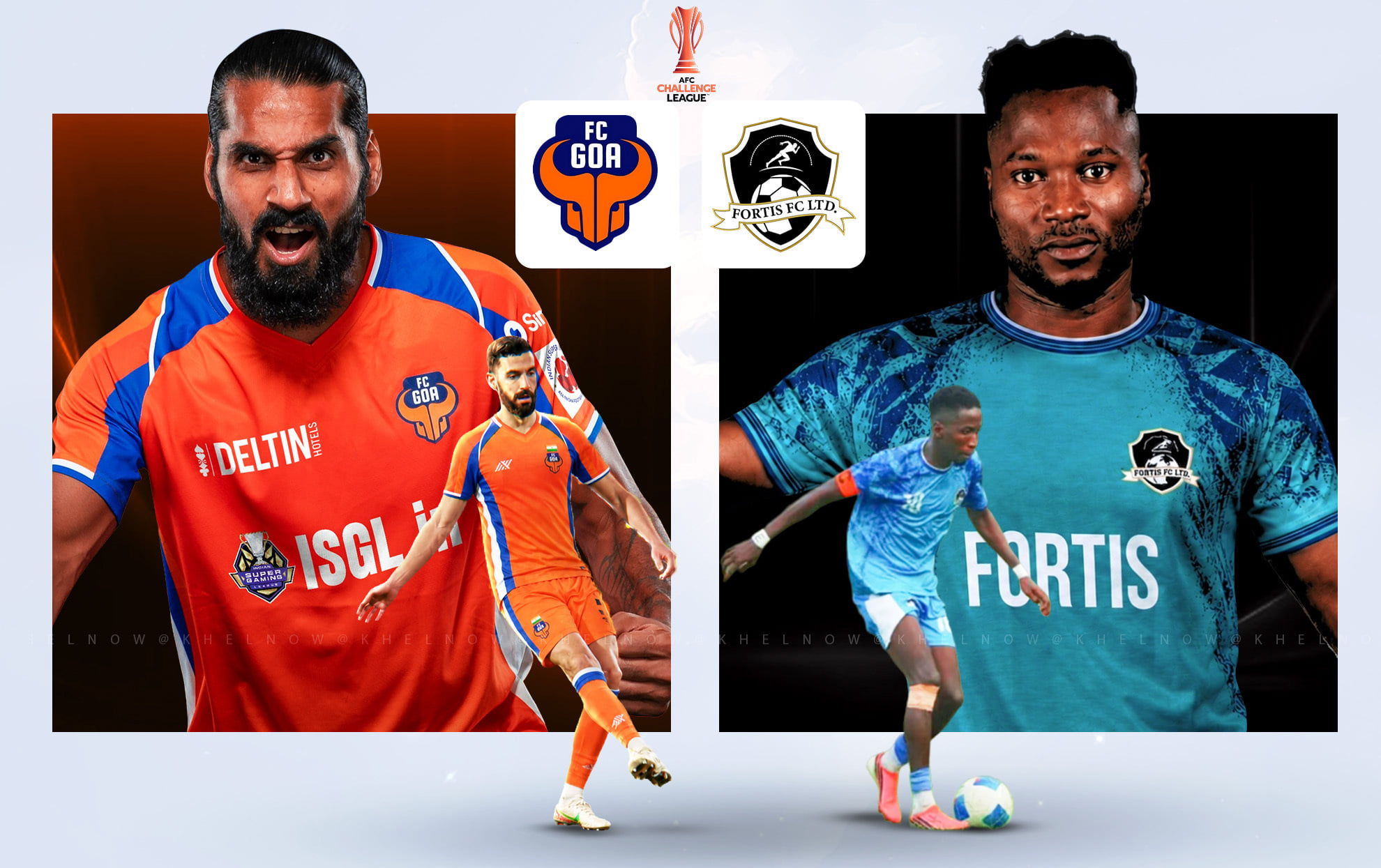
The Gaurs to meet Fortis FC in the AFC Challenge League Matchday 2
The AFC Challenge League group stage leaves no room for recovery. It is a single round-robin, played in Kuwait over a week, with three matches per side. In the West, only the three group winners and the best runner-up reach the quarter-finals.
FC Goa and Fortis FC both arrive at this fixture without a point: Goa beaten 2-1 by FC Regar-TadAZ, Fortis beaten 3-0 by hosts Qadsia SC.
A second defeat would not formally end either campaign, but it would reduce the final matchday to a goal-difference and head-to-head exercise. For Goa, the pressure is compounded by a summer that has already gone wrong: the 3-0 loss to FK Arkadag in the AFC Champions League Two preliminary stage is what dropped them into this tier.
For Fortis FC, the context is different but no less pressing. This is their debut in the competition, which they reached with a 1-0 win over Muras United, in which they created several chances and scored once.
That last detail matters. It points to a side whose problem going forward is finishing rather than access to the final third, and to a side that, after conceding three to Qadsia, will be tempted to sit deeper and rely on transitions.
The three battles below follow from that.
Sandesh Jhingan vs Stephen Chukwude
Catch Every Update, Anytime, Anywhere

Fortis’s most coherent attacking pattern, on the evidence of the Muras United tie, is a counter that begins with a quick vertical pass into a runner, with the Nigerian forward Chukwude as the intended finisher. In that match, Mohammad Ibrahim ran onto a through ball in the 12th minute and squared it for Chukwude, who failed to control it in front of goal. The chance was spurned, but the pattern was clear.
For Jhingan, the captain of FC Goa, the job is less about winning duels than about controlling distances. Goa’s defeat showed what happens when the back line is stretched late in a game: Regar-TadAZ’s first goal came from a ball released into space behind a tiring defence, and the second from a corner delivery met by a header.
Both are failures of line management and set-piece marking rather than of one-on-one defending.
If FC Goa keep a high defensive line while their front pair are still pressing, Jhingan has to be the one dictating when the line drops. A line that sits too high invites exactly the through ball Fortis FC want. A line that drops too deep hands Fortis territory and lets Babou (see Battle 3) turn.
FC Goa’s 4-4-2 shape commits two forwards high. When a Goa attack breaks down, the immediate question is who is positioned between the ball and Jhingan. If Fortis FC win the ball and the first pass finds Chukwude with his back to goal, Jhingan’s task is to stay goal-side and force a lay-off rather than a turn.
Chukwude is the clearest aerial target in the Fortis forward group, which makes Jhingan’s marking assignment at corners the more consequential of the two roles on Tuesday.
The risk for FC Goa is complacency about Fortis’s profile. A side that scored one goal in its previous match against the run of play, and that conceded three in the next, is not obviously a threat. But the Muras tie showed they are capable of producing a clear chance from a single transition.
Álex Zalaya vs Mohammad Ibrahim
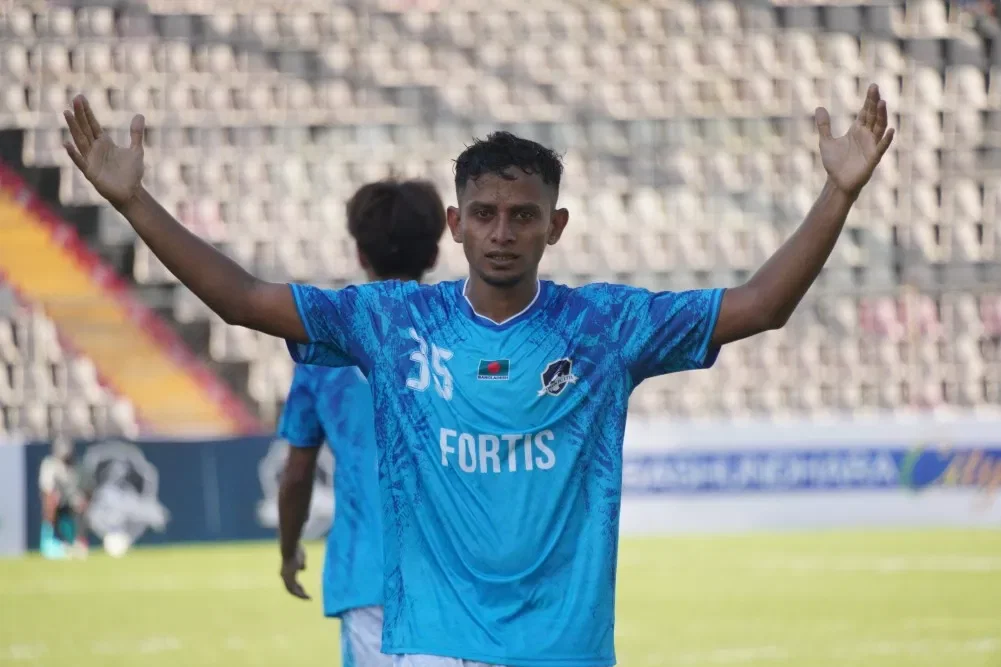
Ibrahim is the most dangerous runner in the Fortis front line on current evidence. He scored the only goal against Muras United in the 52nd minute, controlling a through pass from captain Pa Omar Babou and finishing calmly, and he was the player at the end of that 12th-minute counterattack. Formerly of Abahani, he is the Fortis attacker most likely to attack the channel between Goa’s centre-backs and full-backs.
Zalaya’s task is positional. A centre-back who steps out too early to engage Babou or Chukwude leaves the gap Ibrahim wants. A centre-back who stays too deep gives Fortis the time to play the pass. Zalaya, who came through the Real Zaragoza academy and spent time with Barcelona’s reserve side, has the profile of a defender used to stepping out to engage, but that is also the habit Goa now need to manage carefully.
The tactical question is how FC Goa structure the cover. If the full-back on Zalaya’s side pushes high in support of attacks, Zalaya has to decide between covering the vacated channel and holding his line. Fortis, whose transitions rely on a pass into that channel within two or three touches of winning the ball, will test that decision repeatedly.
Two things would help Goa. Winning the second ball after a long clearance means Fortis rarely get the clean turnover they need to start a counter. Goa lost their late structure against Regar-TadAZ when substitutes with fresh legs ran at a back line that had been defending for most of the second half.
If the first defender engages immediately after a turnover, Ibrahim’s run starts from a standing position rather than a flying one.
Alex Vallejo vs Pa Omar Babou
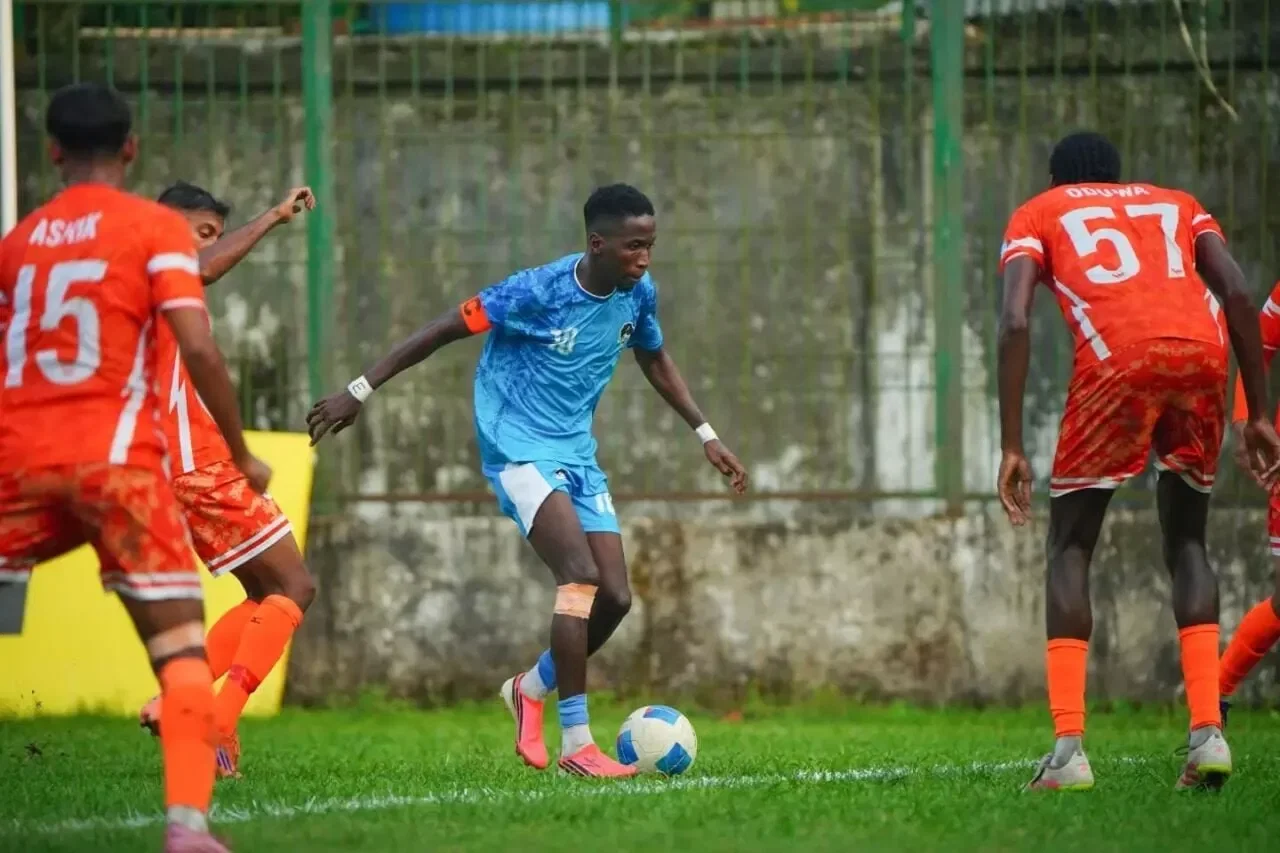
The Fortis captain is the point through which most of their good moments pass. Against Muras United he drove in from the left side of the box to hit the near post, supplied the pass that put Ibrahim through, and was involved in the build-up to the winner.
In the Qadsia match, Fortis were largely reduced to defending after the early penalty, which limited his involvement. On Tuesday, if Fortis can get the game level or ahead, he becomes the key distributor.
Vallejo, whose composure was singled out in the post-match assessments of the Regar-TadAZ defeat, has two jobs. The first is to screen the space between Goa’s midfield and defensive lines, where Babou is most dangerous: receiving on the half-turn and playing forward in one touch.
The second is to dictate tempo in possession so that Fortis do not get the open, stretched game their transitions need.
The tactical detail that matters most is Vallejo’s positioning relative to Goa’s own attacking midfielders. If Goa play with a pair in the middle, as the predicted 4-4-2 suggested with Prachit Gaonkar alongside him, then one of them must always hold position when the other advances.
If both move forward together, Babou has space to receive in front of Jhingan and Zalaya, and that is precisely the lane Fortis want.
Does Goa press Fortis’s build-up high, or sit in a mid-block and let them come? Fortis are most vulnerable when forced to play out under pressure, but a failed press leaves Goa exposed to the very transition they want to avoid.
Vallejo should aim to receive on the half-turn, facing forward, so that Goa’s first pass after winning the ball goes into the final third rather than backwards.
Goa led 1-0 for most of 77 minutes against Regar-TadAZ and still lost. If they score first on Tuesday, controlling possession in the middle third for long stretches, rather than inviting pressure, is the most direct fix for what went wrong in the opener.
Chiki vs Norki Akada
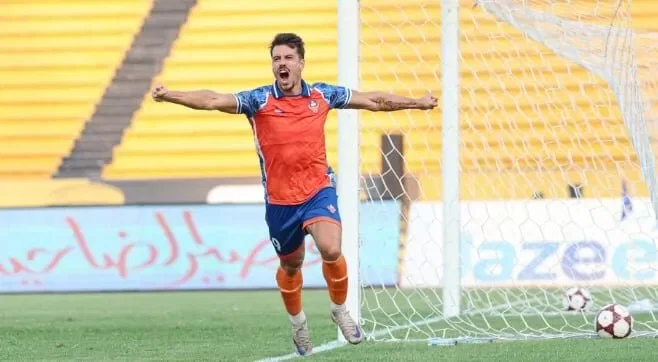
This is the matchup with the clearest recent evidence. Chiki, signed from FC Cartagena in the summer rebuild, scored Goa’s opener against Regar-TadAZ by arriving in the middle of the box and finishing first-time. That is a finisher’s goal, scored from a position where he found space between defenders.
On the other side, Fortis’s Japanese defender Norki Akada gave away the penalty against Qadsia with an unnecessary off-the-ball foul inside the area. It is a single incident, but it points to a possible weakness: a defender who can be drawn into contact when a forward makes a movement behind him.
Chiki’s pattern, arriving late and attacking the space between centre-backs, is the kind of movement that creates exactly those situations.
Fortis’s resilience was nonetheless genuine for much of the Qadsia match. Goalkeeper Sujan Perera kept the game at 1-0 until the 72nd minute and made repeated saves against Muras United.
Any Goa plan that depends on volume of shots will meet a goalkeeper who has been in form. A better route is to generate high-quality chances through the middle, where Chiki’s movement is most effective.
Chiki’s best work is done when he drifts between the two centre-backs and receives with space to turn. Goa’s wide players, Jorge Ortiz and Udanta Singh in the predicted XI, need to deliver early crosses and cut-backs to the penalty spot rather than waiting for a perfect delivery.
Ortiz twice went close against Regar-TadAZ, with a long-range effort in the 21st minute and a breakaway six minutes later that was stopped by a last-ditch tackle. Goa left a one-goal lead unprotected by not extending it, and against a side as organised defensively as Fortis, the same pattern could be costly.
Expect a compact mid-to-low block, with the two holding midfielders staying close to the centre-backs. The space for Chiki will be tight, so combination play on the edge of the box, rather than direct service, is the likelier route to a clear chance.
A result for either side keeps Group C open into the final matchday on October 23, when Goa face Qadsia and Fortis meet Regar-TadAZ. A defeat for either leaves a team needing results elsewhere to survive.
For more updates, follow Khel Now on Facebook, Twitter, Instagram, Youtube; download the Khel Now Android App or IOS App and join our community on Whatsapp & Telegram.