
Decoding the Downfall of Maharashtra Men’s Football Part 3: On The Brink (2020-Present Day)
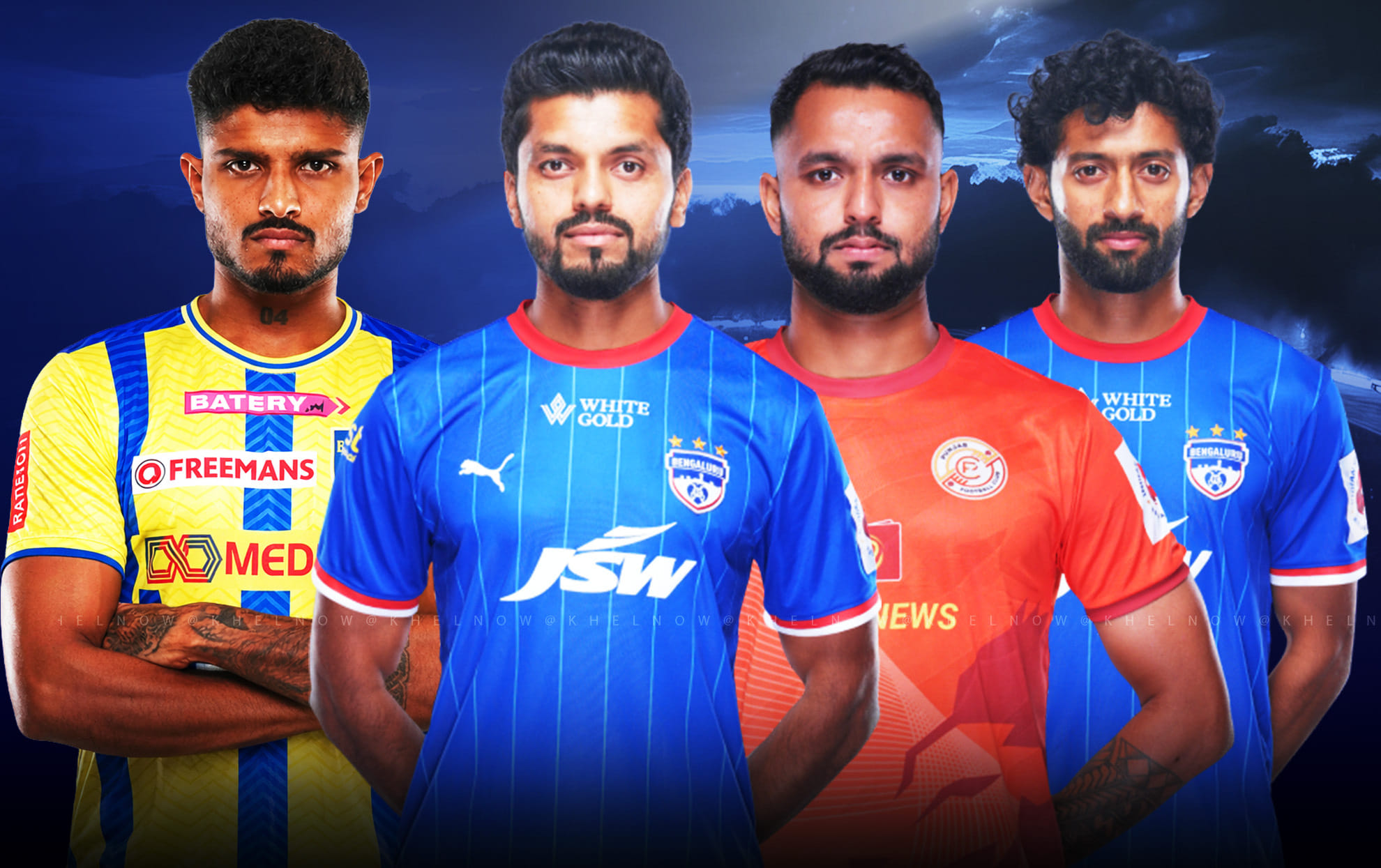
Maharashtra men’s football faces a defining crossroads after years of structural decline.
From getting thrust into the national footballing spotlight in the 2000s courtesy of Mahindra United and the constant yo-yoing of professional top-flight clubs in the 2010s, men’s football in Maharashtra stands at a critical juncture today.
The post-COVID footballing ecosystem in the state has been exposed by weak Santosh Trophy performances, administrative malaise, and a failure to uplift the sport beyond Mumbai.
City Football Group’s exit from Mumbai City FC in December 2025 might have been caused by the incompetence of stakeholders at the macro level of Indian football, but it will hit Maharashtra hard, where there is no other club left to fill the vacuum in case the Islanders decide to shut shop in the near future.
While recent developments like the state government’s Project Mahadeva programme and Bollywood actor Tiger Shroff’s acquisition and subsequent rebranding of local club Mumbay FC have garnered some local media attention, they fail to hide the fact that the supply line of talent to the top tiers of Indian football and the National Team is wearing thin.
Santosh Trophy: No Place to Hide
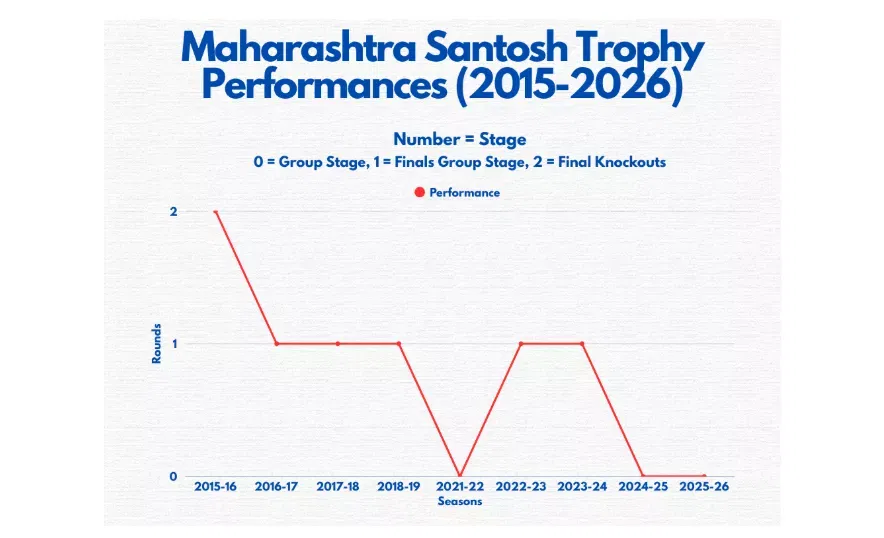
No competition has revealed the true state of Maharashtra men’s football more starkly than the Santosh Trophy. Between 2021-22 and 2025-26, Maharashtra have repeatedly failed to progress beyond the early stages of the competition.
Group-stage exits in qualifiers, inability to dominate neighbouring states, and a complete absence from knockout football have become the norm rather than the exception.
These repetitive failures represent a sustained inability to assemble competitive squads from within the state. Maharashtra are being outworked, outcoached, and outthought by states with arguably lesser history, culture, and infrastructure in football, like Gujarat and Rajasthan, who have built clearer pathways and stronger local ecosystems.
Since the team started competing in the Santosh Trophy in 1962, they have been champions four times (most recently in 1999-2000) and runners-up 12 times (most recently in 2015-16).
Questions surrounding the quality of the selected players, the transparency of the selection process, and coaching appointments regularly come to the fore after tournament failures, but they are restricted to informal conversations between stakeholders rather than directed to the governing body, the Western India Football Association (WIFA), by local sports media.
“In the final rounds of the Santosh Trophy, the games come thick and fast – we played every alternate day – so there is no room for error, and we did not take the chances that came our way,” recalled former Sreenidi Deccan FC and Kenkre FC goalkeeper Harsh Patil, who represented Maharashtra in the 2023-24 finals.
“This difference in quality and mentality can come by playing in a more competitive league – something which Maharashtra football needs. In the last few years, players here have become too comfortable playing locally, and one way they can improve is by going outside their comfort zone and testing themselves outside Maharashtra.”
Also Read: Decoding the Downfall of Maharashtra Men’s Football Part 2: Illusion of Progress (2010-2020)
The Shrinking Professional Funnel
At the professional level, Maharashtra’s presence has thinned over the past few ISL and I-League seasons, with the number of Maharashtra-born players receiving consistent minutes declining.
Across all top-flight clubs, the number of Maharashtra players that were registered in the squad for each of the last five seasons is 19, 16, 12, 15, and 13. The percentage of minutes played by these players in itself is not a bad indicator, but upon closer scrutiny, the concerns become clearer.
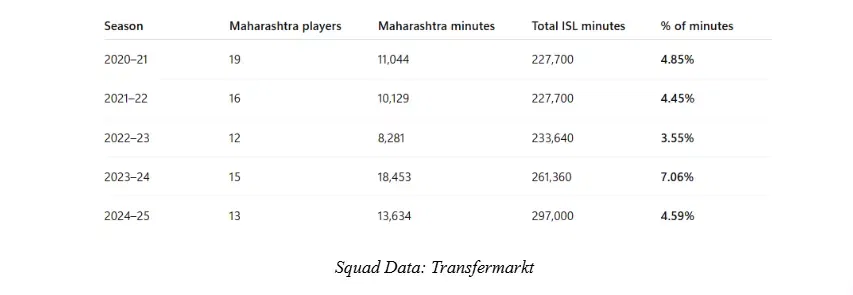
In the 2020-21 season, six of the 19 registered Maharashtra players – Amey Ranawade, Raynier Fernandes, Ashutosh Mehta, Rahul Bheke, Farukh Choudhary, and Pratik Chaudhari – were responsible for 7,196 of the 11,044 minutes, i.e., about 65% of all Maharashtra player minutes.
In the 2021-22 season, six of the 16 registered Maharashtra players – Rahul Bheke, Nikhil Poojary, Aniket Jadhav, Pratik Chaudhari, Amey Ranawade, and Ashutosh Mehta – accounted for 7,296 of the 10,129 minutes i.e. about 72% of all ISL Maharashtra player minutes.
In the 2022-23 season, where only 12 Maharashtra players were registered in ISL squads, five of those – Nikhil Poojary, Rahul Bheke, Pratik Chaudhari, Raynier Fernandes, and Parag Shrivas – played 6,825 of the 8,281, i.e., a staggering 82%, of all ISL Maharashtra player minutes.
In the 2023-24 season, which stands out as a good year of gaining ISL minutes for Maharashtra players, and with the addition of Punjab FC as the newest entrant in the league, seven players – Jay Gupta, Amey Ranawade, Rahul Bheke, Pratik Chaudhary, Nikhil Poojary, Asheer Akhtar, and Nikhil Prabhu – accounted for 13,391 of the 18,453, i.e., 72%, of Maharashtra player minutes.
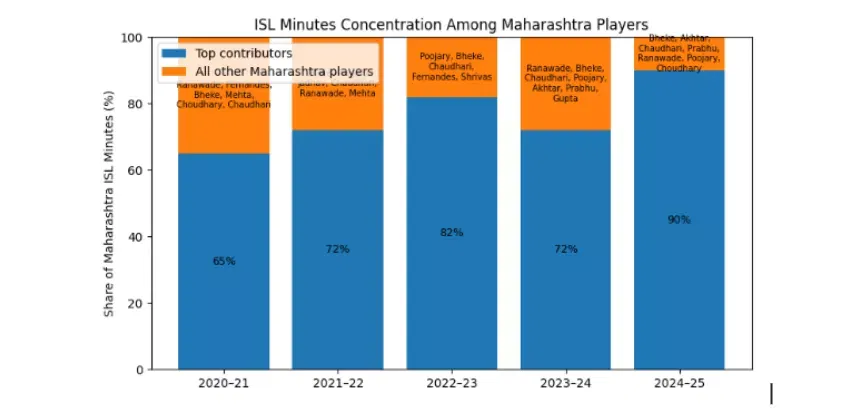
To conclude with the most damning statistic yet, the 2023-24 season saw more minutes available courtesy of Mohammedan SC’s arrival in the ISL, but the usual suspects took the spotlight. Seven of the 13 registered players – Rahul Bheke, Asheer Akhtar, Pratik Chaudhari, Nikhil Prabhu, Amey Ranawade, Nikhil Poojary, and Farukh Choudhary – played for 12,232 of the 13,634 minutes, i.e. almost 90% of all Maharashtra ISL minutes.
There are multiple takeaways from this data analysis, but the two which stand out most are the lack of new faces and the lack of attacking players the state is producing. Rahul Bheke and Pratik Chaudhari are in the twilight of their careers, while Nikhil Poojary, Farukh Choudhary and Asheer Akhtar have entered their 30s.
Amey Ranawade and Nikhil Prabhu are entering their peak years and will be expected to keep the Maharashtra flag flying high over the next few years, but where is the next generation?
Project Mahadeva: Future or Façade?
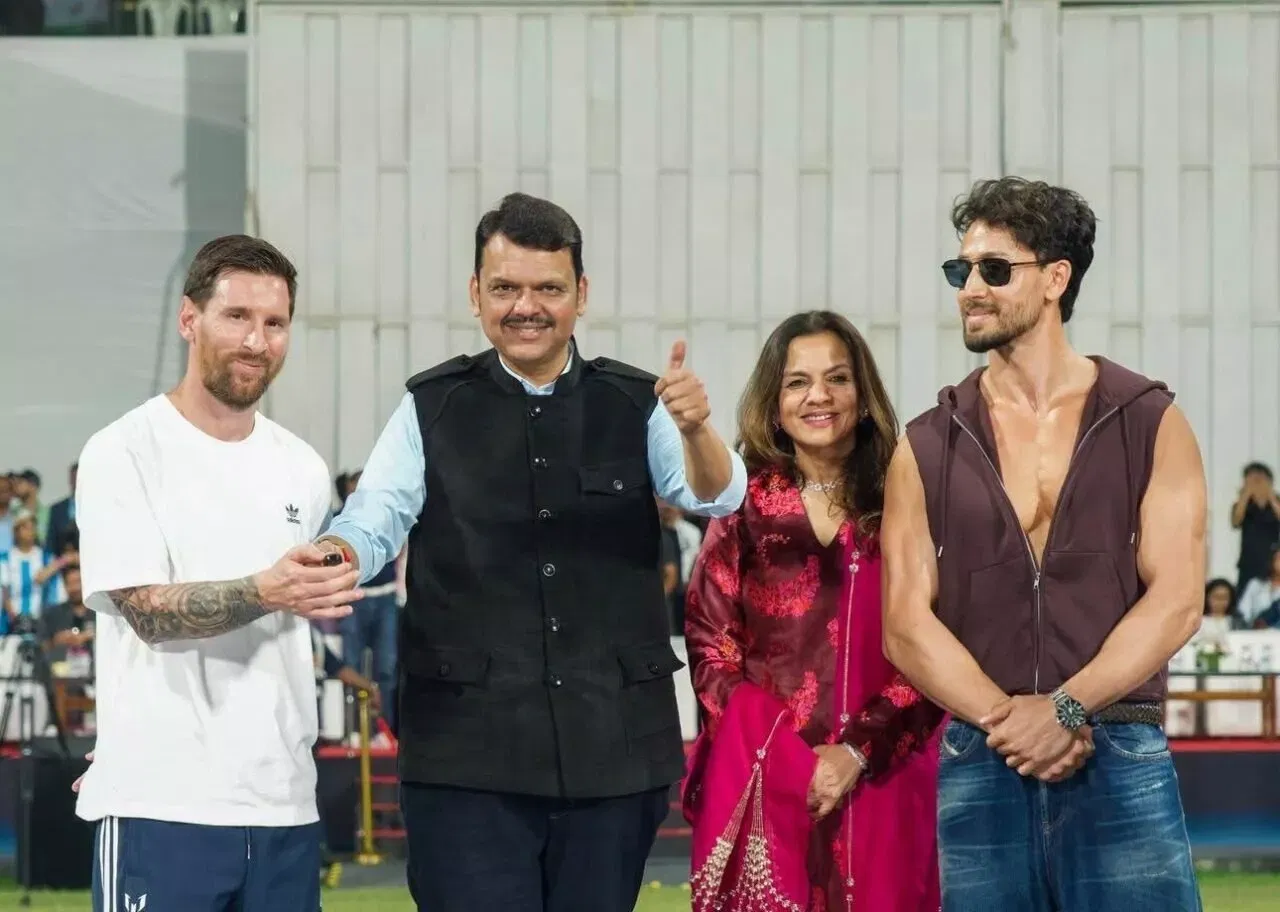
Amidst the circus of Lionel Messi’s visit to India and in the presence of the great man himself, Maharashtra Chief Minister Devendra Fadnavis launched the state government’s grassroots football initiative ‘Project Mahadeva’ which aimed to scout 30 boys and 30 girls aged 13 and provide them with a five year full scholarship covering professional football coaching, education, sports equipment, nutrition, fitness training, mental conditioning, and exposure to competitive matches as per the press release.
Praveensingh Pardeshi – CEO of Maharashtra Institution for Transformation (MITRA), who is supporting Project Mahadeva along with WIFA, CIDCO, and others – echoed this sentiment in his December editorial column for the Indian Express, adding that he hopes these kids would form the spine of the Indian National Team that has ambitions of qualifying for the 2034 FIFA World Cup.
It is not uncommon to hear such statements from political leaders or bureaucratic bigwigs but they reveal an administration out of touch with the stark reality of Indian football’s status quo.
A team which failed to qualify for an expanded edition of the AFC Asian Cup – losing to Bangladesh, Singapore, and Hong Kong – cannot be expected to qualify for a tournament higher in quality and one which they have never reached in their entire history, in the next eight years.
“MITRA had the idea to introduce a holistic life skills development programme for children across the state and together with WIFA, they decided to implement that through football and that is how Project Mahadeva was born,” said Jeddy Almeida, Technical Head of the programme.
“The selected players will be registered under a club called Mahadeva FC and compete in the local youth leagues. Every year, a new batch will be added so that we can create a pipeline of talent that can be developed to compete with the best of Asia.”
For now, it seems to be a case of “Watch this space”, but it may be worth revisiting in five years’ time when the first batch is expected to graduate.
Also Read: Decoding the Downfall of Maharashtra Men’s Football Part 1: Success Without Succession (2000-2010)
What Does the Future Hold?
At the end of this deep dive into how the last two decades have shaped men’s football in Maharashtra, some of the key points of discussion centre around –
- Decentralisation: Can a professional club take root outside Mumbai, create a local fan culture and rise to the top tiers of Indian football? Kolhapur, for one certainly deserves an institution like this. Is there room for policy-based change to separate Mumbai from Maharashtra like it has in the Ranji Trophy to allow state-wide talent to flourish?
- Mumbai City FC: After City Football Group’s exit, there is real concern that Maharashtra’s only top-flight club might cease to exist due to budget constraints. This would deprive the state’s football players of their only local pathway to the top of Indian football, forcing the best talent to seek new pastures across the border.
- Building a fan culture: Stakeholders need to invest in professional fan engagement with modern, digital methods and tailored approaches to different categories of football fans – for the local league, grassroots tournaments, ISL/I-League matches or even bringing back the Rovers Cup.
India’s peers in Asian football have progressed at an alarming rate over the last decade, with the likes of Jordan, Uzbekistan even having qualified for the 2026 FIFA World Cup. In the same way, Maharashtra is being left behind by Gujarat, Rajasthan and others, showing that football waits for no one if you stand still. Is there anyone out there with the political will, administrative competence and sporting vision to revive men’s football in Maharashtra?
For more updates, follow Khel Now on Facebook, Twitter, Instagram, Youtube; download the Khel Now Android App or IOS App and join our community on Whatsapp & Telegram.
\

Tanay Apte is a football journalist who focuses on Indian football’s player development pathways, governance structures, and tactical trends. Using data-led analysis, he challenges prevailing narratives and explores what best practices in the game can and should look like.