
Lionel Messi for ministers, funded by masses

Messi came for the fans, who never seemed to be a part of the plan.
Lionel Messi‘s arrival in Kolkata came heavy with promise. The stands filled early. The noise built steadily. Children held up posters. Fans waited for a glimpse of history.
Yet, once the event kicked off, the balance shifted. Power moved to the centre. People were pushed to the edges. Messi arrived as the headline. Politicians claimed the spotlight.
I write this having witnessed the Kolkata leg from the media box. From that vantage point, the breakdown was immediate and unmistakable. Confusion came before chaos. Privilege arrived before panic. The GOAT Tour in Kolkata did not fall apart over time. It unravelled within minutes.
When a football spectacle turned hostile!
From the media enclosure, it was impossible to miss the warning signs. Entry points clogged early. Volunteers disappeared without explanation. Instructions kept changing every few minutes. Meanwhile, Lionel Messi arrived with his security detail and official entourage, which was expected.
What followed was not.
Within seconds, the space around him collapsed. Politicians, aides, VIP guests, their children and even their spouses rushed in, tightening the circle. Arms wrapped around shoulders like staged reunions.
Phones shot up instantly. Smiles were rehearsed. VIP kids and families queued for photographs with Messi, while fans watched from a distance. Messi was no longer walking. He was being yanked, paused, turned and pulled again.
From above, it felt surreal. You could play Where’s Waldo with Messi. Only flashes of him appeared between suits and security jackets. A head here. A jersey there. Fans did not see Messi. They saw an obstruction.
Fans below waited patiently at first. They stood. They craned their necks. They shouted Messi’s name. However, they saw nothing. Security rings tightened. Access narrowed. Hope thinned.
Then Messi was taken away.
Not escorted. Extracted.
The reaction was instant. Bottles flew. Plastic seats uprooted. Barricades shook. From above, the sound was frightening. Metal tore. Glass shattered. Parents shielded children.
And the fallout was severe. Spanish and Argentine media tore into the Kolkata leg, portraying the city and India as chaotic and unsafe. What should have been a celebration became an international embarrassment.
Calling this hooliganism doesn’t begin to cover it, misses the truth. Anger does not appear without reason. It grows when dignity is stripped away.
Also Read: Big chaos as Lionel Messi’s GOAT Kolkata tour is terminated within 10 minutes!
Why was the anger inevitable?
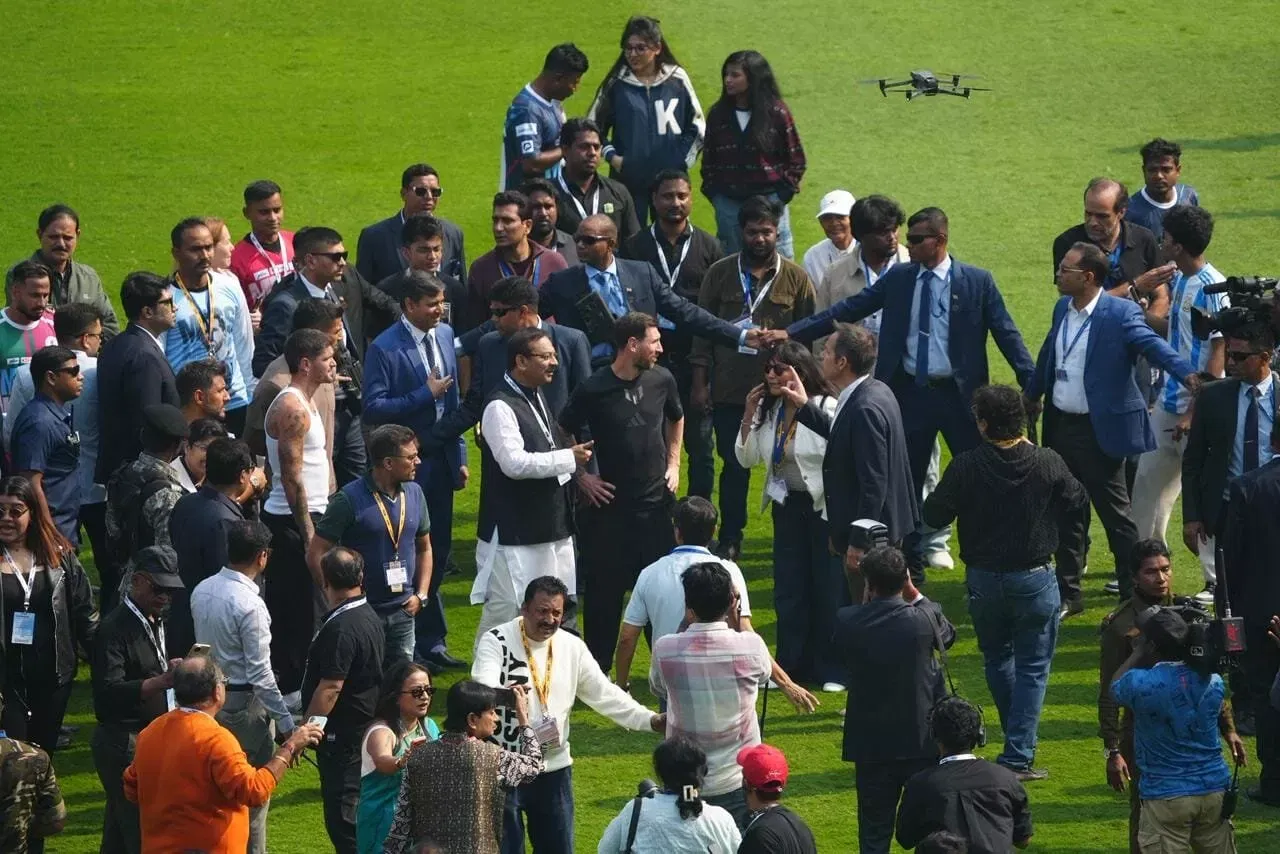
The frustration inside the stadium was justified. Fans had paid premium prices, followed every rule, and waited patiently. Yet, they were treated like an inconvenience rather than contributors. Meanwhile, the pitch was filled with ministers, their families, aides and celebrities, while paying supporters were pushed back behind barricades. Apparently, proximity mattered more than participation.
The management failed at every level. There was no buffer zone, no protected fan access, and no contingency plan. Political presence was prioritised over basic safety.
This was not a riot waiting to happen. It was mismanagement waiting to collapse.
The GOAT Tour in Kolkata was marketed aggressively. Expectations were manufactured carefully. Promises were made publicly. Yet, delivery never mattered once the optics took over.
When fans realised that the event was no longer about them, anger became the only remaining language.
Hyderabad looked like a success story, but is it!?
As the tour moved on to Hyderabad, praise followed the next stop. The event was calmer. Crowd control improved.
Sightlines stayed clear. Messi was visible, accessible and present. He stayed longer, interacted freely, completed laps around the stadium and kicked footballs into the stands. Children shared the pitch. Messi even addressed the crowd, thanking fans for their love and support.
It deserves acknowledgement. That night was managed better. Fans felt valued rather than manhandled. The atmosphere remained celebratory instead of combustible.
What never actually changes?
Yet, beneath the smoother execution, the centre did not shift.
Politicians remained at the heart of the event.
The pitch still doubled as a political stage. Exhibition matches featured political teams. Presentations revolved around political figures. Power stayed close to Messi, only this time with discipline.
Fans ensured funding. Ministers ensured visibility.
In Kolkata, mismanagement exposed everything. In Hyderabad, the choreography improved. Yet, even there, ministers remained central. Optics were managed carefully. Power was present at every step, only this time with discipline.
Funded by fans, access by power
This is where the discomfort lies. Both events were financed by the people. Ticket prices were steep. Promotions were aggressive. Emotion was monetised.
However, when it mattered, the fans became background noise.
In Kolkata, ministers occupied space meant for safety buffers. In Hyderabad, ministers occupied time meant for football. Different approaches. Same entitlement.
The GOAT Tour in Kolkata failed because management collapsed under political pressure. Hyderabad succeeded because management controlled that pressure. But neither truly removed it.
Messi did not come to India to meet ministers. Fans did not come to stadiums to watch ministers embrace and shake hands with Messi. Yet, both spectacles ensured that political presence stayed unavoidable.
Kolkata’s fans were promised access and delivered exclusion. They were sidelined, not acknowledged.
In Hyderabad, applause replaced anger. Fans were calmer because they were valued. Messi stayed longer. He interacted. He spoke. He respected the crowd.
The difference proves one thing. Fans respond to respect, not slogans.
However, let us not confuse calm with correction. Hyderabad did not decentralise power. It simply managed it better.
Optics over fandom
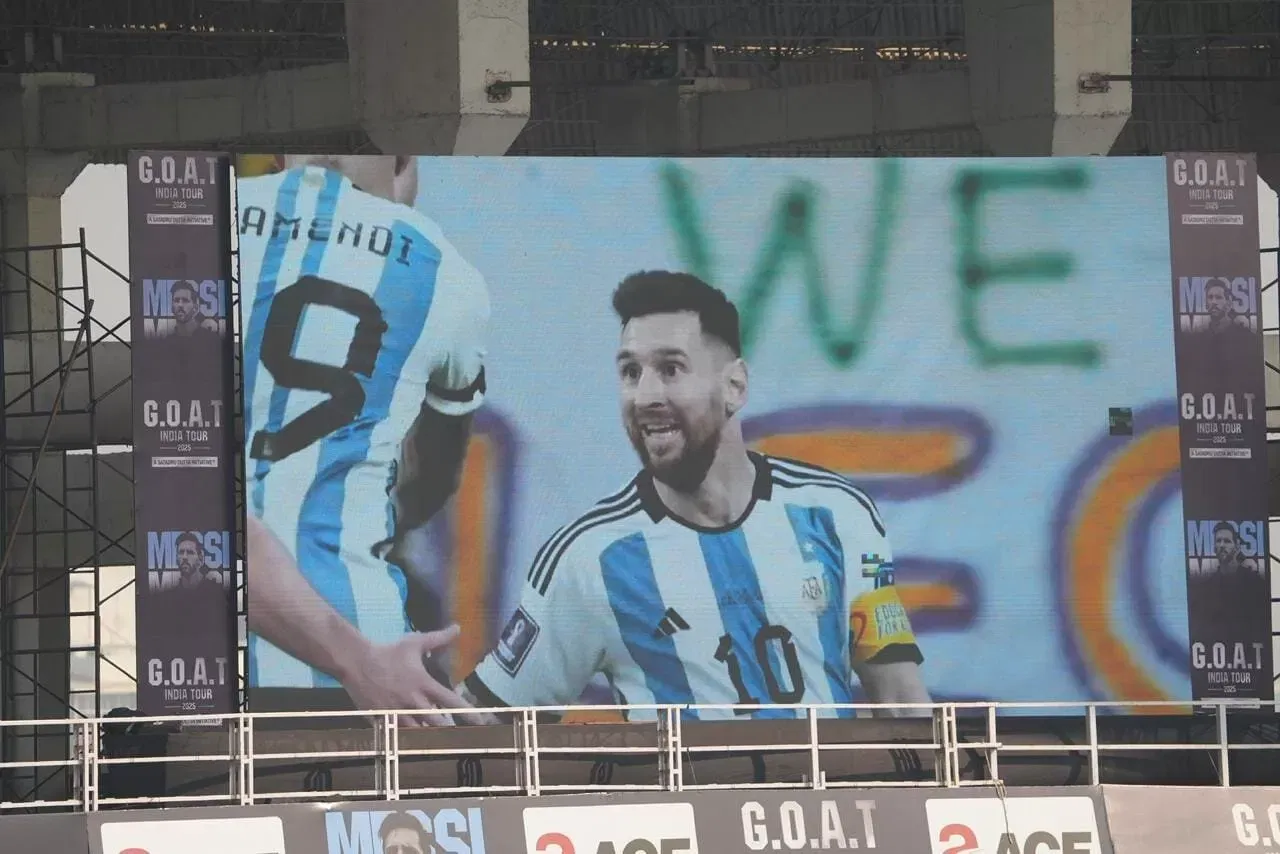
What both cities exposed is a deeper flaw. Indian sporting events still chase optics over ownership. Politicians want proximity to greatness. Organisers want photographs. Fans want memories.
Guess whose needs are easiest to sideline.
Messi missed genuine moments in Kolkata. He never saw the banners made by fans. He never heard chants practised for weeks. Those opportunities vanished because access was hijacked.
In Hyderabad, Messi saw more. Yet, even there, the narrative remained curated. Ministers ensured order. Ministers ensured visibility. Ministers ensured control.
The masses? They gave funding.
What this tour should have been about!
The GOAT Tour, especially in Kolkata, should have centred on one thing: THE FANS. Not crowd optics. Not political symbolism. Just football joy.
Instead, it became a study in contrast management. Fail publicly or succeed politically. Either way, power stayed close to the pitch.
This is not an argument against security. It is an argument against entitlement. There is a difference. When ministers treat sporting icons as extensions of authority, fans feel smaller. When organisers prioritise access for influence, trust erodes.
In the end, the GOAT Tour taught us more about ourselves than Messi. He came as the greatest footballer alive. He left as a backdrop.
Because across two cities, the message stayed the same. Whether it was those selfies with Aroop Biswas or the ‘high-voltage’ clash against Anumula Revanth Reddy!
Lionel Messi was brought here for ministers. Never truly for the masses.
For more updates, follow Khel Now on Facebook, Twitter, Instagram, Youtube; download the Khel Now Android App or IOS App and join our community on Whatsapp & Telegram.

A sports journalist for over 4 years, Triyasha has been covering Indian Football and Kanbaddi meticulously, She specialises in in-depth knowledge of the game, the players and the footballing infrastructure and heritage in India.
- Kannur Warriors upset defeating defending champions Calicut to secure a spot in Super League Kerala Final
- CD Guadalajara vs Barcelona Preview, prediction, lineups, betting tips & odds | Copa del Rey 2025-26
- GOD of cricket Sachin Tendulkar meets Lionel Messi, gifts his number '10' jersey at the Wankhede Stadium
- Egypt vs Nigeria Preview, prediction, lineups, betting tips & odds | International friendly
- Cardiff City vs Chelsea Preview, prediction, lineups, betting tips & odds | EFL Cup 2025-26 Quarter-Final
- GOD of cricket Sachin Tendulkar meets Lionel Messi, gifts his number '10' jersey at the Wankhede Stadium
- Top nine players Erling Haaland surpassed in Champions League goals; Henry, Rooney & more
- Top three highest bicycle kick goals in football history; Ronaldo, McTominay & more
- Cristiano Ronaldo's Portugal Route to FIFA World Cup 2026 Final
- Cristiano Ronaldo vs Lionel Messi in World Cup 2026 Quarter Finals? How it can happen?