
How is Judo played as a sport? Know rules, terms & more
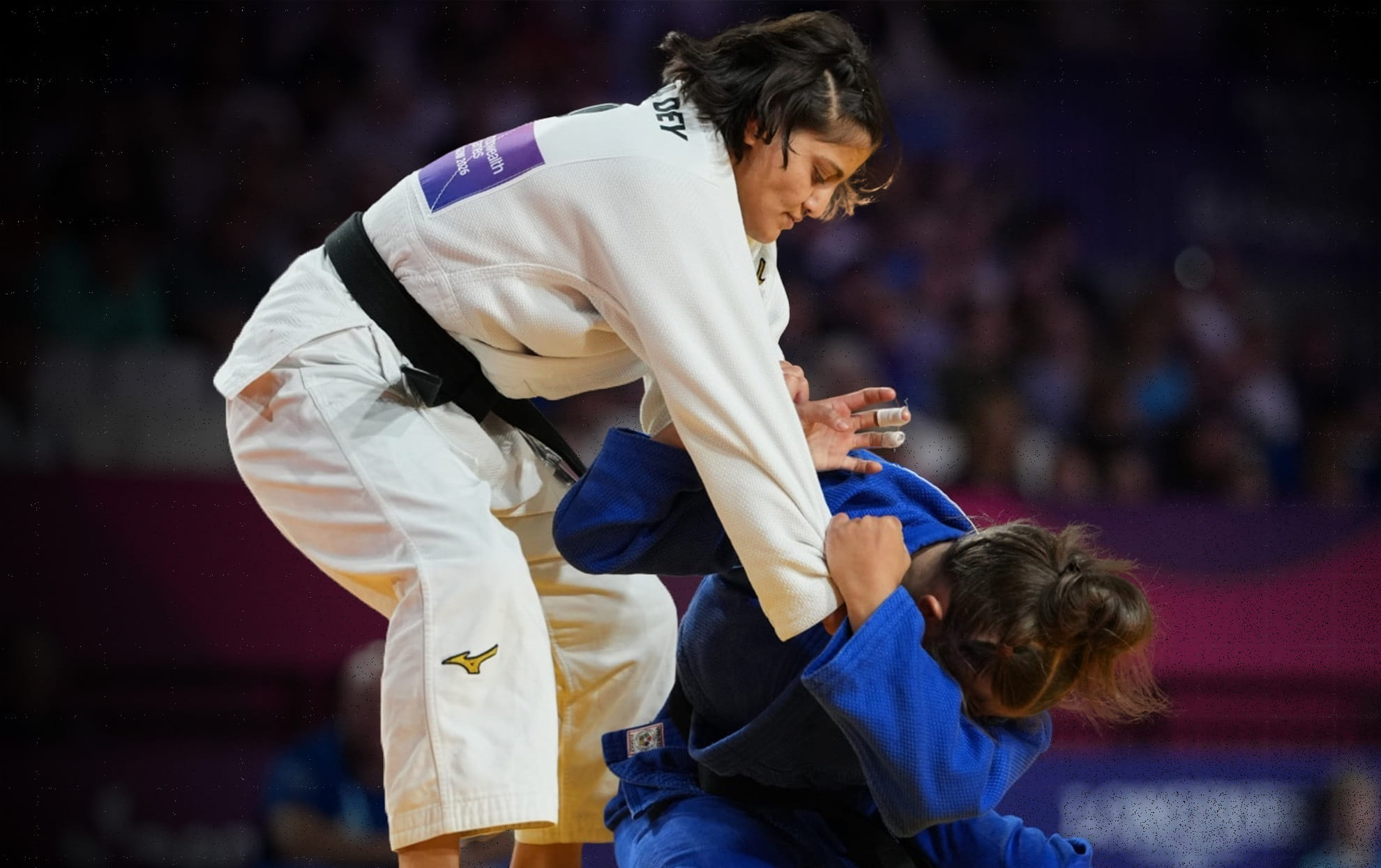
The popularity of Judo has grown in India.
The sport of judo is enjoying an unprecedented spotlight in India, with the country’s judokas excelling at the Commonwealth Games 2026 in Glasgow, Scotland. India made history on the first day of the judo events on July 31, with three judokas claiming medals, including the country’s first-ever CWG gold medal in the sport.
Asmita Dey became the first Indian gold-medallist judoka at the Games, beating Canada’s Heidi Quach in the women’s 48 kg final.
Harsh Singh added to the tally with a historic second gold medal in the men’s 60 kg final, beating Joshua Katz of Australia. Yamini Mourya added a hard-fought silver in the women’s 57 kg event.
Despite being quite famous, judo remains a mystery to most Indian audiences. Let’s look at the historical origins, rules, special terms, and more for this dynamic combat sport.
The Gentle Way: What is Judo?
Catch Every Update, Anytime, Anywhere
Compared to other forms of martial arts, Judo is a relatively recent development. It was created in 1882 by the famous Japanese educator Kano Jigoro from existing jujutsu techniques that were going out of fashion in Japan.
Judo was introduced as a more modern and technical alternative; it became one of the most famous styles of unarmed martial arts in the world.
The word “judo” literally means “the gentle way”, but the sport is anything but. It is a fast-paced, dynamic fighting style where the athletes – called judokas – attempt to throw or take down their opponents.
Punching, kicking, or striking is strictly prohibited; therefore, players must rely on their technique, leverage, balance, and agility, rather than sheer strength, to overpower their opponents.
The fighters utilise pins, chokeholds, joint locks (jujigatame), and other techniques to score points and win bouts.
Rules of Judo: How does scoring work?
In judo, the athletes look to execute successful manoeuvres that earn them points – primarily half or full points. A standard bout lasts four minutes, and the fighter with the most points at the end is the winner.
If the scores are level, the match goes to “Golden Score” (sudden death), with the athlete registering the first point winning the bout.
There are several ways to score, win, or lose a judo match:
Ippon (Full Point): This is the equivalent of a knockout. This is the highest score achievable in a contest and brings the match to an immediate end; the player who scores an ippon is declared the winner.
This is awarded for cleanly throwing an opponent on their back, pinning them on the mat for 20 seconds, or forcing a submission via a chokehold or arm-lock.
Waza-ari (Half Point): This is awarded for an athlete throwing their opponent on their back, but without the full force and control required for an Ippon. It is also given for pinning an opponent down on the mat for around 10-19 seconds (just short of a full point). Two Waza-aris in a match result in an Ippon, ending the contest.
Yuko (Quarter Point): This is awarded when athletes can pin their opponents for short periods (around five to nine seconds) or for getting a minor throw. If no athlete achieves a high score, this could prove crucial in breaking a tie.
Shido (Penalties): The competitors are penalised by the referee for passivity (failing to engage or attack their opponent), stepping out of bounds, or using illegal grips. Accumulating three Shidos in a match leads to “Hansoku-make” (disqualification), resulting in victory for the opponent.
Judo terms and glossary
The referee gives the commands entirely in Japanese, in line with the sport’s origins. Let’s learn about them:
- Hajime: This means “begin”, which the referee says to start or resume a fight.
- Matte: This means “wait” or “stop”, which the referee says to pause the fight.
- Rei: This means “bow”, which the referee says to ask competitors to bow as a sign of respect.
- Tatami: This is the specialised mat where the fight takes place.
- Judogi: This is the traditional uniform worn by the competitors.
- Dojo: This is the facility where the fighters train.
Judo’s history at the Commonwealth Games
Judo made its debut in the Commonwealth Games as a demonstration sport at the Edinburgh 1986 Games. It eventually made its official debut at the Auckland 1990 Games as an optional sport. It was made part of the mandatory CWG sports programme at the Birmingham 2022 Games.
Narender Singh was the first Indian judoka to win a CWG medal, clinching bronze in the men’s extra-lightweight event at the Auckland 1990 Games. Rajinder Dhanger also won bronze in the same edition, claiming the men’s middleweight medal.
What is Judo and how did it originate?
It was created in 1882 by Kano Jigoro in Japan, evolving from jujutsu as a form of unarmed martial arts.
What are the basic rules of Judo?
A bout lasts four minutes. Athletes score through throws, pins, or submissions. Key scoring methods are Ippon (full point), Waza-ari (half point), and Yuko (quarter point).
For more updates, follow Khel Now on Facebook, Twitter, and Instagram; download the Khel Now Android App or IOS App and join our community on Whatsapp & Telegram