
Different paths, different prospects: Why Pramveer Singh's move could be blueprint for young Indian footballers

Pramveer made a move to NorthEast United FC ahead of 2026-27 season.
Indian football loves a blockbuster transfer. The bigger the fee, the louder the headlines. Add a Kolkata giant into the mix and suddenly every youngster is expected to dream about signing on the dotted line.
A youngster signs for Mohun Bagan Super Giant, East Bengal or Bengaluru FC, and suddenly the narrative shifts from development to destination. The assumption is simple: if one of the country’s biggest clubs wants you, you’ve already won.
But football careers are rarely decided by transfer announcements. Minutes, responsibilities and opportunities decide them.
Punjab FC academy graduates Pramveer Singh and Tekcham Abhishek Singh find themselves at the centre of that debate.
Both defenders emerged from one of Indian football’s most productive youth systems. Both broke into the Indian Super League at a young age. Both attracted attention from some of the biggest clubs in the country. Yet the paths they have chosen could not be more different.
Abhishek completed a high-profile move to Mohun Bagan Super Giant in a deal reportedly worth more than ₹6 crore, making him one of the most expensive young Indian defenders in recent memory.
Pramveer, meanwhile, opted to join NorthEast United FC, a club that cannot match Mohun Bagan’s financial muscle or trophy cabinet but has consistently offered young players something equally valuable: opportunity.
Neither move is wrong. But one of them might offer a more realistic roadmap for the next generation of Indian footballers.
Abhishek deserves credit because he made a difficult move work
Catch Every Update, Anytime, Anywhere
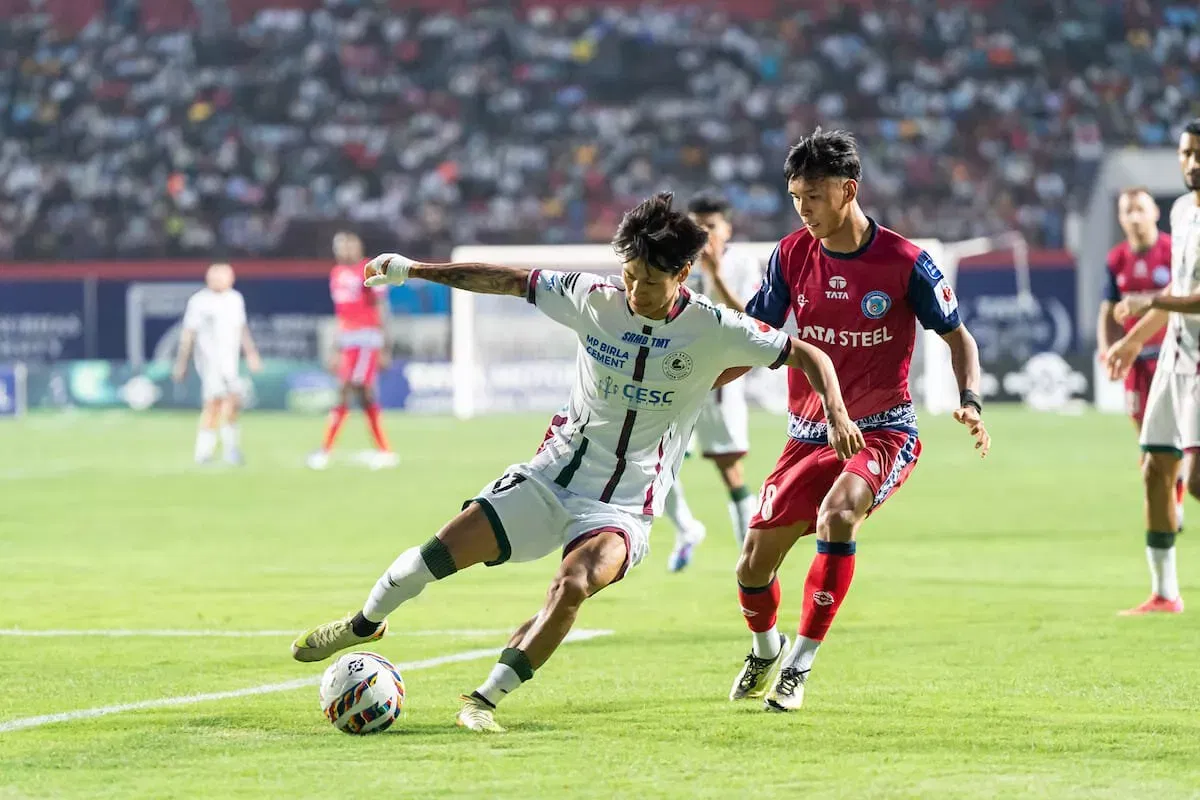
Photo: Abhinav Ashish Aind/Focus Sports/ ISL
Before comparing the two pathways, it is important to acknowledge one thing. Abhishek’s move to Mohun Bagan has worked. Far too often, young players arrive at India’s biggest clubs only to disappear from the conversation within a season or two. Abhishek has managed to avoid that fate.
The Manipuri defender adapted quickly to life at a title-contending club and established himself as a reliable option in the Mariners’ setup. His ability to play on both flanks significantly improved his chances, while his consistency ensured he remained part of the first-team picture.
That is easier said than done.
The pressure at a club like Mohun Bagan is relentless. Every dropped point becomes a talking point. Every selection decision is scrutinised. Every season is judged by trophies. Young players rarely receive the luxury of patience.
Abhishek deserves praise because he forced his way into the conversation rather than waiting for opportunities to arrive. But his success also highlights a different reality.
His journey is the exception, not the rule.
The Sumit Rathi story should be a warning to every young footballer
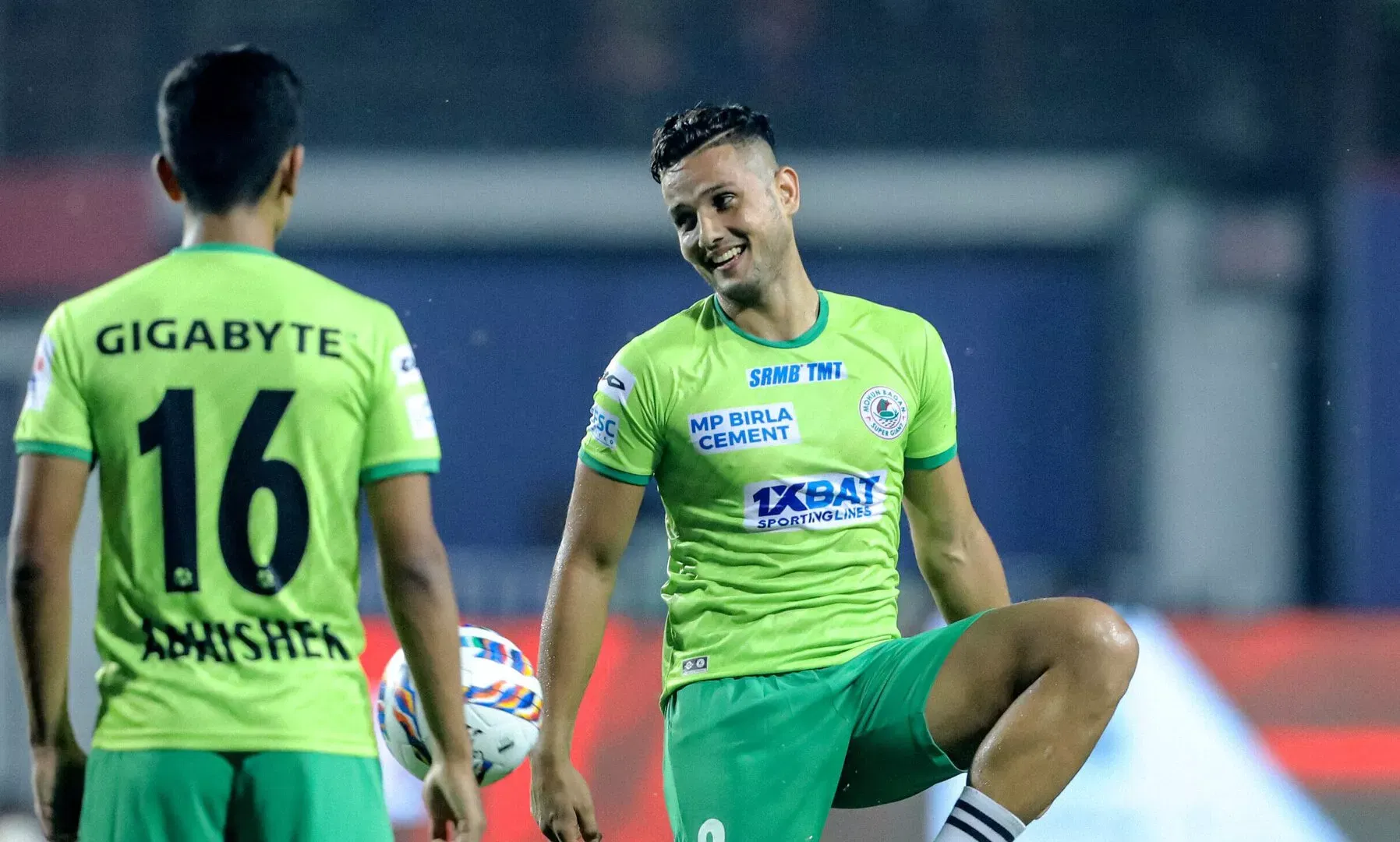
Adimazes/ISL
Indian football does not have to search far for examples of promising talents whose development stalled after securing dream moves. Sumit Rathi remains one of the clearest examples.
Back in the 2019-20 season, Rathi looked destined for the very top. The defender broke into ATK’s first team at just 18 years of age and won the ISL Emerging Player of the Season award after helping his side lift the league title.
At the time, many believed India had discovered its next long-term defensive leader. Then came the merger between ATK and Mohun Bagan. On paper, it seemed like the perfect next step. In reality, things unfolded very differently.
Across the following years, Rathi struggled for consistent opportunities. His appearances became increasingly sporadic as established names occupied key positions in the squad. The momentum that had once made him one of the country’s most exciting young defenders gradually disappeared.
Today, Rathi is no longer discussed among India’s top defensive prospects. Instead of becoming a regular national-team contender, he has spent recent years searching for regular football through moves away from Kolkata.
His story is not unique. And that is exactly the point.
Why do Indian footballers keep chasing glitz, glamour and big names over opportunity?
Young footballers are often told that training with better players will automatically improve them. There is certainly some truth to that. However, football development is not a classroom exercise.
It would also be unfair to ignore why so many young footballers are drawn to such moves. A transfer worth over crores can completely change a player’s life and secure the future of their family, especially for those coming from modest backgrounds.
Beyond the financial aspect, there is the opportunity to train alongside established stars, learn from top coaches, compete for trophies, and experience the standards demanded at India’s biggest clubs. Those benefits are real. The challenge is ensuring that the pursuit of financial security and prestige does not come at the cost of regular game time and long-term development.
Another factor that often gets overlooked is that many young footballers are making career-defining decisions at 18, 19, or 20 years of age without a strong support system around them. Not everyone has a mentor, former player, or trusted advisor helping them weigh long-term development against short-term gains. In such situations, bigger contracts and longer deals naturally become attractive.
Agents, too, can have incentives aligned with securing the largest possible package, as higher transfer values and longer contracts often benefit all parties involved financially. There is nothing inherently wrong with that, but it can sometimes shift the focus away from a more important question: where is the player most likely to play, develop, and become the best version of himself over the next three or four years?
A centre-back does not learn positioning by watching matches from the bench. A striker does not improve finishing by sitting in the stands. A midfielder does not develop game management by observing senior teammates from a distance.
Players improve by playing. It sounds obvious, yet Indian football repeatedly ignores this basic principle.
For every youngster who breaks into a heavyweight club’s starting lineup, several others spend their most important developmental years waiting for opportunities that never arrive.
The issue is not the players. The issue is the environment.
Title-chasing clubs are built to win trophies immediately. Coaches are hired to deliver results. Under pressure, managers usually trust experience over potential.
Can anyone really blame them?
If a coach has the choice between a seasoned international and a 19-year-old prospect during a title race, the decision is usually straightforward.
That is why young players often find themselves trapped in a cycle of promise without progression.
The Suhail Bhat example highlights the same problem
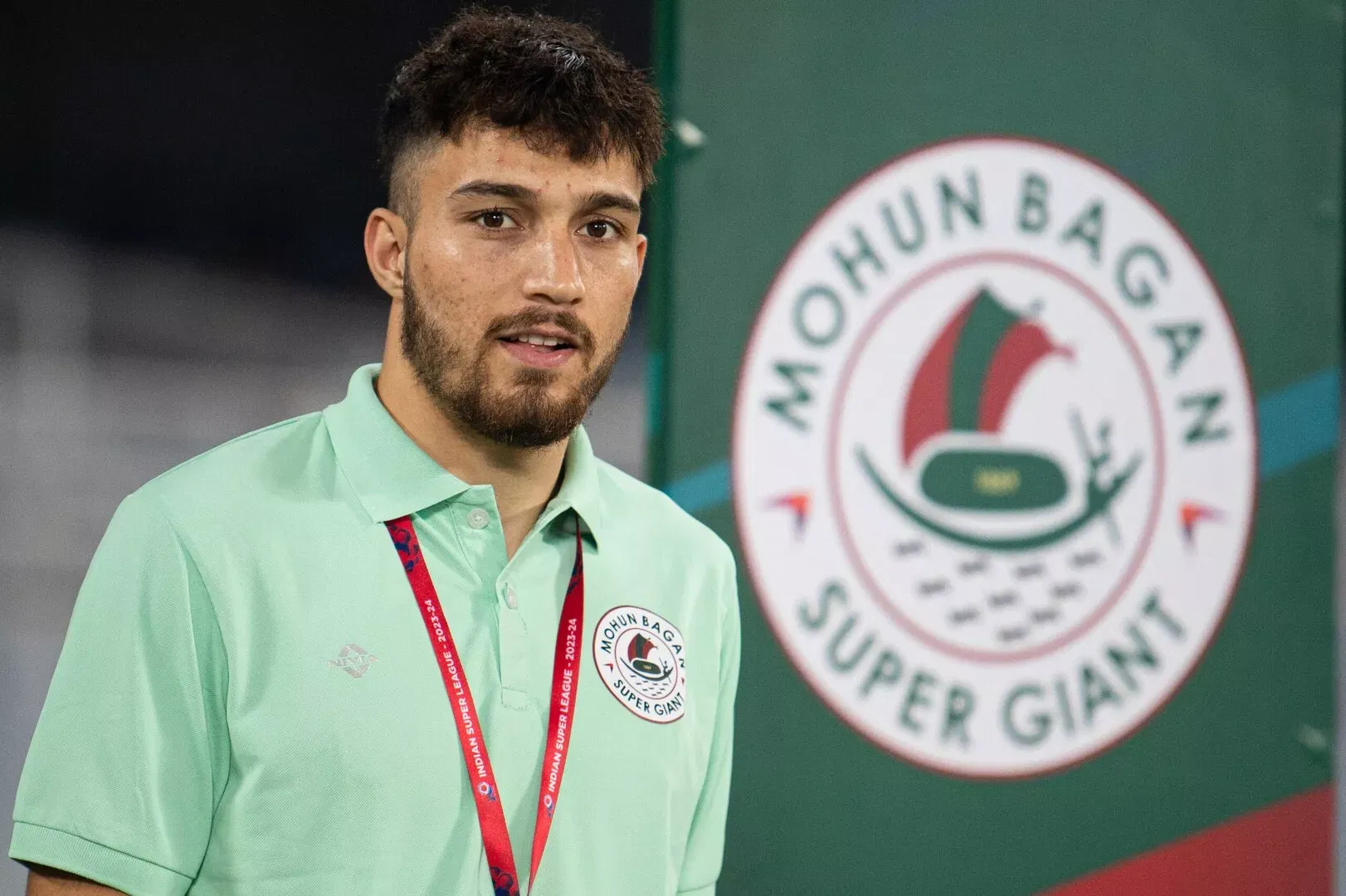
Abhijit Addya/Focus Sports/ISL
Suhail Bhat remains one of Indian football’s most exciting young forwards.
The Kashmiri attacker possesses technical quality, intelligence in the final third and the confidence required to succeed at the highest level. Whenever opportunities have arrived, he has shown glimpses of why many regard him as one of the country’s brightest attacking prospects. Yet the breakthrough many expected has not fully materialised. Part of that comes down to competition.
Breaking into the attack of a trophy-contending side is never easy, especially when experienced players occupy key positions. Young forwards need rhythm. They need to start. They need the freedom to make mistakes and learn from them. Occasional substitute appearances rarely provide that.
Suhail remains a highly talented player, but his situation serves as another reminder that potential alone is not enough. Opportunity matters just as much.
Why Pramveer’s move feels different?

Unlike Abhishek, Pramveer has not yet played a competitive match for NorthEast United FC. That is important to acknowledge.
This article is not an attempt to declare his move a success before it has even begun. Instead, it is about the logic behind the decision.
Pramveer already possesses the credentials of an elite prospect. He became the youngest starter in ISL history while representing Punjab FC and has steadily climbed through India’s youth ranks before earning recognition at the senior level.
The next phase of his development is not about proving talent. It is about accumulating experience. For defenders, there is no substitute for match minutes.
Every duel won improves confidence. Every mistake teaches a lesson. Every difficult away game develops resilience. Every season of regular football adds another layer to a player’s understanding of the game.
The best defenders are rarely built overnight. They are built through repetition. They are built through practice.
NorthEast United may not offer the glamour associated with a move to Mohun Bagan, but they could offer something more important at this stage of Pramveer’s career: responsibility.
The lesson Indian football keeps forgetting
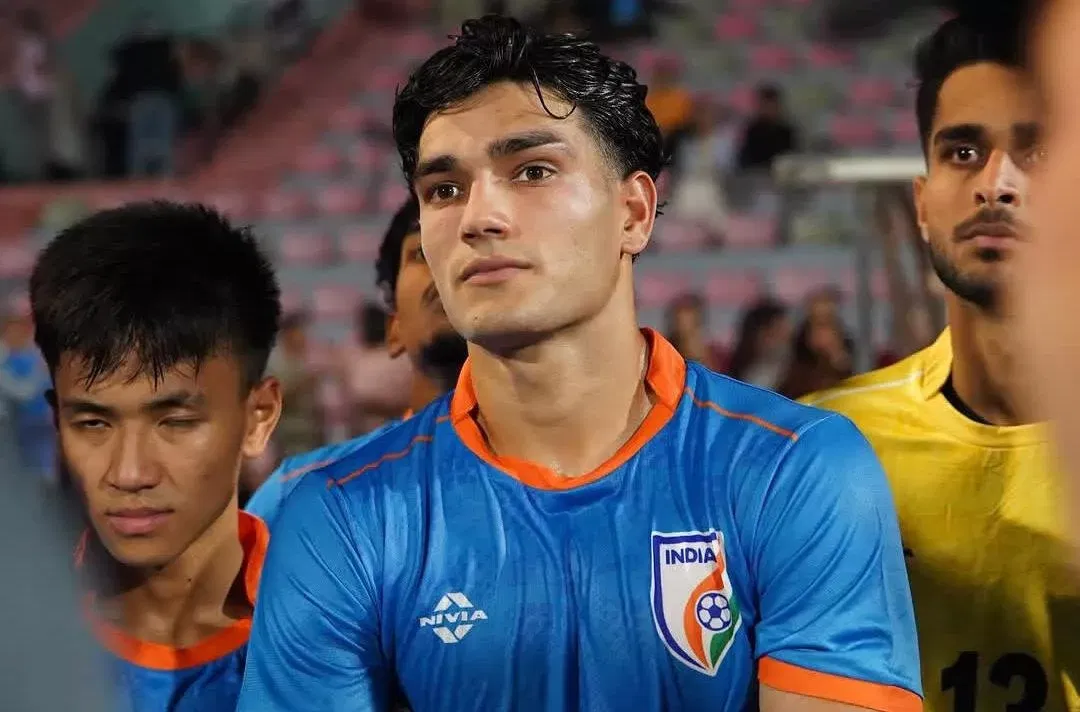
Indian football often celebrates the wrong milestones.
Transfer fees dominate discussions. Contract announcements create excitement. Young players are judged by the clubs they join rather than the football they play. Yet history suggests that appearances matter far more than publicity.
Five years from now, nobody will remember the exact value of Abhishek’s transfer fee. Nobody will remember how many social media posts accompanied a signing announcement.
What people will remember is who established themselves as an Indian regular. They will remember who crossed 100 ISL appearances. They will remember who continued developing year after year.
Abhishek deserves enormous credit because he took one of the most difficult routes available to a young footballer and succeeded.
But if aspiring Indian footballers are searching for a pathway that is realistic, repeatable and centred around development, Pramveer’s decision may ultimately offer the more valuable lesson.
Because not every youngster will become the next Tekcham Abhishek Singh, most simply need a club willing to trust them enough to play.
And in football, the opportunities and game time remain the most valuable currency of all.
What is the contract duration of Pramveer’s contract at NorthEast United?
Pramveer Singh joins NorthEast United on a three-year contract
Which club does Abhishek Singh plays for?
Abhishek Singh plays for Kolkata giants Mohun Bagan SG.
For more updates, follow Khel Now on Facebook, Twitter, Instagram, Youtube; download the Khel Now Android App or IOS App and join our community on Whatsapp & Telegram.