
East Bengal's overall record in AFC competitions
Red & Gold will play in the ACL Two
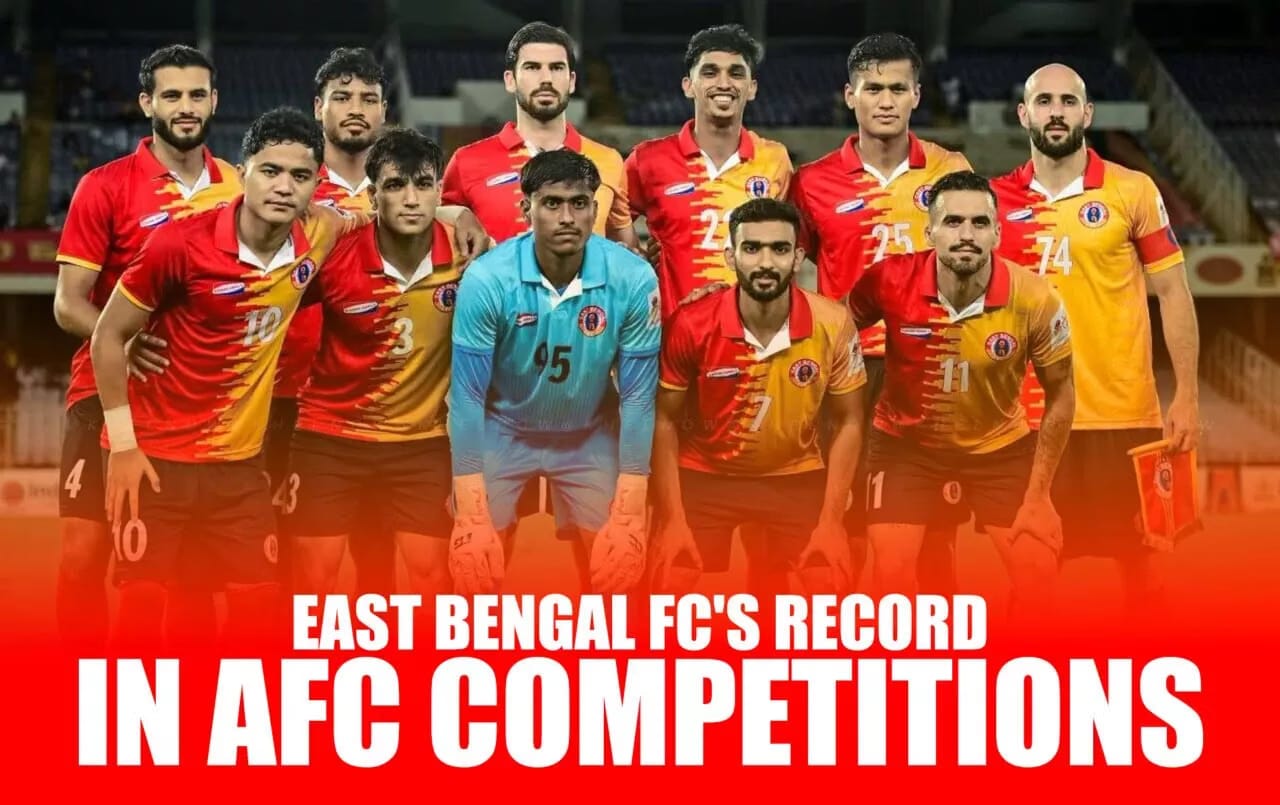
East Bengal were able to secure a place in the group stages of the 2026-27 AFC Champions League Two with their thrilling 4-1 win over Al-Arabi SC in the qualifier clash recently. That means the Red & Gold Brigade will be playing in the second-tier of the Asian competitions pyramid for the first time since 2015, as well as making their return to continental football after a one-year gap.
The Torchbearers have actually gained a lot of experience in playing at AFC competitions over the decades, being one of the most played-Indian clubs at the continental level. Even though they haven’t won any AFC competitions yet, East Bengal have produced some eye-catching performances in a few editions in their performances in the AFC since they started playing continental-level football from the mid 1980s.
With East Bengal poised to play in the group stages of the 2026-27 AFC Champions League Two, here we look at their current record of playing in AFC competitions.
Catch Every Update, Anytime, Anywhere
Asian Club Championship
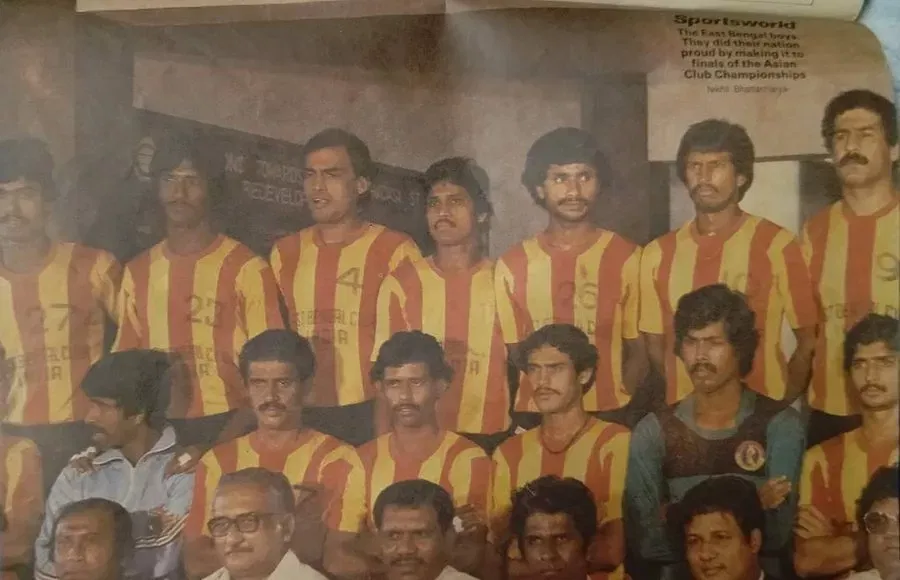
The first-time that East Bengal ever played in an AFC competition was in the form of the Asian Club Championship, which they were able to play for the first time in the 1985-86 season. Of course, they had to qualify for the edition by playing in the Central Asian Champions Cup before it, which included teams from Bangladesh, Pakistan, Sri Lanka and Nepal as well.
The Red & Gold Brigade absolutely dominated this qualification competition, winning all five matches and scoring 20 goals – with Biswajit Bhattacharya also scoring five goals. This secured them a place in the Asian Club Championship group stages in the 1985-86 season, where they faced Saudi Arabia side Al-Ahli as well as Indonesian side Krama Yudha Tiga Berlian.
East Bengal put in a tough fight against Al-Ahli, with Debashish Roy scoring against them before suffering a 2-1 loss.
They also ended up going down to a 2-0 loss to Krama Yudha to be eliminated in the group stages. East Bengal had a chance to play in the Asian Club Championship in the 1998-99 season again, but they ended up suffering a 6-0 loss to Chinese side Dalian Wanda in the first round itself.
Asian Cup Winners’ Cup
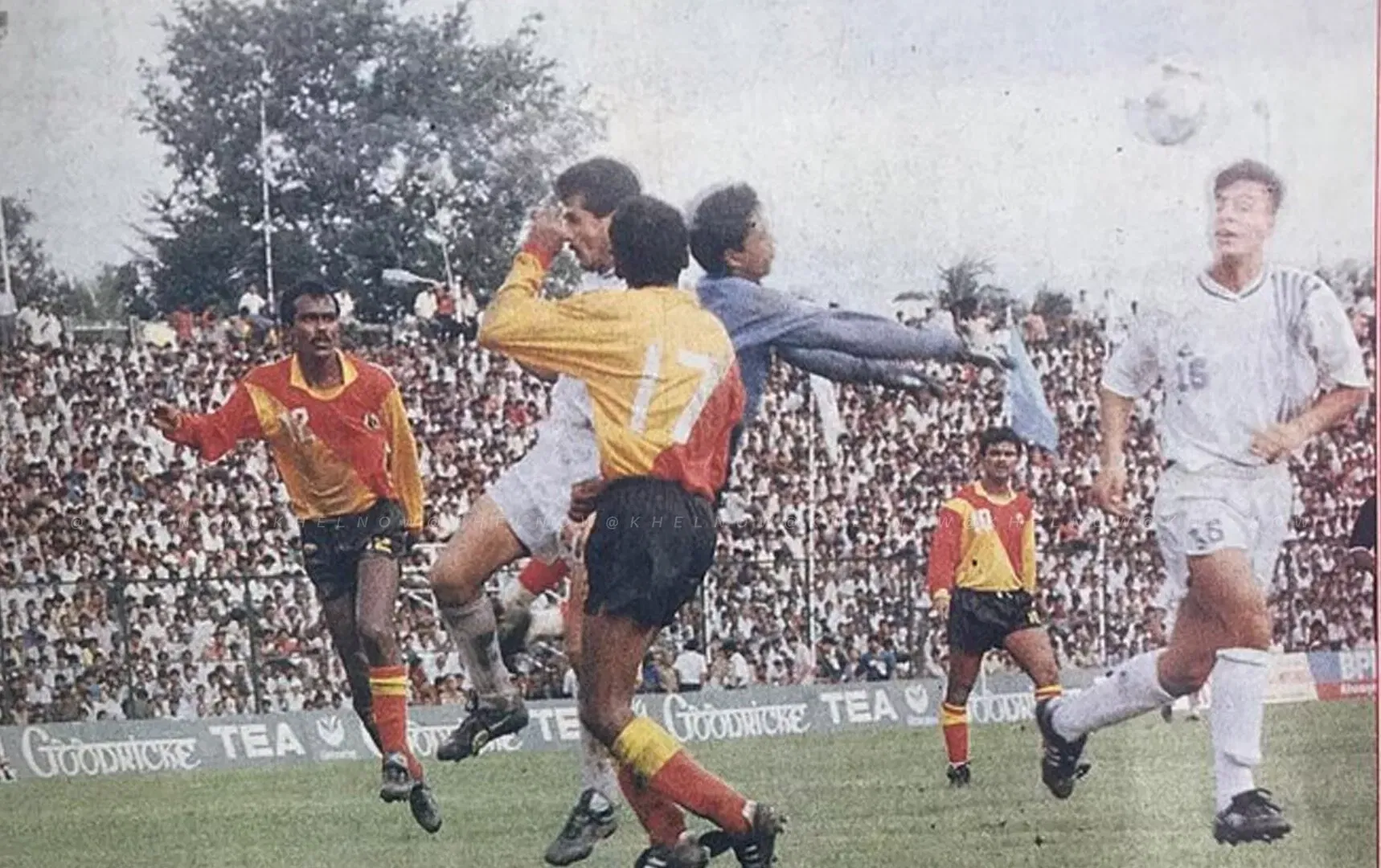
The AFC’s Asian Cup Winners’ Cup was a competition designed to take place between those teams across’ AFC’s nations to have won their highest domestic competition. As East Bengal enjoyed quite a lot of success in winning major cups in the 1990s, they were able to play in this competition five times in that decade.
Their most prolific participation in the competition was in the 1991-92 season. Here, they defeated Bangladesh side Abahani Dhaka in the first round to reach the quarterfinals. However, they ended up suffering a 7-1 loss on aggregate to Japanese side Yokohama F. Marinos, named as Nissan Motors FC back then.
East Bengal were eliminated in the second round of the 1993-94 Asian Cup Winners’ Cup, despite defeating Iraqi side AL Zawraa in the first round.
The Kolkata side played in the 1994-95 edition of this tournament as well, winning one gam ein the preliminary qualification round but ending up failing to qualify for the main tournament. They ended up losing to Malaysian side New Radiant in the 1995-96 AFC Asian Cup Winners’ Cup in the second round.
In the 1997-98 edition of the tournament, they thrashed Nepalese side Tribhuvan 11-0 in the first round – only to lose to Japanese side Verdy Kawasaki in the second round by a 5-3 margin – which marked their final participation in this tournament.
ra
AFC Challenge League
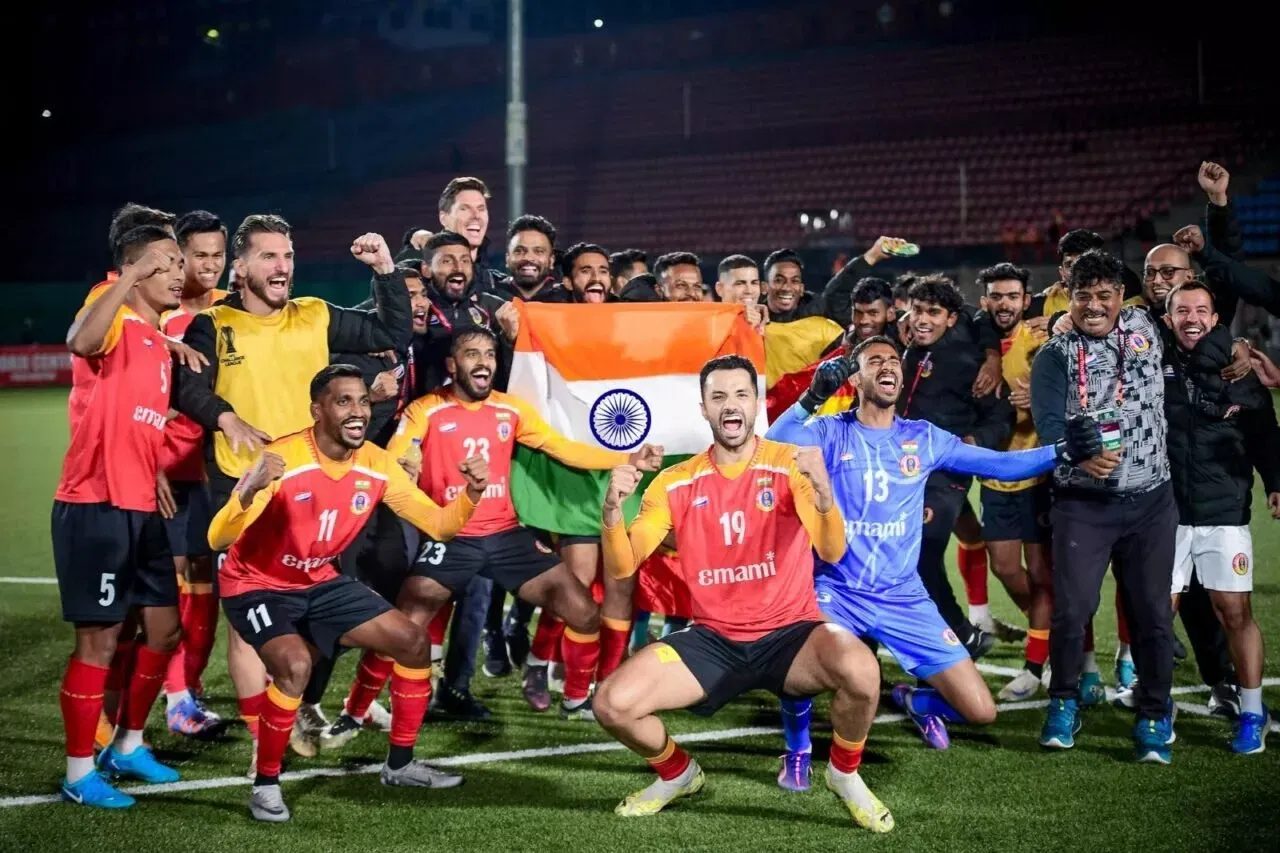
The first (and only) time that East Bengal have participated in the AFC Challenge League was in the 2024-25 edition of the tournament. They did so after winning the 2024 Super Cup tournament, which enabled them to qualify to play in at least one continental competition and mark their return to Asian football after almost a decade.
In the group stages of the AFC Challenge League, the Kolkata heavyweights were paired against Paro FC, Bashundhara Kings and Nejmeh FC. Despite having a shaky start to the competition, being held to a 2-2 draw by Paro FC in the opening game, the Red & Gold Brigade showcased a lot of grit after that.
They were able to grab a smashing 4-0 win over Bashundhara Kings to set up a thrilling end to the group stages. In the final group game against Nejmeh, the Kolkata side overcame many obstacles to ultimately seal a 3-2 win – which enabled them to win the group and progress to the knockout rounds.
East Bengal faced Turkmenistan side FK Arkadag in the quarterfinals of the 2024-25 AFC Challenge League, as they suffered a 1-0 loss in the first leg of the competition. However, they took an early first-minute lead in the second leg to tie the game 1-1 to get themselves back into the competition. They tried hard to find a winner, but the hosts showcased resolve by scoring two late goals to win the match (and quarterfinals) in the dying stages to break East Bengal’s hearts.
AFC Champions League Two (formerly known as AFC Cup)
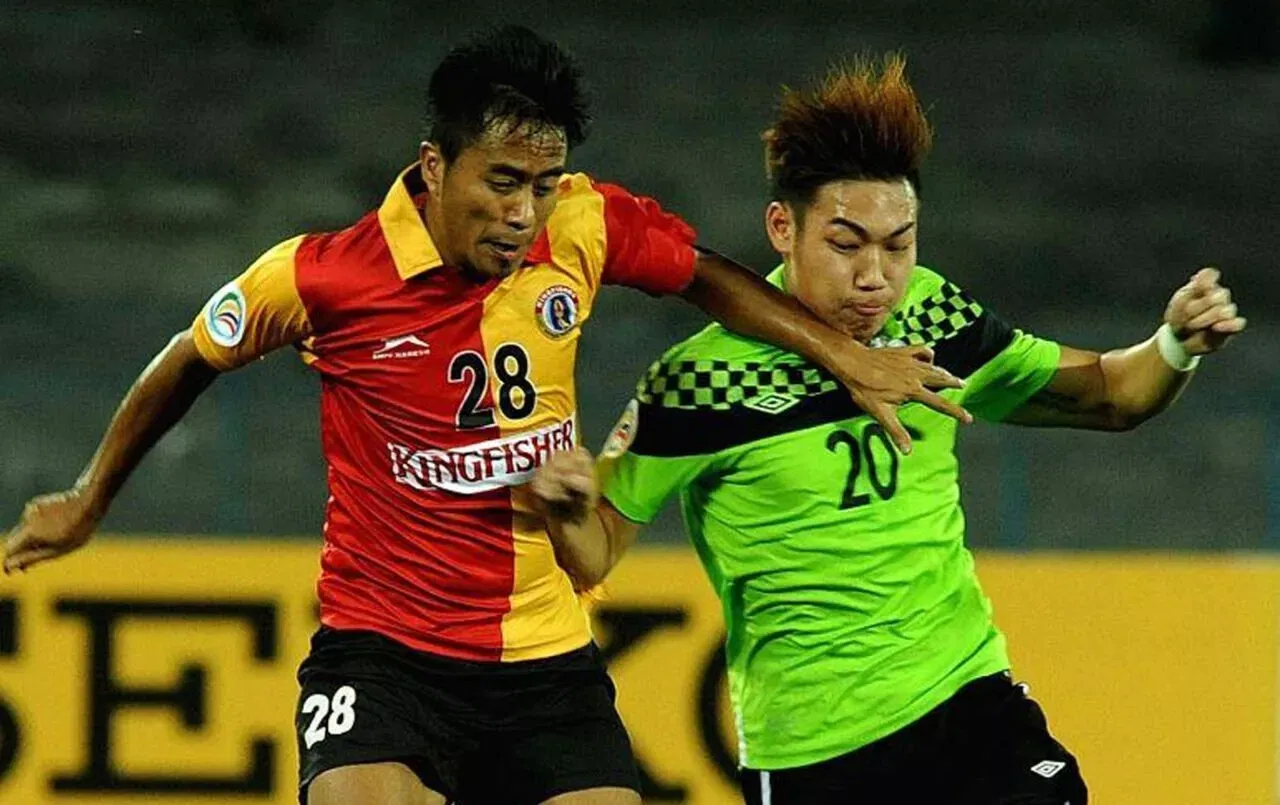
The AFC competition in which East Bengal have played in the most number of times would be the AFC Cup, which has recently been remodelled as the AFC Champions League Two. The Kolkata side made their debut into this competition in 2004, when they were one of the two Indian teams (along with Mahindra United) to participate in it.
The Kolkata side were paired in a tricky group against challenging opponents like Geyland United (Indonesia), Negeri Sembilan (Malaysia) and Island Football Club (Maldives), but they fought through in the group stages. East Bengal won four of their six group games, with Cristiano Jr scoring six of their 14 goals to help them top their group.
In the quarterfinals, East Bengal were paired up to face Syrian side Al-Jaish FC. They got held to a 0-0 draw at the Salt Lake Stadium in the first leg, before suffering a disappointing 3-0 loss in the second leg to be eliminated from the AFC Cup. They returned to play in the competition in 2005 as well, but were eliminated in the group stages after only winning two of their six matches.
In 2008, East Bengal qualified for the AFC Asian Cup alongside Dempo. However, they were placed in another tricky group that saw Lebanese side Safa win the group. East Bengal only won two of their six games, marking a similar outing as they did in 2005. However, their worst outing at an AFC Asian Cup was to come in 2010.
They qualified for the tournament and were placed in a challenging group consisting of Kuwait giants Al-Qadisa and Syrian side Al-Ittihad. East Bengal ended up losing all six matches in the 2010 Asian Cup group stages, conceding 20 goals and only scoring five times.
In 2011, they showcased very little improvement – failing to win one game but playing out three draws to finish bottom of their group. Similar disappointment followed in the 2012 Asian Cup, where they again lost all six matches in their group.
However, they bounced back really strongly in the 2013 AFC Asian Cup under the guidance of Trevor James Morgan and Brazilian boss Marcos Falopa. The Kolkata side impressed at the group stages, where they faced off against the likes of Tampine Rovers (Singapore), Sai Gon Xuan Thanh (Vietnam) and Malaysian heavyweights Selangor FC.
Despite some tricky games, East Bengal won four of their six matches to top the group – with the likes of Chidi Edeh, Penn Orji and Andrew Barisic shining.
In the Round of 16, East Bengal faced off against Myanmar side Yangoan United at the Salt Lake Stadium. Taking the spirit of their fans into stride, the Red & Gold Brigade produced a thrilling performance to earn a 5-1 win – with Edeh scoring a hat-trick in it to help his side reach the quarter-finals.
The Kolkata heavyweights faced Indonesian giants Semen Padang in the quarterfinals, where Falopa was able to guide them to a famous win. They defeated the Indonesian side 1-0 in the first leg thanks to Ryuji Sueko’s winner, before being placed under pressure in the return leg when Semen Padang took a 1-0 lead early on. However, East Bengal defended really strongly and equalized through James Moga – clinching the match 2-1 on aggregate to become the first-ever Indian side to reach the semifinals of the AFC Asian Cup.
In the semi-finals, however, Esat Bengal suffered a disappointing 7-2 loss (on aggregate) to Al-Kuwait to end their campaign. The Kolkata side returned to the AFC Cup in 2015, where they got placed into another tough group with Vietnamese heavyweights Kitchee FC and Malaysian giants JDT. They only won one of their six matches, finishing in third place to get eliminated from the group stages.
Now, East Bengal will mark their return to their second-biggest AFC competition after over a decade in the 2026-27 AFC Champions League Two. Antonio Habas needs to prepare his side to produce something truly inspired for them to make Indian football proud and re-establish themselves as capable of thriving in the continental football scene.
When did East Bengal FC first play in an AFC competition?
East Bengal FC made their Asian competition debut in the 1985-86 Asian Club Championship. They started their campaign with a 7-0 victory over Nepal’s New Road Team.
Was East Bengal the first Indian club to play in the Asian Club Championship?
Yes. East Bengal became the first Indian club to participate in the Asian Club Championship, the predecessor of the modern AFC Champions League.
For more updates, follow Khel Now on Facebook, Twitter, Instagram, Youtube; download the Khel Now Android App or IOS App and join our community on Whatsapp & Telegram.