
'Wanted to become like Virat Kohli' – Himanshu Dhillon reveals inspiration behind shooting success
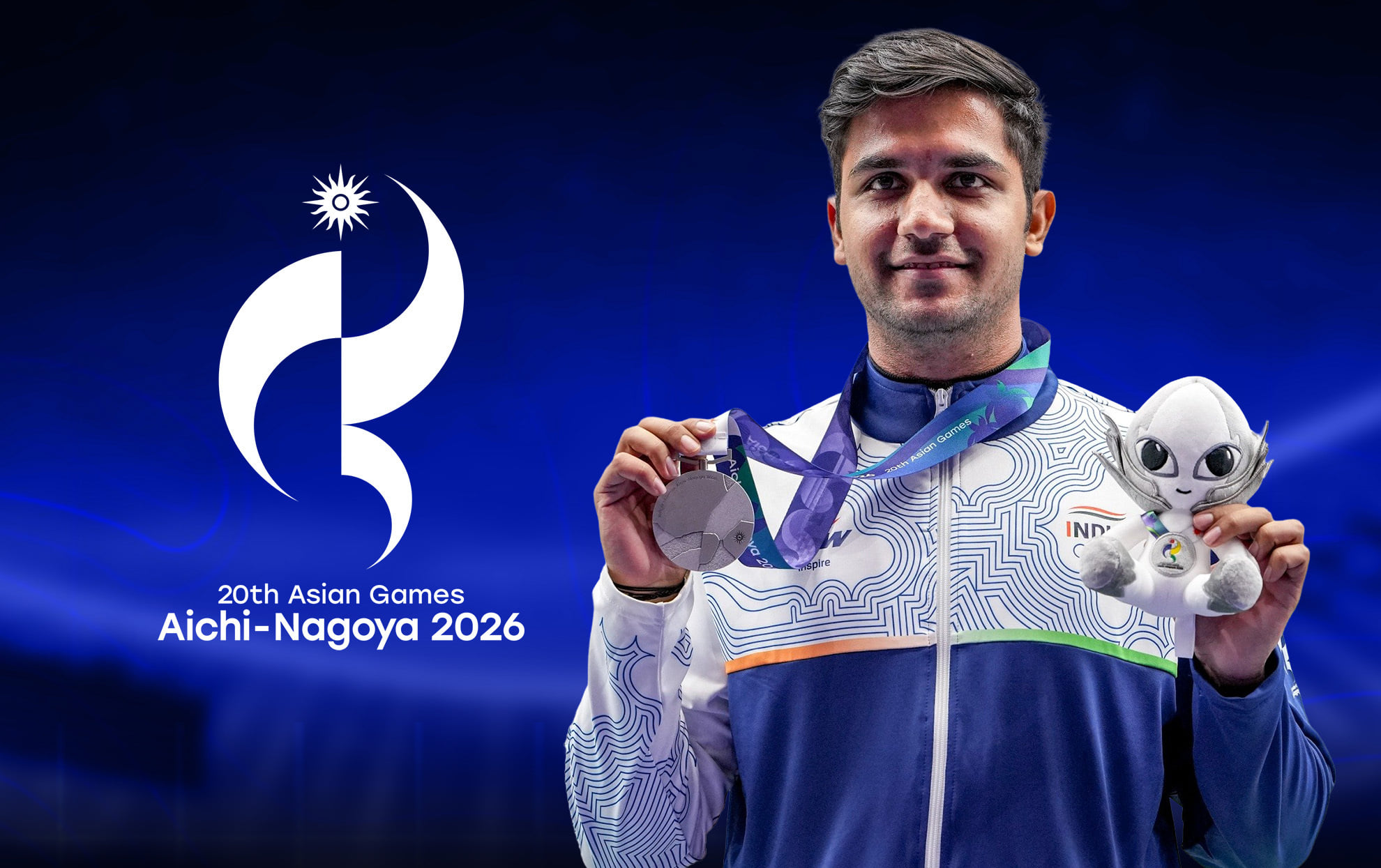
Himanshu Dhillon won twin silver medals in the men’s 10m air rifle individual and team events
Indian shooter Himanshu Dhillon has emerged as one of the talking points of the ongoing Asian Games 2026 in Aichi-Nagoya after securing a twin silver-medal haul.
The 20-year-old finished on the podium in both the men’s 10m air rifle individual and team events, marking a significant milestone in his young career.
Dhillon’s rise has been swift. He partnered Ramita Jindal to win gold in the 10m air rifle mixed team event at the National Shooting Championship 2025 in Bhopal. He later added a gold and a bronze medal at the ISSF Junior World Cup 2025.
In July this year, Dhillon partnered Sonam Maskar in the 10m air rifle mixed team event at the ISSF World Cup to claim the bronze medal, his first senior international medal.
Also Read: Asian Games 2026: India’s updated schedule for Day 5 (September 24)
Inspired by Virat Kohli
Catch Every Update, Anytime, Anywhere
Dhillon carried that momentum into the Asian Games, helping India open its medal account in the shooting discipline. However, his success has been built on more than just recent form.
Reflecting on his journey and the influences that have shaped his career, Dhillon revealed that Indian cricket icon Virat Kohli has been a major source of inspiration. He admitted that he has admired Kohli’s dedication and wanted to replicate that level of success in shooting.
“I started watching his videos, but now I see that his reports are very similar to mine. He has a lot of dedication and is very natural when it comes to his game,” Dhillon said during a media interaction.
“He is on his feet, out of his feet, down to earth; it feels good to see that he supports people a lot. So, I was also inspired by that. I also wanted to become like Virat Kohli.”
Related: Asian Games 2026 – India’s medal winners, live medal tally, results
Dhillon also spoke about his desire to use his success to give back to his country and his family.
“I wanted to do as much as I could for my countrymen and my parents. I wanted to win as many medals as I could for my country. This is what I wanted to do for them.”
“This is what inspires me about him [Kohli]. He has done so much for his country. I hope I can do the same in the future.”
Special thanks to coach and sports psychologist
Mental preparation is a crucial component of elite shooting, particularly when athletes are competing under the pressure of a medal-deciding final. Dhillon’s calmness in Aichi-Nagoya was one of the defining features of his campaign.
The shooter credited his sports psychologist, Shivam Dwivedi, for helping him develop the mental tools required to handle high-pressure situations.
“My psychologist, Mr Shivam Dwivedi, worked very well with me. He used to give me different tasks every day. He told me that I have to push my mind in this way and shared his experience with me,” he said while answering a query from Khel Now.
Dhillon also highlighted the role played by his coach, Pooja Ghatkar, and the wider support team.
“He [Dwivedi] coordinated very well with her, and both of them worked very hard on my final play process, so that I could focus on the toughest situations, like anxiety in the last shot; how to stay in the present and how to focus on my shot,” he articulated.
“They made me work very hard on that, and their hard work has brought a lot of colours. I would like to thank them from the bottom of my heart.”
From wrestling to shooting
Interestingly, shooting was not Dhillon’s first sporting choice. He initially tried his hand at wrestling before eventually transitioning to shooting, the discipline that has now brought him success on the international stage.
Dhillon said the transition was made easier by the support of his family, coaches and wider team.
“I did wrestling for a short period of time, only for 12 or 14 days. At the age of 20, the family, coaches, and the team behind it have a big effect on the atmosphere. It is built mentally,” he noted.
Dhillon dedicated his Asian Games success to those who have supported him throughout his journey.
“I would like to dedicate it [the silver medal] to my parents. They are the ones who work so hard for their children. I would like to dedicate it to them.”
“Secondly, I would like to dedicate it to my coach, Pooja Ghatkar and the sports science team behind me. I would like to dedicate it to my mental trainers, my assistants, and my physios.”
Explaining why he moved away from wrestling, Dhillon said the physical demands of the sport proved challenging for him, while he also struggled with the speed and technical aspects required to compete effectively.
“I did not play wrestling. At that time, I was not physically fit. I was not able to do wrestling, speed, or other techniques. It was very tough for me. After that, I left wrestling,” he continued.
His introduction to shooting came during his time at the Gurukul, where he discovered a shooting range.
“During my studies at the Gurukul, there was a shooting range there. From there, my shooting career started.”
Challenges at the start of his shooting career
Dhillon comes from an agricultural family, and beginning a career in shooting presented significant financial challenges. The sport requires considerable investment in equipment, training and competition, making the decision particularly difficult for his family.
He recalled the uncertainty surrounding the early stages of his career.
“It was expensive. There were a lot of challenges, like whether my father would be able to do it or not,” he said.
However, the family gradually committed to the decision and continued supporting his ambitions.
“I told him that this is how it works. In Haryana, we made a strong decision to start shooting. Slowly, we got our small hopes. We kept working with our family.”
Aggression became an unexpected advantage
Shooting and wrestling are vastly different disciplines, but Dhillon believes one aspect of his brief wrestling experience has proved valuable in his current sport: aggression.
“The aggression in wrestling has helped me a lot in my work during the finals and matches. I like it a lot. If I play aggressively, I enjoy it even more,” he said.
That mindset has helped Dhillon approach high-pressure moments with greater intent, particularly when competing against some of the best shooters in the field.
Related: Manu Bhaker finishes fifth in 10m air pistol final; misses medal at Asian Games 2026
Focus on the process, not the outside noise
Shooting has become increasingly competitive in India, with a steady stream of young athletes challenging established names for places in major international competitions. For shooters, maintaining consistency and staying in contention can be as demanding as performing on competition day.
Dhillon, however, believes the key is to remain focused on the process rather than external expectations.
“We mostly follow the process and our normal routine. We try to focus on being normal with everyone and work hard as much as possible, and do more self-talk,” he said.
“When you have worked hard with your heart, it brings that colour. So, follow your practice or routine with full dedication,” he signed off.
How many medals did Himanshu Dhillon win at Asian Games 2026?
Dhillon won twin silver medals in the men’s 10m air rifle individual and team events.
Has Himanshu Dhillon ever won a medal at the ISSF World Cup?
Yes, in July this year, Dhillon partnered with Sonam Maskar in the 10m air rifle mixed team event at the ISSF World Cup to claim the bronze medal.
Who has been Himanshu Dhillon’s inspiration?
Dhillon admits to having been inspired by Virat Kohli.
For more updates, follow Khel Now on Facebook, Twitter, and Instagram; download the Khel Now Android App or IOS App and join our community on Whatsapp & Telegram